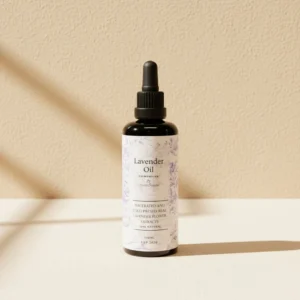
Lavandula angustifolia — lavender macerated oil with linalool and linalyl acetate, documented GABA-A receptor interaction, and 11 clinical trials confirming anxiety reduction — for skin calming, sleep support, and full-body wellness
What is Azara Natural's lavender oil — macerate vs essential oil
Lavandula angustifolia Mill. (true lavender) is an aromatic perennial shrub of the mint family (Lamiaceae), native to the western Mediterranean basin — from the Iberian Peninsula and southern France to the Italian and Balkan coasts. In Spain, lavender (lavanda, espliego, or alhucema in different regional traditions) is cultivated particularly in Castilla-La Mancha and Aragón, where its medicinal and aromatic properties have been recognized in folk medicine for centuries.
There are multiple forms of lavender botanical preparation:
Steam-distilled lavender essential oil:
The aromatic fraction of lavender flowers — primarily linalool (25–45%) and linalyl acetate (25–45%), with lesser amounts of camphor, 1,8-cineole, beta-ocimene, and terpinen-4-ol. Highly concentrated. Requires dilution before skin application (typically 1–3%). Linalool and linalyl acetate are EU-regulated fragrance allergens: above threshold concentrations in leave-on products, they must be individually disclosed on the INCI label.
Cold-macerated lavender oil (Azara Natural):
Lavender flowers cold-infused in a carrier Corn Oil base. The maceration extracts both the fat-soluble fraction of lavender’s botanical compounds and partially the aromatic compounds (linalool transfers into the oil phase during extended maceration).
The result is:
– Lower linalool concentration than essential oil — reduced sensitisation risk
– Carrier oil fatty acids alongside lavender-derived actives
– More appropriate for leave-on skin applications at daily use quantities
Lavender hydrosol:
The water-phase condensate from distillation — water-soluble linalool fractions at gentle concentrations. Used in the Azara Natural mist formulations.
The GABA mechanism: why lavender works for anxiety and skin
The calming properties of lavender are now understood at the molecular level — and the mechanism is more direct than most people realize.
Linalool and GABA-A receptors:
A study published in Phytomedicine demonstrated linalool’s anxiolytic effects and GABA-A receptor interaction. Research on linalool metabolites confirmed their capacity to enhance GABA-A receptor-mediated inhibitory currents directly at the receptor level. GABA-A receptors are the primary inhibitory receptors in the nervous system — the same receptors targeted by benzodiazepine anxiety medications, through a different and gentler botanical mechanism.
Clinical evidence for anxiety reduction:
A 2023 systematic review of 11 clinical trials involving 972 participants found that 10 of 11 studies reported significantly reduced anxiety following lavender oil exposure — attributing effects to GABAergic pathway modulation.
The skin relevance — psychodermatology:
Chronic stress and elevated cortisol directly impair skin barrier function, increase sebum production, and drive the inflammatory cascade underlying acne, eczema, and rosacea. A 2025 clinical study confirmed that moderate chronic stress reduced skin antioxidant potential and increased skin aging severity by 32.9%, with cortisol decreasing filaggrin synthesis by 32%. By reducing the GABA-A mediated stress response, lavender oil addresses both the psychological state and its dermatological consequences simultaneously — making it more than just a fragrant addition to a skincare formulation.
Silexan — the oral lavender evidence:
Silexan is a standardized oral lavender oil preparation approved in Germany for anxiety-related restlessness. Multiple RCTs have confirmed its anxiety-reducing efficacy comparable to lorazepam and paroxetine at appropriate doses. This is relevant context — it confirms that lavender’s calming mechanism is pharmacologically real and not merely aromatic suggestion.
Skin benefits: calming, barrier support, and antimicrobial
Calming reactive and inflammatory skin:
Linalool’s GABA-mediated calming reduces the nervous system’s stress-driven contribution to skin reactivity — relevant for stress-triggered acne, rosacea flushing, and eczema flares. Additionally, linalool and linalyl acetate have documented direct anti-inflammatory properties at the skin level — reducing mast cell degranulation and inflammatory mediator release.
Barrier support from the carrier oil fatty acids:
The carrier oil base in lavender macerate contributes barrier-supporting fatty acids — the specific profile depending on the carrier used. This provides the structural lipid support to skin alongside lavender’s calming botanical compounds, high quality corn oil base. Corn oil’s high vitamin E content protects linalool and linalyl acetate from oxidative degradation — extending the macerate’s active compound potency and the shelf life of these aromatic compounds that are most valuable when fresh and intact.
Antimicrobial activity:
Lavender compounds have documented antimicrobial activity against S. aureus and other skin pathogens — relevant for acne-prone and easily congested skin. The antimicrobial mechanism is gentle and compatible with maintaining the skin’s commensal microbiome balance, unlike broad-spectrum synthetic antimicrobials.
Sleep support and its skin consequence:
Poor sleep directly impairs skin barrier repair and the cellular processes that regenerate skin overnight. Lavender’s documented sleep quality improvement (confirmed across multiple RCTs) means that its evening application contributes to skin health through two channels: direct topical anti-inflammatory benefit and improved sleep quality for enhanced overnight skin restoration.
Wound healing and minor skin repair:
Lavender compounds have documented wound-healing properties — accelerating epidermal repair in minor skin damage. Traditional Spanish and European folk medicine consistently used lavender oil (aceite de lavanda) for minor burns and abrasions, a use now supported by antimicrobial and healing mechanism research.
Hair and scalp benefits
Scalp calming for stress-related hair loss:
Telogen effluvium — stress-related hair shedding — is driven by the same HPA axis cortisol response that lavender’s GABA mechanism addresses. Scalp massage with lavender macerate combines the documented nervous system calming of linalool with the mechanical circulation stimulation of the massage itself. For stress-related hair shedding, the intervention addresses both the emotional trigger and the local scalp environment simultaneously.
Anti-inflammatory scalp support:
Linalool’s anti-inflammatory properties reduce the low-grade scalp inflammation that contributes to follicle miniaturization and reactive scalp conditions.
Antimicrobial balance:
Lavender compounds support scalp microbiome balance without the broad-spectrum disruption of pharmaceutical antifungals — relevant for mild dandruff and scalp sensitivity management.
Scalp massage recommendation:
5–8 drops of lavender macerate (alone or blended with rosemary macerate for enhanced circulation support) massaged into the scalp sections for 5 minutes before a wash. The calming aromatic benefit of the massage itself adds to the scalp botanical benefits.
Lavender in massage: the most evidence-backed aromatic massage oil
Of all aromatic botanicals used in massage, lavender has the most extensive and consistent clinical evidence base for the specific purpose of a massage context — nervous system calming, anxiety reduction, pain modulation, and sleep improvement.
Relaxation and full-body massage:
Lavender is the single most studied aromatic oil for massage therapy. Multiple clinical trials have confirmed that lavender massage produces measurable reductions in anxiety, heart rate, and cortisol compared to massage with a non-aromatic carrier. At 1–3% diluted in sweet almond or jojoba carrier, or used as a cold macerate at higher concentration, it transforms a relaxation massage from a comfort-only experience into a documented nervous system intervention.
Sleep massage (evening pre-bed routine):
Evening self-massage with lavender oil has the most consistent supporting evidence of any pre-bed botanical intervention. The combination of massage-induced physical relaxation, linalool’s GABA-mediated calming, and lavender’s documented sleep quality improvements in RCTs makes an evening lavender massage routine one of the most evidence-aligned self-care practices available.
Sports recovery massage:
Lavender’s anti-inflammatory properties, combined with its pain-modulating activity (documented through multiple mechanisms including GABA and calcium channel effects), make it relevant in sports recovery massage — reducing the inflammatory component and the sensory discomfort of post-exercise muscle recovery.
Children’s massage:
Lavender is one of the most appropriate aromatic botanicals for pediatric massage applications — lower concentrations than for adults (check age-appropriate dilution guidelines), with a well-established gentle safety profile. Spanish and European pharmacy tradition consistently recommends lavender preparations for children’s calming and sleep routines.
Massage types most suited to lavender macerate:
Relaxation massage, sleep massage, sports recovery, pediatric massage (appropriate dilution), stress management massage, facial massage for reactive skin, scalp massage for stress-related conditions.
Cold macerate vs essential oil: sensitisation and concentration
Lavender is one of the most carefully handled botanicals from a European regulatory perspective — because while its benefits are real, linalool and linalyl acetate are EU-regulated fragrance allergens. The distinction between lavender macerate and concentrated essential oil is directly relevant to skin safety.
Lavender essential oil:
Linalool typically at 25–40%, linalyl acetate at 25–45%. At these concentrations, both compounds exceed the EU leave-on product fragrance allergen disclosure threshold. Undiluted essential oil applied directly to skin creates a meaningful sensitisation risk — particularly with repeated daily use. Even diluted at 1–3%, the concentrations are significant. This is why the EU’s SCCS (Scientific Committee on Consumer Safety) has noted limitations on leave-on lavender essential oil concentrations.
Cold-macerated lavender oil:
Linalool and linalyl acetate transfer into the carrier oil phase during maceration — but at significantly lower concentrations than in the neat essential oil. The macerate delivers lavender’s therapeutic compounds in a gentler, more diluted form that is inherently more appropriate for leave-on daily skin applications without reaching concentrations that trigger sensitisation.
The key difference:
The macerate is not a diluted essential oil — it is a different extraction form. The phytochemical profile is broader (it includes non-volatile lavender compounds that don’t distil over), and the concentration of the sensitising aromatic compounds is inherently lower. For daily-use skincare, this makes macerate the more appropriate form. For acute, short-duration aromatherapy applications where aromatic intensity is the goal, essential oil is appropriate — at correct dilution.
“Pure lavender oil” from market stalls:
Unlabelled “pure lavender oil” sold at very low prices in tourist markets across Spain (particularly in lavender-growing regions like Brihuega, Guadalajara) is almost always synthetic lavender fragrance in a carrier — containing no genuine Lavandula angustifolia botanical compounds.
Azara Natural's Lavender Oil is cold-macerated from Lavandula angustifolia flowers — delivering linalool and botanical lavender compounds at leave-on-appropriate concentrations. Formulated into the Body Care Blend and Muscle Care Blend for its documented GABA-mediated calming and anti-inflammatory properties.
Get Azara Natural Lavender OilFrequently Asked Questions
Lavender macerated oil is particularly beneficial for reactive, sensitive, stress-affected, and combination skin. Its GABA-mediated linalool calming reduces stress-driven skin reactivity; its anti-inflammatory compounds calm active surface inflammation; its antimicrobial properties address mild acne and bacterial imbalance; and its barrier-supportive carrier fatty acids contribute structural support. For mature skin, it is most effective blended with richer, more conditioning oils (frankincense, sesame). For oily and combination skin, its calming anti-inflammatory properties are directly beneficial without adding heaviness. Evening application delivers the most value — the GABA sleep mechanism adds a skin health benefit through improved overnight restoration.
Lavender in appropriate concentrations has a well-established safety profile in pediatric applications — Spanish and European pharmacy tradition consistently recommends diluted lavender preparations for children’s calming and sleep routines. Key guidance: use specifically at reduced concentrations appropriate for the child’s age (follow pediatric aromatherapy dilution guidelines — generally 0.5–1% for children under 6, lower for younger infants); avoid application near the face/mouth in young infants; do not use concentrated essential oil undiluted on children’s skin. The cold macerate form is gentler than essential oil and more appropriate for pediatric applications. As with all topical products for infants and children, consult your healthcare provider if you have any concerns.
Yes — this is one of the better-supported claims in botanical medicine. Multiple RCTs have confirmed lavender oil’s sleep quality improvement effects, including an improvement in sleep quality scores and reduced nighttime awakening. The Silexan oral preparation (standardized lavender oil) is approved in Germany for anxiety-related restlessness with RCT evidence comparable to some pharmaceutical anxiolytics. Topically, evening application via massage activates both the GABA-mediated calming mechanism and the mechanical relaxation response of the massage itself. The combination of the two produces more consistent sleep onset support than either alone. Apply to pulse points, the chest, or perform a short foot massage with lavender macerate 20–30 minutes before bed for the most consistent effect.