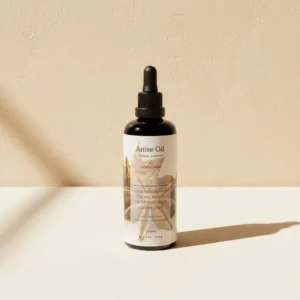
Illicium verum — crushed star anise pods macerated in soybean oil for 8 weeks, delivering trans-anethole, shikimic acid, and phenylpropanoid compounds with documented antibacterial, antifungal, anti-inflammatory, and antioxidant activity
What is Azara Natural's star anise oil — Illicium verum, the crushed pod macerate
Illicium verum Hook. f. is a medium-sized evergreen tree of the Schisandraceae family, native to the tropical and subtropical regions of southern China (particularly Guangxi and Guangdong provinces) and northeastern Vietnam. It is cultivated extensively for its star-shaped fruit pods — the brown, woody, star-shaped structures containing seeds that are both the culinary spice and the source of the aromatic oil.
Azara Natural’s star anise oil is produced through a specific and deliberate extraction method:
Crushed star anise pods — the whole dried fruit structures, not just the seeds — are macerated in high quality soybean oil at controlled temperature for 8 weeks. The 8-week maceration period is significant: it allows extended contact time between the crushed plant material and the carrier oil, achieving a thorough transfer of both the volatile aromatic compounds (anethole, eugenol, anisaldehyde) and the non-volatile phenylpropanoid and flavonoid fraction that a shorter maceration would not fully extract. This produces a more complete phytochemical profile than a brief infusion or steam-distilled essential oil alone.
Key composition:
– trans-Anethole: 80–90% of the volatile fraction — primary aromatic compound, antispasmodic and antimicrobial active
– Eugenol: minor amounts — TRPV1 warm-receptor activity, additional antimicrobial contribution
– Anisaldehyde: antifungal and antimicrobial activity
– Shikimic acid: present in star anise pods — the same compound used as the precursor in the synthesis of the antiviral medication oseltamivir (Tamiflu). Shikimic acid has antioxidant and antiviral properties.
– Flavonoids: quercetin and kaempferol derivatives — antioxidant and anti-inflammatory activity
– Minor phenylpropanoids: methyl chavicol, anisyl alcohol, foeniculin
– Soybean oil carrier: linoleic acid ~52%, oleic ~23%, ALA omega-3 ~8%, vitamin E, phytosterols, lecithin
The soybean oil carrier contributes its own meaningful properties: ALA omega-3 anti-inflammatory activity (~8%) complements anethole’s own anti-inflammatory mechanisms; phytosterols add barrier-supportive and anti-inflammatory properties; lecithin supports compound delivery to skin tissue.
5,000 years of tradition: from ancient China to the Silk Road to Spain
Illicium verum has been used in Chinese medicine and cuisine for over five millennia — one of the defining aromatics of traditional Chinese medicine (TCM), where it is called Bajiaohuixiang
In TCM, star anise is classified as warming, dispersing, and qi-regulating — documented for digestive, respiratory, and circulatory applications. Traditional topical uses include preparations for rheumatic pain and as an antiseptic for skin conditions — a traditional application now supported by published antimicrobial and anti-inflammatory research on Illicium verum specifically.
The Silk Road connection: star anise travelled from southern China through the Arab trade networks from at least the 13th century onwards, entering European trade from the 16th century when Portuguese navigators returned from Asia with Asian spices. The compound found in star anise — anethole — is the same compound present in Mediterranean anise (Pimpinella anisum) and fennel (Foeniculum vulgare), which is why star anise rapidly found cultural acceptance in European markets despite its Chinese origin: it smelled and tasted almost identical to botanicals Europeans already knew.
The Middle Eastern connection : Star anise is a component of baharat (بهارات), the aromatic spice blend central to Levantine, Syrian, and wider Arab cuisine. In traditional Levantine medicine, anise-family preparations (whether from Pimpinella anisum or Illicium verum) were used for warming, digestive, and calming purposes — documented in Islamic medical texts through the anethole compounds both species share.
In Spain, anís estrellado is universally recognized — used in traditional Spanish aniseed liqueurs including some Chinchón and anís preparations, in traditional pastry (particularly around the Christmas season), and as a recognized herbal tea ingredient. Spanish consumers are highly familiar with star anise through multiple cultural touchpoints, making this botanical oil particularly accessible in terms of cultural recognition and trust.
The phytochemistry: anethole, shikimic acid, and what the research confirms
trans-Anethole — the primary active:
A phenylpropanoid compound (1-methoxy-4-prop-1-enylbenzene) making up 80–90% of the volatile fraction, responsible for star anise’s characteristic sweet, warming, licorice-like aroma. Documented mechanisms:
Antispasmodic through NO-cGMP pathway:
Anethole produces concentration-dependent smooth muscle relaxation through the nitric oxide-cyclic GMP pathway — the pharmacological mechanism underlying star anise’s traditional use for digestive and muscle-tension applications.
Antimicrobial:
Anethole has documented activity against bacteria, yeasts, and fungal strains. A 2021 in vivo study published in Infectious Diseases and Resistance confirmed that topical application of Illicium verum extract significantly reduced bacterial load in MRSA-infected skin lesions in animal models — one of the few botanical oil studies using an in vivo topical antimicrobial model.
A randomized double-blind crossover clinical trial confirmed Illicium verum’s anti-inflammatory, astringent, and antimicrobial effects — a genuine RCT specifically on Illicium verum, not just in vitro data.
Antioxidant activity:
A 2024 comprehensive review in Pharmacological Research — Modern Chinese Medicine confirmed anethole and Illicium verum extracts demonstrate antioxidant, antibacterial, antifungal, and anti-inflammatory activities across the assembled research literature.
Shikimic acid — the Tamiflu precursor:
Star anise is the primary natural source of shikimic acid — the compound used as the biological precursor in the synthesis of oseltamivir (Tamiflu), the antiviral medication for influenza. This pharmaceutical connection to star anise underlines the botanical’s genuine pharmacological complexity. Shikimic acid itself has antioxidant, anti-inflammatory, and antiviral properties relevant to the whole-plant extract.
Flavonoids (quercetin, kaempferol derivatives):
These flavonoid antioxidants contribute free-radical scavenging protection at the skin surface — complementing anethole’s own antioxidant activity with independent flavonoid antioxidant mechanisms.
Eugenol (minor amounts):
The same TRPV1/TRPV3 receptor-activating compound present in clove — present at minor concentrations in star anise, contributing mild warming and additional antimicrobial activity alongside the dominant anethole profile.
The phytoestrogenic note — important information:
Trans-anethole shows mild estrogenic activity in some in vitro and animal studies, leading to its classification as a phytoestrogen. At cosmetic topical concentrations applied in normal use, the systemic estrogenic effect is extremely limited through dermal absorption. Individuals with hormone-sensitive conditions may wish to discuss extended use with their healthcare provider as a reasonable precaution — this is not an indication of danger at standard cosmetic use but a scientifically accurate transparency note.
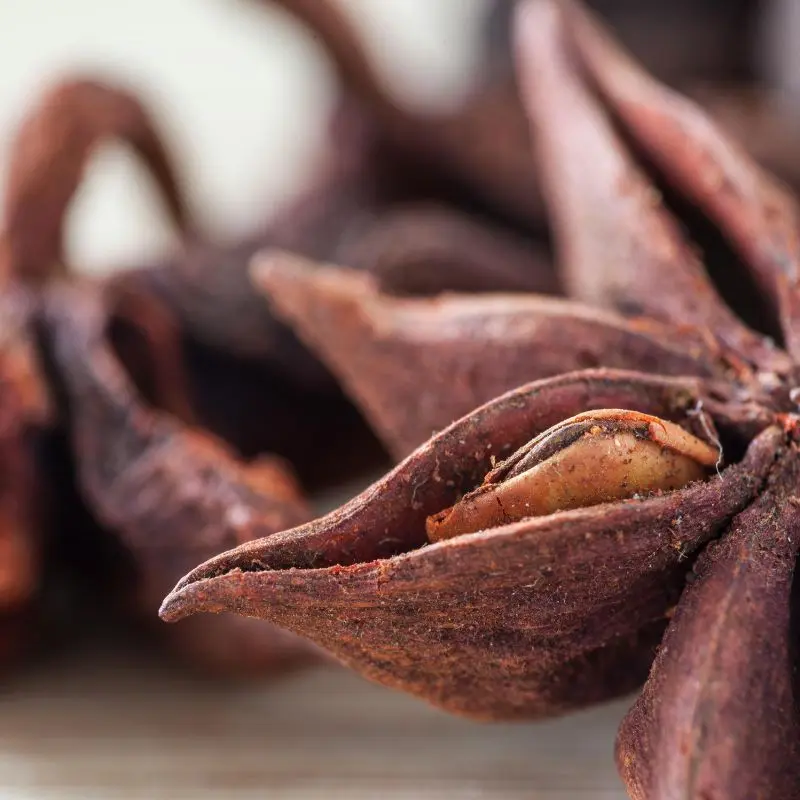
Star anise is the primary natural source of shikimic acid — the precursor compound used in the synthesis of Tamiflu (oseltamivir). This pharmaceutical connection reflects Illicium verum's genuine pharmacological complexity beyond its aromatic character. The same plant used in Chinese five-spice and Vietnamese pho is also one of the most pharmaceutically significant botanicals in modern medicine.<br />
Skin benefits: antimicrobial, anti-inflammatory, and antioxidant
Broad-spectrum antimicrobial:
The 2021 in vivo topical study confirmed Illicium verum extract reduced bacterial load in MRSA-infected skin lesions — one of the most resistant bacterial strains in clinical medicine. For skin conditions where antimicrobial activity is relevant (acne, superficial infections, compromised skin), star anise macerate’s anethole-driven broad antimicrobial spectrum provides meaningful botanical support. Documented activity against S. aureus (including MRSA strains), Acinetobacter baumannii, Pseudomonas aeruginosa, and Candida albicans.
Anti-inflammatory skin support:
Anethole’s anti-inflammatory activity — confirmed in the Illicium verum crossover RCT alongside its antimicrobial effects — reduces surface skin reactivity relevant to acne, reactive skin conditions, and inflammation-driven redness. The soybean carrier’s ALA omega-3 (~8%) adds a complementary anti-inflammatory COX/LOX pathway contribution.
Antioxidant protection:
The combined antioxidant activity of anethole, shikimic acid, and flavonoid compounds (quercetin, kaempferol derivatives) provides multiple simultaneous free-radical scavenging mechanisms. For skin exposed to Spain’s high UV index across long summer seasons, this layered antioxidant protection supports cumulative photoaging prevention.
Astringent and toning:
The Illicium verum RCT also confirmed astringent properties — anethole and the phenolic fraction produce a mild toning and astringent effect at the skin surface, supporting an even, refined-looking complexion.
Warming skin circulation:
Anethole’s mild TRPV1 activity produces a gentle warming effect that improves local microcirculation — more subtle than mustard or camphor, contributing to the improved skin radiance associated with better peripheral blood flow without the intensity of the more pronounced warming oils.
Hair and scalp benefits
Scalp antimicrobial — broad-spectrum and gentle:
Anethole’s documented antimicrobial activity against Candida and bacterial species makes star anise macerate a gentle but effective antimicrobial option for scalp microbiome management. Less intense than clove or cinnamon (lower eugenol/cinnamaldehyde concentrations), it is appropriate for sensitive scalps where the more potent warming antimicrobials may be excessive.
Anti-inflammatory scalp calming:
The anti-inflammatory mechanisms documented in the Illicium verum clinical trial translate directly to scalp application — reducing the low-grade scalp inflammation that contributes to follicle miniaturization and reactive scalp conditions.
Aromatic grounding during scalp massage:
The warm, sweet aromatic of star anise creates a deeply calming quality to scalp massage sessions — engaging the olfactory-limbic pathway through anethole’s characteristic scent, supporting the parasympathetic nervous system shift that makes scalp massage most therapeutically effective for stress-related conditions.
Antioxidant follicle protection:
Quercetin, kaempferol, and shikimic acid contribute antioxidant protection to the follicle environment — reducing the oxidative stress damage to follicle stem cells that contributes to age-related thinning.
Application: 5–8 drops in a scalp blend alongside castor oil (conditioning, antimicrobial ricinoleic acid) or rosemary macerate (circulation support). Star anise provides aromatic grounding, antioxidant protection, and gentle antimicrobial balance to the blend. Leave 30–60 minutes before washing.
Cold macerate vs essential oil: what each is, best applications, honest claims, and price
Cold-macerated crushed star anise pod oil (Azara Natural)
Crushed Illicium verum pods macerated in high quality soybean oil for 8 weeks — extracting both the volatile aromatic fraction (anethole, eugenol, anisaldehyde) and the non-volatile phenylpropanoid, flavonoid, and shikimic acid fraction into a skin-appropriate soya carrier. The 8-week maceration period produces more complete extraction than brief infusion methods.
Best for: leave-on skin applications (gentle antimicrobial, anti-inflammatory antioxidant), relaxation and sleep-supporting massage blends (antispasmodic, aromatic grounding), scalp antimicrobial and calming treatment, abdominal massage, and any application where consistent skin contact with star anise’s full botanical profile is the goal. The soybean carrier’s ALA omega-3 and phytosterol content adds complementary anti-inflammatory and barrier-supportive properties.
The 8-week maceration: this is meaningfully longer than many commercial macerates (which may be 2–4 weeks). Extended maceration time allows thorough transfer of both volatile and non-volatile phytochemicals — particularly relevant for the flavonoid (quercetin, kaempferol) and shikimic acid fraction that shorter macerations may not fully extract.
Price: €20–40 for 50–100ml of quality cold macerate. The 8-week maceration time and the quality of soybean carrier are the primary cost determinants.
Steam-distilled star anise essential oil
Concentrated volatile fraction — primarily trans-anethole (80–90%), with minor eugenol, anisaldehyde, and monoterpenes. Highly aromatic. Does not contain shikimic acid, quercetin, kaempferol, or other non-volatile phytochemicals present in the whole pod macerate.
Best for: aromatherapy diffusion (the most widely used and appropriate application — the warm, sweet, comforting aromatic of star anise in diffusion is globally recognised), flavouring in food and beverage industry (star anise essential oil is widely used in the production of anise-flavoured spirits including pastis, ouzo, and Spanish anís liqueurs), and highly diluted topical applications at 0.5–1% in carrier. The essential oil delivers the most concentrated aromatic experience; the macerate delivers the more complete botanical extract for skin contact applications.
Price: €5–15 for 10ml of genuine Illicium verum essential oil — more widely available and more affordable than many botanical essential oils because star anise is a high-volume commercial crop.
How to identify genuine Illicium verum (anise oil) cold macerate
Appearance: The macerate in soybean oil should have a warm amber to golden colour — characteristic of anethole and phenylpropanoid transfer from the crushed pods. Colourless = poor maceration or refined carrier without adequate extraction.
Scent: The most immediately recognisable quality check — the warm, sweet, distinctly star-anise aromatic of anethole should be clearly present. Recognisably “star anise” but gentler and more complex than neat essential oil, with the rounded sweetness of the soybean carrier alongside the spice. No star anise scent = inadequate maceration or adulteration.
Texture: Should have the medium weight of the soybean carrier — not thin, not viscous. Absorbs well on skin within a few minutes.
Origin transparency: Quality star anise macerate from a reputable producer will specify Illicium verum (not simply “anise”) and the maceration method. “Anise oil” without species specification cannot be verified as genuine Illicium verum vs Pimpinella anisum or synthetic anethole in carrier.
Tactile quality: Gentle warming sensation on skin within a few minutes of application — mild, sweet-spiced warmth from anethole’s low-level TRPV1 activity. The warmth should be pleasant and diffuse, not intense or burning.
Azara Natural's Star Anise Oil is produced by crushing Illicium verum star-shaped pods and macerating them in high quality soybean oil for 8 weeks — extracting the full botanical profile of anethole, shikimic acid, quercetin, kaempferol, and the complete phenylpropanoid fraction in a skin-appropriate soya carrier with ALA omega-3 anti-inflammatory contribution. Formulated into the Relaxing Massage Blend. Available individually for antimicrobial skin support and aromatic grounding massage.
Get Azara Natural Star Anise OilFrequently Asked Questions
The 8-week maceration period is a deliberate quality decision. Shorter macerations (2–4 weeks) efficiently extract the volatile aromatic fraction (anethole, eugenol) but may not fully extract the non-volatile phytochemicals from the crushed pod material — including flavonoids (quercetin, kaempferol), shikimic acid, and the phenolic fraction. The extended 8-week contact time between the crushed Illicium verum pods and the soybean oil allows thorough extraction of both the aromatic and the non-aromatic phytochemical fraction — producing a more complete and therapeutically complex extract than a brief infusion. This is the same principle behind high-quality traditional botanical maceration practice across Ayurvedic, Chinese, and Middle Eastern herbalism: time is one of the active ingredients in a quality botanical oil infusion.
Shikimic acid is a naturally occurring organic acid found at significant concentrations in Illicium verum pods — and it was historically the primary commercial source of shikimic acid used as the biological starting material in the synthesis of oseltamivir (Tamiflu), the antiviral medication for influenza. The pharmaceutical industry’s dependence on Chinese star anise for this precursor compound made it one of the most commercially valuable botanical species during influenza pandemic preparedness periods. In the context of the star anise macerate, shikimic acid contributes antioxidant, anti-inflammatory, and antiviral properties to the extract’s overall phytochemical profile — a genuinely pharmacologically significant compound present in the pods that the 8-week maceration process helps transfer into the soybean carrier.
Illicium verum (Chinese star anise) is safe and extensively used globally in food, cosmetics, and medicine. It appears in the EU CosIng cosmetic ingredient database. The safety concern sometimes associated with “star anise” relates specifically to Illicium anisatum (Japanese star anise) — a completely different species containing neurotoxic compounds that has caused poisonings when accidentally substituted for the edible Chinese species. In commercial cosmetic and food supply chains, Illicium verum is the authenticated species. As with any anethole-containing botanical, individuals with hormone-sensitive conditions should note the mild phytoestrogenic activity of trans-anethole and discuss extended use with their healthcare provider as a precaution.
Both smell almost identical because both are dominated by anethole (80–90% of the volatile fraction) — but they come from botanically unrelated plants. Anise seed oil is from Pimpinella anisum, an annual Mediterranean herb. Star anise oil is from Illicium verum, an evergreen tree from southern China. Azara Natural’s product is macerated from crushed Illicium verum star-shaped pods — the Chinese botanical with the Silk Road trade heritage, the documented MRSA topical antimicrobial studies, and the shikimic acid pharmacological interest. The shared anethole aroma makes them easily confused in retail contexts; the INCI name (Illicium verum fruit/extract vs Pimpinella anisum seed/fruit) is the definitive distinguishing label information.
Star anise macerated oil (aceite de anís estrellado) is most specifically beneficial for: gentle broad-spectrum antimicrobial skin support (documented in vivo against MRSA in skin lesion models, PMC: 7797340), anti-inflammatory calming of reactive and acne-prone skin (confirmed in the Illicium verum randomized clinical trial, PMC: 8181057), layered antioxidant protection from anethole, shikimic acid, and quercetin/kaempferol flavonoids, and mild circulatory warming from anethole’s TRPV1 activity. It is gentler than clove, cinnamon, or mustard — most appropriate as a supportive antimicrobial and aromatic-grounding oil in formulated blends rather than a standalone primary facial oil.