Cinnamomum verum — cold-macerated cinnamon oil delivering cinnamaldehyde and eugenol for TRPV1 warming, broad-spectrum antimicrobial activity, and scalp circulation support — with an honest assessment of the bark vs leaf distinction and sensitisation considerations
What is cinnamon oil — species, plant part, and the extract distinction
The “cinnamon oil” category encompasses several different botanical sources with meaningfully different compositions:
Cinnamomum verum (syn. C. zeylanicum) — Ceylon/true cinnamon, from Sri Lanka:
– Bark: cinnamaldehyde dominant (65–80%) — the “classic” cinnamon aroma
– Leaf: eugenol dominant (70–80%) — clove-like rather than classic cinnamon
– Very low coumarin content — important for both dietary and cosmetic safety
Cinnamomum cassia (Chinese cinnamon/cassia):
– Bark: cinnamaldehyde (75–90%)
– Very high coumarin content (1,000–12,000mg/kg) compared to Ceylon (trace amounts)
– Lower quality and less appropriate for cosmetic use due to coumarin concentration
Azara Natural’s cinnamon oil is a cold macerate — cinnamon plant material (bark) cold-infused in a carrier corn oil over an extended period, producing a botanical extract with:
– Cinnamaldehyde: transferred to the oil phase during maceration at concentrations lower than the essential oil
– Eugenol: transferred alongside cinnamaldehyde
– Cinnamyl acetate and minor phenylpropanoids
– Carrier oil fatty acid base and vitamin E
At appropriate formulated concentrations, cinnamon macerate is safe and therapeutically effective. The key is concentration management and patch testing — particularly important for individuals with known cinnamon or fragrance sensitivities.
Historical use: from ancient Egypt to the Spanish spice trade
Cinnamon is documented in trade records predating 2000 BCE — imported into ancient Egypt from Southeast Asia via Arab traders for embalming, ritual, and medicinal use. The Ebers Papyrus lists cinnamon among its medicinal preparations.
The spice trade in cinnamon shaped Mediterranean economic history. Arab traders controlled the cinnamon supply for over a millennium before European colonisation of Sri Lanka in the 16th century. The Portuguese, then the Dutch, then the British controlled the Ceylon cinnamon trade in sequence — the economic importance of this single spice drove European colonial expansion in Southeast Asia.
In Spain, canela has been embedded in culinary and medicinal tradition since the Moorish period — used in Spanish sweets (roscón de reyes, arroz con leche), traditional medicine preparations for digestive and circulatory complaints, and aromatic preparations across Spanish Catholic religious tradition. Spanish pharmacy tradition consistently included cinnamon oil preparations for warming topical applications.
The Levantine connection: the same Arab trade routes that brought cinnamon from Ceylon through the Middle East to Spain are directly relevant to Azara Natural’s geographical and cultural heritage — cinnamon’s path through the Levant to Europe mirrors the botanical heritage the brand draws on.

Key compounds and therapeutic mechanisms
Cinnamaldehyde (trans-cinnamaldehyde):
The primary phenylpropanoid compound — responsible for cinnamon’s characteristic aroma and its most potent antimicrobial activity. Documented activity against a very broad spectrum of bacteria, fungi, and yeasts. Its antimicrobial mechanism involves disruption of cell membranes and inhibition of key microbial enzymes. Also activates TRPV1 at appropriate concentrations, contributing to warming sensation.
Eugenol:
Present particularly in the leaf fraction — adds the triple TRPV1/TRPV3/TRPA1 receptor engagement mechanism described in the Clove Bud Oil post, alongside additional antimicrobial activity. Provides the mild numbing/tingling sensation alongside warming.
Cinnamyl acetate:
A pleasant-smelling ester that contributes to the aromatic complexity of cinnamon oil without the sensitization risk of cinnamaldehyde — partly responsible for the “sweeter” aromatic character of cinnamon compared to eugenol-only compounds.
Coumarin (C. cassia only):
NOT relevant to Cinnamomum verum (Ceylon cinnamon), which contains trace amounts. In Cinnamomum cassia and cassia-derived products, coumarin is present at potentially concerning concentrations for repeated application — another reason Ceylon cinnamon is the appropriate choice for cosmetic formulation.
TRPV1 activation and warming:
Both cinnamaldehyde and eugenol activate TRPV1 — producing the warming and analgesic counter-irritant effects. Cinnamon’s warming character is somewhat different from clove (more aromatic, less intensely numbing) due to the cinnamaldehyde dominance over TRPA1-activating eugenol.
Skin benefits: antimicrobial, warming, and circulation
Antimicrobial — extraordinary breadth:
Cinnamaldehyde’s documented antimicrobial activity covers an exceptionally wide pathogen range — including many antibiotic-resistant strains. For acne (C. acnes, S. aureus), fungal skin conditions (Candida, dermatophytes), and scalp conditions (Malassezia), cinnamon macerate provides one of the most comprehensively antimicrobial botanical options available.
Skin brightening — tyrosinase inhibition:
Cinnamaldehyde has documented tyrosinase inhibitory activity — the same enzyme responsible for melanin overproduction in hyperpigmentation. This adds a mild brightening mechanism to cinnamon’s thermal and antimicrobial properties.
Warming and circulation:
TRPV1 activation improves local microcirculation — the same mechanism as other warming botanicals, improving blood flow and skin radiance in applied areas.
Sensitisation management:
Cinnamon macerate should be used at appropriately low concentrations in leave-on skin applications — the 5% maximum mentioned for the DIY lip oil applies as a general upper limit for most leave-on applications. At 1–5% in a formulated blend, the antimicrobial and warming benefits are active while sensitisation risk is managed. Individuals with known cinnamon or fragrance allergies should avoid.
Hair and scalp benefits
Scalp antimicrobial — the broadest coverage alongside clove:
Cinnamaldehyde’s antimicrobial breadth makes cinnamon macerate one of the most comprehensively antimicrobial scalp botanicals alongside clove bud. For persistent dandruff, seborrheic dermatitis, and scalp conditions with strong microbial components, the combination of cinnamaldehyde and eugenol (from cinnamon macerate) covers the widest pathogen range of any single botanical.
Scalp circulation from TRPV1 warming:
Applied in a scalp blend at 5–10% alongside a neutral carrier, the TRPV1 vasodilatory effect improves scalp blood flow to follicle bases — supporting the circulation aspects of follicle health.
The plumping lip and scalp tingling sensation:
Cinnamon oil at very low concentration (1–3%) in a scalp serum produces the mild tingling associated with TRPV1 activation — perceived as a sign of efficacy and activity by many users. This is real physiology (receptor activation) rather than merely a sensory marketing claim.
Important: Apply only in blends at appropriate concentration. Cinnamon macerate applied near full concentration to the scalp can produce excessive irritation. 5–10% in a carrier blend is the appropriate range.
Cinnamon oil in massage: warming, aromatic, and sensory
Cinnamon macerate adds a distinctive aromatic warmth to massage formulations — the most recognisably warming aromatic profile of all the warming oils, and the one with the strongest cultural associations with comfort, intimacy, and wintertime warmth.
Warming relaxation massage:
In a relaxation massage context (rather than a therapeutic sports context), cinnamon’s warmth is more appropriately aromatic than mustard’s intense AITC-driven heat. At 5–10% in sweet almond or sesame carrier, it adds a warming, comforting aromatic dimension to full-body massage that is appropriate for seasonal warmth-focused rituals.
Intimate massage:
Cinnamon’s warming-tingling profile and its deeply culturally embedded associations with warmth and intimacy make it a natural fit for intimate massage formulations — alongside rose, lavender, and clove. The TRPV1 warming at appropriate concentrations is pleasant and enhancing rather than overwhelming.
Joint and muscle massage (as a blend component):
The antimicrobial and anti-inflammatory properties alongside circulatory warming make cinnamon relevant in therapeutic massage at low concentration alongside more specifically anti-inflammatory botanicals (turmeric, ginger, frankincense).
Massage types most suited: Warming relaxation massage (aromatic warmth), intimate massage (sensory warmth), winter season therapeutic massage, combined warming-antimicrobial scalp massage.
Cold macerate vs essential oil (bark vs leaf) vs cassia: what each is, best uses, and price
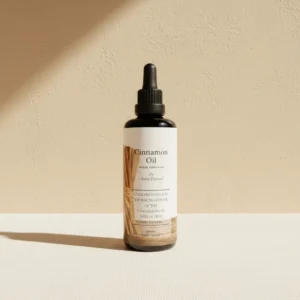
Cold-macerated cinnamon oil — Azara Natural
Cinnamon plant material cold-infused in a carrier — delivering cinnamaldehyde and eugenol at concentrations inherently lower than concentrated essential oil, with a more complete botanical profile.
Best for: leave-on skin applications at appropriate concentrations (1–5%), scalp antimicrobial treatment in blends (5–10%), warming massage blends (5–10%), and formulations where cinnamon’s combined warming-antimicrobial-brightening mechanisms are the goal. The lower concentration relative to essential oil makes it more appropriate for repeated skin contact.
Price: €20–40 for 50–100ml of quality cold macerate.
Cinnamon bark essential oil (C. verum)
Highly concentrated cinnamaldehyde (65–80%). Among the most potent skin sensitizers in the essential oil category. Requires maximum 0.05–0.1% in leave-on skin products — one of the most restricted concentrations in professional aromatherapy safety guidelines (Tisserand & Young).
Best for: diffusion (the most appropriate aromatherapy application — warming, comforting, antimicrobial room purification), flavouring in food applications, and highly diluted inclusion in wash-off personal care. NOT appropriate for leave-on skin products at standard aromatherapy dilutions. The sensitisation risk is high even at low concentrations with repeated application.
Price: €12–25 for 10ml of genuine Ceylon cinnamon bark essential oil.
Cinnamon leaf essential oil (C. verum)
Eugenol-dominant rather than cinnamaldehyde-dominant. Lower sensitisation risk than bark oil but still significant. Gentler warming profile — more clove-like than classic cinnamon aroma.
Best for: therapeutic warming massage blends (at 0.5–1% dilution), aromatherapy diffusion. More appropriate than bark oil for skin applications, but still requires careful dilution.
Price: €8–18 for 10ml.
Cassia oil (C. cassia) — not appropriate for quality cosmetics
High cinnamaldehyde (75–90%) plus high coumarin. The coumarin concentration in cassia makes it less appropriate for cosmetic use than Ceylon cinnamon, particularly for repeated application.
Best for: culinary applications where cassia is traditional (in many Asian cuisines). For cosmetic use, Ceylon (C. verum) is the appropriate species.
Price: cheaper than Ceylon. The lower cost is not a quality advantage for cosmetic applications.
How to identify genuine cinnamon macerate
Colour: Warm amber to brown — cinnamon pigments transferring to carrier. Colourless = poor maceration.
Scent: Warm, spicy, recognisably cinnamon. The macerate has a gentler, more rounded scent than the sharp cinnamaldehyde intensity of the essential oil — still clearly identifiable.
Tactile effect: Mild warming and gentle tingling on skin within minutes. The sensation should be pleasant and warming — not intense burning. Intense burning at application indicates excessive concentration or individual sensitisation; rinse with cool water.
Patch test: Essential before first use, particularly for those with fragrance sensitivities.
Azara Natural's Cinnamon Oil is cold-macerated from Cinnamomum verum — delivering cinnamaldehyde and eugenol's warming, antimicrobial, and brightening mechanisms in a skin-appropriate carrier. Formulated into the Intimate Massage Blend. Available individually for targeted antimicrobial skincare and warming massage.
Get Azara Natural Cinnamon OilFrequently Asked Questions
Cinnamon macerate’s primary documented benefits are antimicrobial (broad-spectrum cinnamaldehyde activity relevant for acne, fungal conditions, and scalp microbiome management), warming and circulatory (TRPV1 activation improving local blood flow), and mild brightening (tyrosinase inhibition). It is best used as a component of a targeted formulation at 1–5% in a carrier blend rather than as a primary standalone facial oil — the cinnamaldehyde sensitisation risk makes concentration management important. For warming massage blends, 5–10% in carrier is appropriate. Always patch test, especially for those with known fragrance sensitivity.
At appropriately diluted concentrations in a carrier blend (5–10% cinnamon macerate in a neutral carrier), it is safe and contributes scalp antimicrobial and circulation benefits. The claim that “cinnamon makes hair grow faster” circulating in social media refers to the brief vasodilatory warming that people perceive as stimulating — this is real (TRPV1 activation improving scalp circulation) but it does not equate to documented hair growth promotion in clinical evidence. The circulation improvement creates a supportive scalp environment; it does not directly stimulate hair follicle growth biology.
For cosmetic use, Ceylon cinnamon (C. verum) is the preferred species. It has very low coumarin content — cassia has coumarin at 50–200 times higher concentration, and coumarin is associated with hepatotoxicity at high systemic exposure. While topical absorption of coumarin in cosmetics is generally limited, EU cosmetic regulations restrict coumarin in certain product categories, and Ceylon’s near-absence of coumarin makes it the straightforward quality choice. Aromatically, cassia is often sold as “cinnamon” in general markets (particularly in the USA) — look for “Cinnamomum verum” or “Cinnamomum zeylanicum” in the INCI to confirm Ceylon origin.