
Why the proportions in a botanical oil formulation matter more than the ingredient list — fatty acids, oxidative stability, synergy, and EU regulatory safety explained
Bioavailability: how the skin actually absorbs different oils
Not all oils penetrate the skin equally — and the difference is structural, not superficial.
Molecular weight and fatty acid chain length determine how readily an oil crosses the stratum corneum. Lighter oils — grapeseed, safflower, radish seed, arugula — have smaller fatty acid chains that allow them to penetrate the outer skin layers more readily, making them well-suited as primary active carriers in facial formulations. Heavier oils — castor, avocado — form a partially occlusive film on the skin surface that slows transepidermal water loss. Neither function is superior; both are necessary in a balanced formula. Using only light oils leaves the skin unprotected from water loss; using only heavy oils creates a surface barrier without deep delivery of actives.
The linoleic/oleic distinction is arguably the most important concept in skin-compatible oil selection. High-linoleic oils — black seed, chia seed, hemp seed, evening primrose — mirror the fatty acid composition of healthy sebum and are particularly effective for oily, acne-prone, or compromised skin. High-oleic oils — macadamia, olive, avocado — penetrate more slowly and are structurally closer to the lipids found in mature or dry skin. Matching oil type to skin type is not aesthetic preference — it is a biochemical decision with measurable consequences.
One important nuance on rosehip oil it is rich in provitamin A precursors (beta-carotene) and trace all-trans retinoic acid. This gives it gentle cellular interaction in the skin, but it is important to be precise — rosehip’s beta-carotene concentration is not a clinical substitute for prescription retinoids. The conversion pathway from carotenoid to active retinoid in skin is enzymatically limited and highly variable. Rosehip oil should be understood as a supportive, skin-compatible vitamin A source — not a pharmacological equivalent to retinol therapy.
Synergy and proportion: where formulation becomes science
Botanical oil formulation at its best is a study in chemical complementarity — certain combinations amplify each other’s efficacy; others compete, destabilize, or produce unwanted effects at the wrong proportions.
Combinations with documented synergistic potential:
Sesame oil at approximately 30% combined with black seed oil at approximately 10% delivers meaningful anti-inflammatory activity — sesame’s linoleic acid working alongside nigella’s thymoquinone — without creating an excessively heavy texture. Jojoba and grapeseed together (both technically liquid waxes with low comedogenic ratings) create a rapid-absorbing, non-occlusive base well-suited for facial serums. Argan oil combined with a small proportion of fenugreek seed oil supports hair shaft structural integrity while the fenugreek’s steroid saponins address scalp inflammation.
Where incorrect proportions cause problems:
Turmeric oleoresin above approximately 15% in a finished formula produces cosmetically unacceptable yellow pigment transfer that no stabilizer can resolve. Coconut oil above approximately 60% in facial formulations risks comedogenic response in oily skin types due to its high lauric acid content. High concentrations of polyunsaturated oils (omega-3 and omega-6 dominant) without adequate vitamin E stabilization will oxidize faster than the product’s intended shelf life, producing skin-damaging free radicals rather than the antioxidants they’re supposed to deliver.
Oxidative stability: the shelf-life science most brands don't discuss
Oxidative stability is the most underexplained concept in natural skincare — and one of the most practically important.
Polyunsaturated fatty acids (PUFAs) — omega-3 and omega-6 — are the most biologically active fatty acid families for skin. They are also the most susceptible to oxidation: exposure to oxygen, light, and heat triggers lipid peroxidation that converts beneficial fatty acids into free radicals, aldehydes, and peroxides. An oxidized oil is not a neutral product — it is a pro-oxidant that actively damages skin cell membranes and accelerates the very aging processes it was intended to address.
This is why oxidative stability is a formulation priority, not just a shelf-life commercial concern. Vitamin E (tocopherols) is both a skin-active antioxidant and the most effective natural oxidative stabilizer for botanical oils. Including vitamin E-rich oils (wheat germ, sesame, sunflower) in appropriate proportions in a blend provides protection for the more delicate PUFA-rich oils (chia, rosehip, black seed) that would otherwise degrade.
Packaging matters just as much. UV light accelerates oxidation dramatically — which is why UV-protecting dark glass bottles are a functional choice, not a premium aesthetic one. A high-PUFA oil sold in a clear glass or plastic bottle is likely to be partially oxidized long before it reaches your skin, regardless of how well-formulated the product is.
Cold pressing preserves natural tocopherol content. Heat extraction destroys it — which is one of the most functionally important reasons cold-pressed is not simply a marketing claim.
EU regulatory safety: what "cosmetic" actually means and what it doesn't
Every skincare product sold in the EU — including botanical oil blends — is classified as a cosmetic under EU Regulation 1223/2009. This classification has specific legal consequences for what claims can and cannot be made.
A cosmetic is defined as a product intended to be applied to the external surfaces of the body for the purpose of cleaning, perfuming, changing appearance, protecting, keeping in good condition, or correcting body odors. It is explicitly not a medicinal product — it cannot claim to treat, cure, prevent, or diagnose disease.
This means that claims about a cosmetic product must describe what is observable — the appearance of fine lines, the look of firmness, the feel of hydration — rather than physiological mechanisms. “Reduces fine lines” is a cosmetic claim about appearance. “Stimulates collagen production” is a medicinal claim about a physiological mechanism — not permitted on a cosmetic product under EU law, regardless of whether the underlying biology supports it.
This is not a cover-up or a limitation of ingredient efficacy. It is a regulatory framework designed to separate cosmetics from pharmaceuticals. Understanding it helps consumers read claims more accurately: when a botanical brand says “appearance of fine lines” rather than “eliminates wrinkles,” the careful language reflects regulatory compliance, not an admission that the product doesn’t work.
Natural oil formulations are governed by exactly the same regulatory framework. INCI ingredient listing is mandatory. Safety assessments are required. Responsible natural brands operate within this framework — not because the regulatory language softens the science, but because the science is real and the regulatory language is honest.
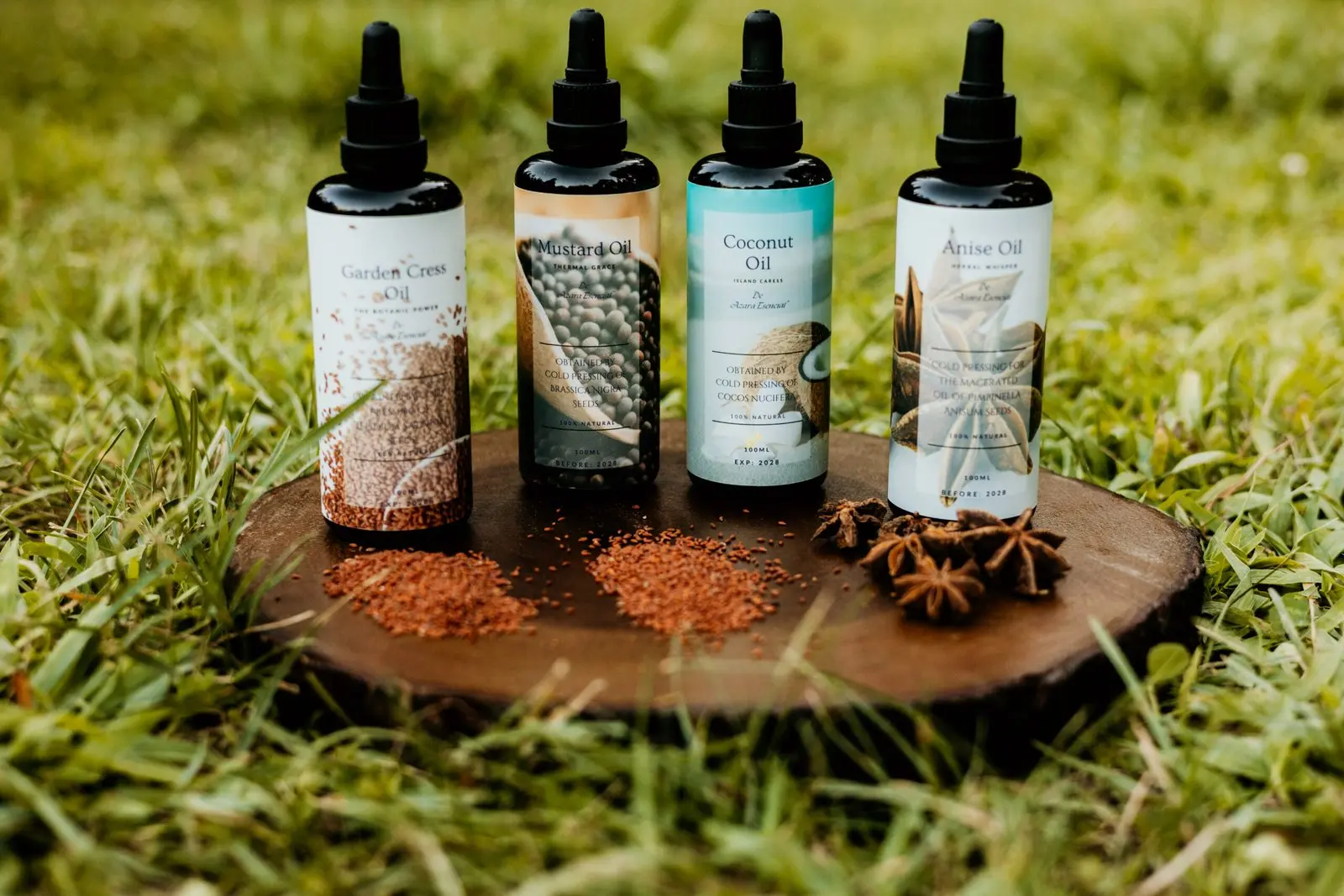
Every Azara Natural blend is a multi-oil formulation — not a single-ingredient product. Fatty acid balance, oxidative stability, and skin-type compatibility inform every proportion decision. The full range of 30 cold-pressed and macerated oils includes both individual oils and formulated blends.
Explore Azara Natural OilsFrequently Asked Questions
Several variables determine the functional profile of an oil even from the same botanical source: the origin of the plant material (soil composition, climate, altitude), whether the oil is cold-pressed or heat-extracted, how the plant material was stored before pressing, and whether the oil is refined or unrefined after extraction. A cold-pressed, unrefined black seed oil from Syrian-origin seeds will have a measurably different fatty acid and thymoquinone profile than a refined, solvent-extracted equivalent from a different origin. Origin, extraction method, and refining status all affect what the oil actually contains.
Yes. High concentrations of comedogenic oils (coconut oil, palm oil) in a facial formulation can cause congestion in susceptible skin types. High concentrations of warming essential oils (mustard, camphor, clove) without adequate carrier dilution can cause irritation or sensitization. A high proportion of PUFA-rich oils without adequate vitamin E stabilization will oxidize faster than the shelf life, delivering pro-oxidant damage rather than antioxidant benefit. Proportion matters in both directions — too much of even a beneficial ingredient can become counterproductive.
Technically, no — jojoba (Simmondsia chinensis) produces a liquid wax composed primarily of wax esters, not triglycerides. This is relevant because wax esters are what human sebum is predominantly composed of — making jojoba uniquely compatible with skin chemistry. It does not oxidize in the same way triglyceride-based oils do, which gives it an exceptionally long shelf life and makes it a highly stable carrier and base component in facial formulations. Its comedogenic rating is very low in clinical testing, making it appropriate across all skin types.
Useful signals: the ingredient list includes stabilizing vitamin E-rich oils or added tocopherol; packaging is in dark glass or UV-protecting material; the formulation includes both lighter absorbing oils and heavier protective ones rather than a single oil; the company can describe the function of each ingredient specifically rather than vaguely. Red flags: claims about mechanisms that exceed cosmetic classification (treating, curing, physiologically remodeling); no clear shelf life or batch information; transparent packaging for high-PUFA products; single-ingredient “miracle oil” positioning without formulation rationale.