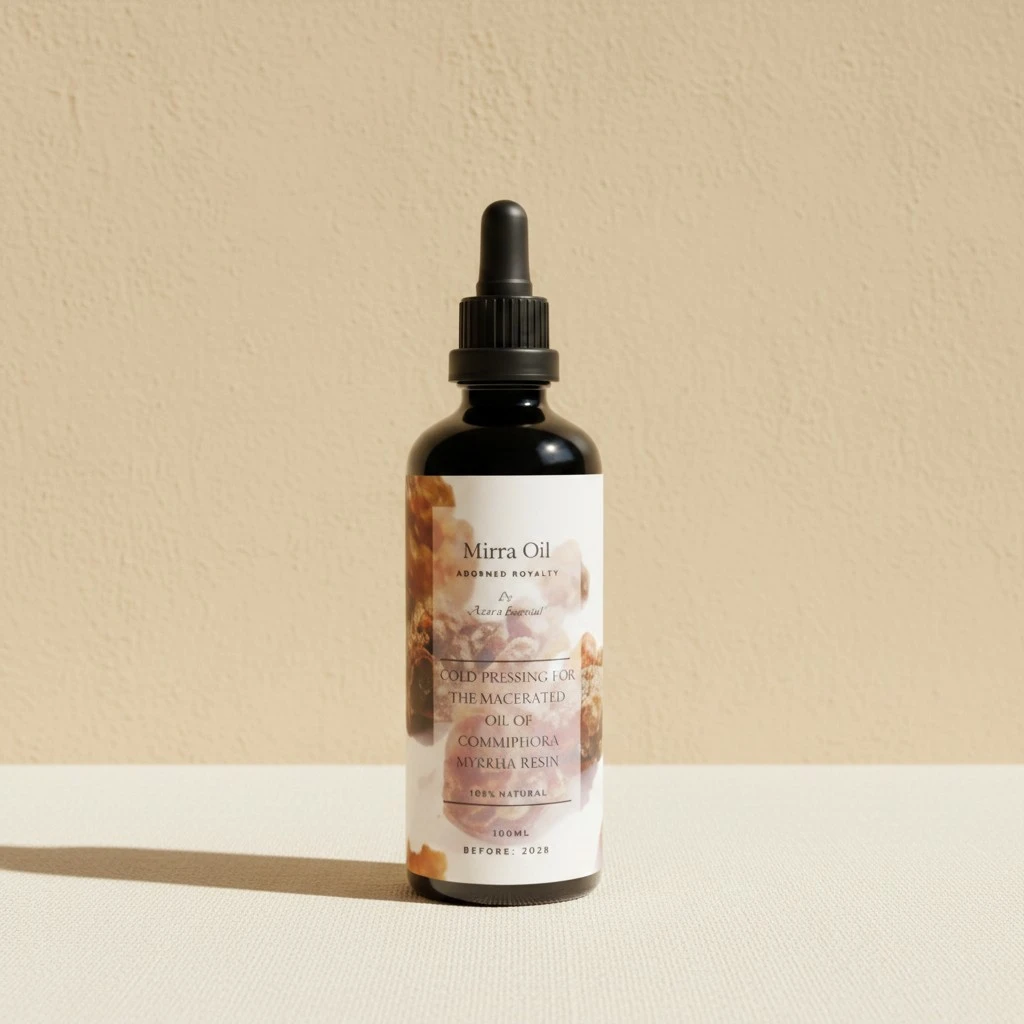
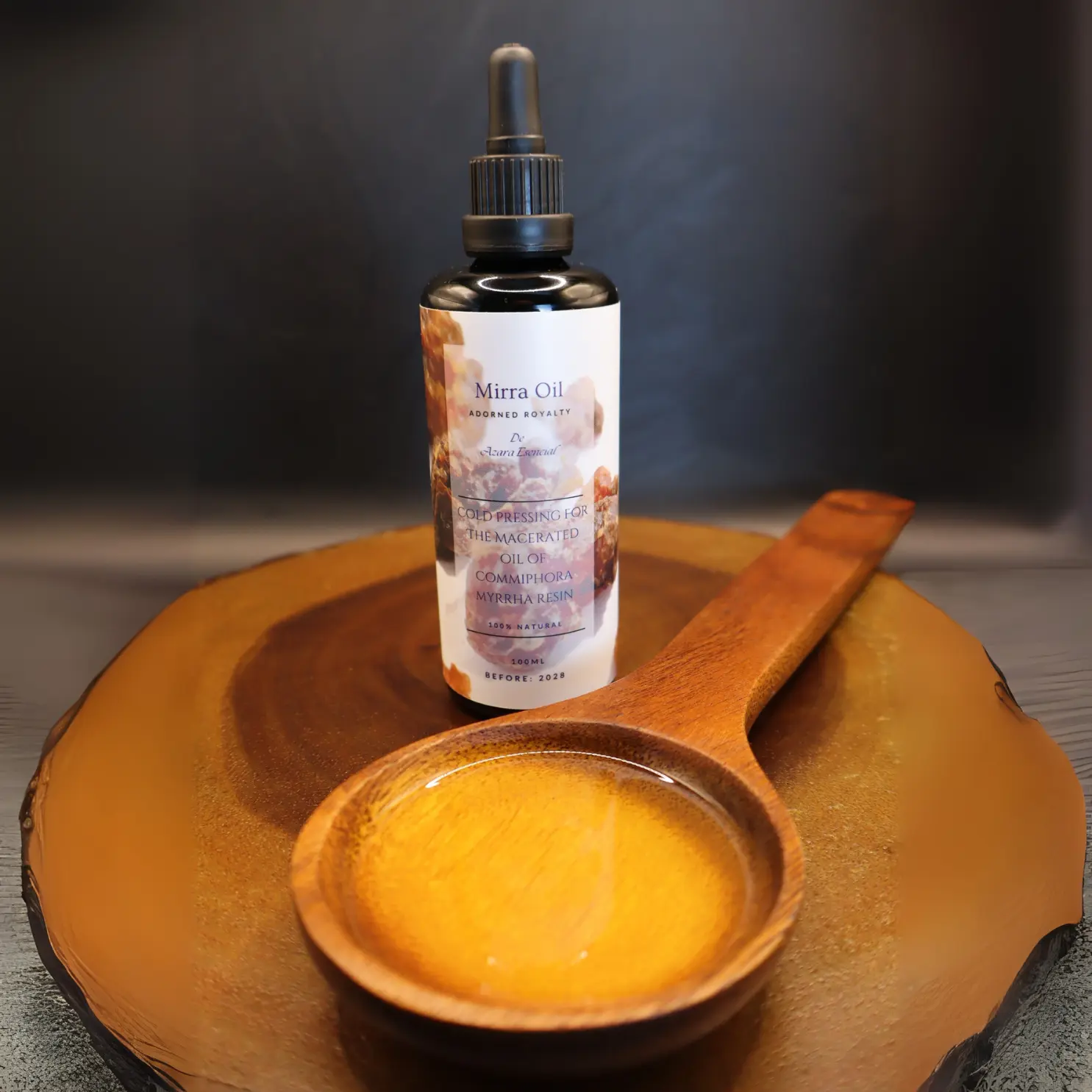
 Myrrh Resin Macerated Oil
25,00 € inc. VAT
Availability: In stock
25,00 € inc. VAT
Availability: In stock
Botanical origin
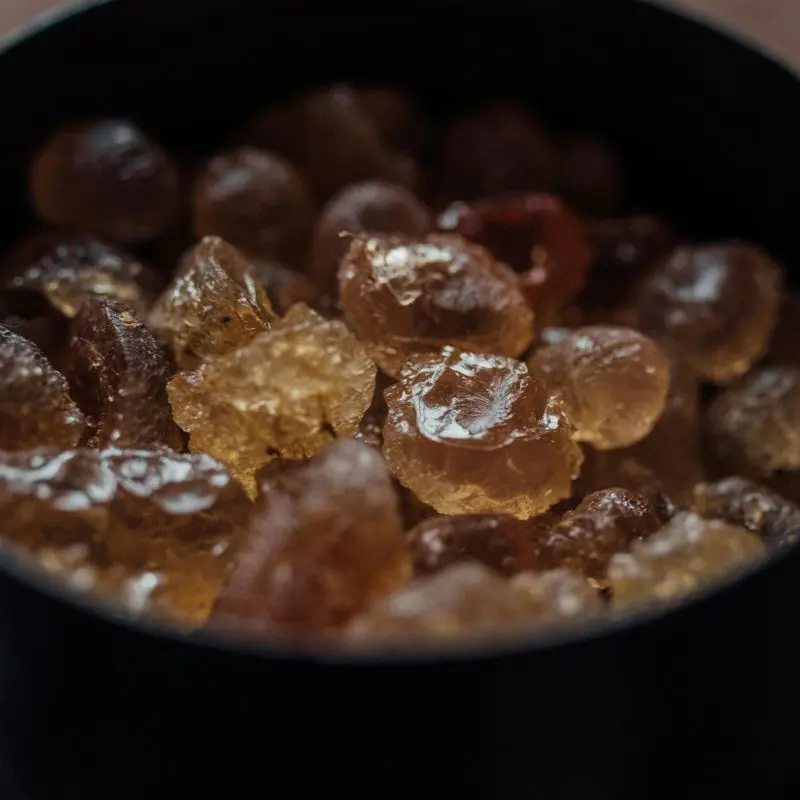
Most myrrh-based skincare products use either synthetic fragrance or diluted essential oil — capturing the aroma but missing the compounds that give myrrh its 4,000-year reputation in botanical skin care. A genuine resin maceration works at a completely different level. By submerging raw Commiphora myrrha resin in a carrier oil over an extended period, it extracts the full spectrum of high-molecular-weight sesquiterpenes — furanoeudesma-1,3-diene, curzerene and lindestrene — that are entirely absent from any distilled myrrh essential oil. These are the compounds behind myrrh's documented interaction with opioid receptors in skin tissue, making this cold-pressed macerated oil one of the most scientifically substantiated natural skin-regenerating preparations available.
Best for
Traditional Middle Eastern resin — traded for millennia across Arabia, Egypt and the Mediterranean
Science
The defining active sesquiterpenes of myrrh resin — absent in essential oil and only accessible through resin maceration in a lipid carrier. These compounds interact with mu and delta opioid receptors in skin tissue, producing a genuine calming effect on nociceptive signals. This receptor-level interaction is the documented biochemical basis of myrrh's centuries-old use in wound healing and skin regeneration.
Myrrh sesquiterpenes inhibit 5-lipoxygenase (5-LOX) — the same inflammatory enzyme targeted by frankincense boswellic acids, but through a complementary molecular pathway. Used together, myrrh and frankincense cover two distinct routes of the inflammatory cascade simultaneously — the scientific explanation behind their combined use across cultures for millennia.
The natural resin matrix of Commiphora myrrha contributes emollient and barrier-supportive properties, forming a protective layer that helps reduce transepidermal water loss in mature or compromised skin. Terpenoids in the resin provide broad-spectrum antimicrobial support, protecting skin during healing processes.
The soybean carrier oil contributes predominantly linoleic acid — an omega-6 essential fatty acid that supports the skin's hydration barrier, reduces transepidermal water loss, and provides additional anti-inflammatory activity at membrane level. Together with the myrrh sesquiterpenes, it creates a complete anti-ageing and regenerating lipid environment.
Application
Cleanse your face thoroughly and apply your usual toner or hydrosol to leave skin slightly damp. The dampness increases absorption of the lipophilic sesquiterpenes.
Warm 2–3 drops between your palms for a few seconds. Press firmly onto face and neck, then massage upward with gentle circular motions for 45–60 seconds.
Use consistently every evening. Myrrh sesquiterpenes work cumulatively — their interaction with tissue opioid receptors supports progressive improvement in skin comfort and visible appearance of marks over several weeks.
Ritual combinations
Myrrh + frankincense is the most documented botanical anti-ageing combination in history — now confirmed by modern science. They inhibit 5-LOX through two different molecular pathways, covering the inflammatory cascade from two directions simultaneously.
View oil →Rose and myrrh have been combined in skin rituals since ancient Egypt. Rose adds hydration, brightening and emotional harmony; myrrh adds regeneration and barrier fortification. Together they address both surface radiance and deep skin renewal.
View oil →Black seed oil's thymoquinone reinforces the barrier and antimicrobial action of myrrh's sesquiterpenes. Particularly beneficial for reactive or irritation-prone skin that needs both calming and protection.
View oil →From the journal
The science behind Commiphora myrrha resin maceration — why sesquiterpenes cannot be extracted by distillation, and how this 4,000-year-old botanical compound interacts with opioid receptors in skin tissue.
Read the articleQuestions
Myrrh essential oil is produced by steam distillation and contains primarily volatile aromatic compounds. The high-molecular-weight sesquiterpenes — furanoeudesma-1,3-diene and curzerene — that give myrrh its documented skin-calming and regenerating properties are resin-bound compounds that cannot survive distillation temperatures. They are only extracted through extended maceration in a lipid carrier, which is precisely what Azara's cold maceration produces.
Yes. Apply 2–3 drops as a night facial oil after cleansing and toning. For scar and mark support on the body, daily application is recommended for consistent results. The sesquiterpene compounds are cumulative in effect — consistency matters more than quantity.
Yes — myrrh's 5-LOX inhibiting sesquiterpenes make it particularly appropriate for reactive skin types. For a first week of use, mix 1–2 drops into your regular moisturiser rather than applying neat, then build up gradually once tolerance is confirmed.
The interaction of myrrh sesquiterpenes with skin opioid receptors supports the skin's natural regeneration process. Visible improvement in the appearance of marks and scars typically becomes noticeable after 4–8 weeks of consistent nightly use. Results are progressive rather than immediate.
Yes. Myrrh oil works well alongside vitamin C serums, retinol (applied in separate steps), and other plant oils. It can be applied after water-based serums and before a heavier moisturiser, or used as the final step in a facial oil routine.
Myrrh Resin Macerated OilAvailability: In stock