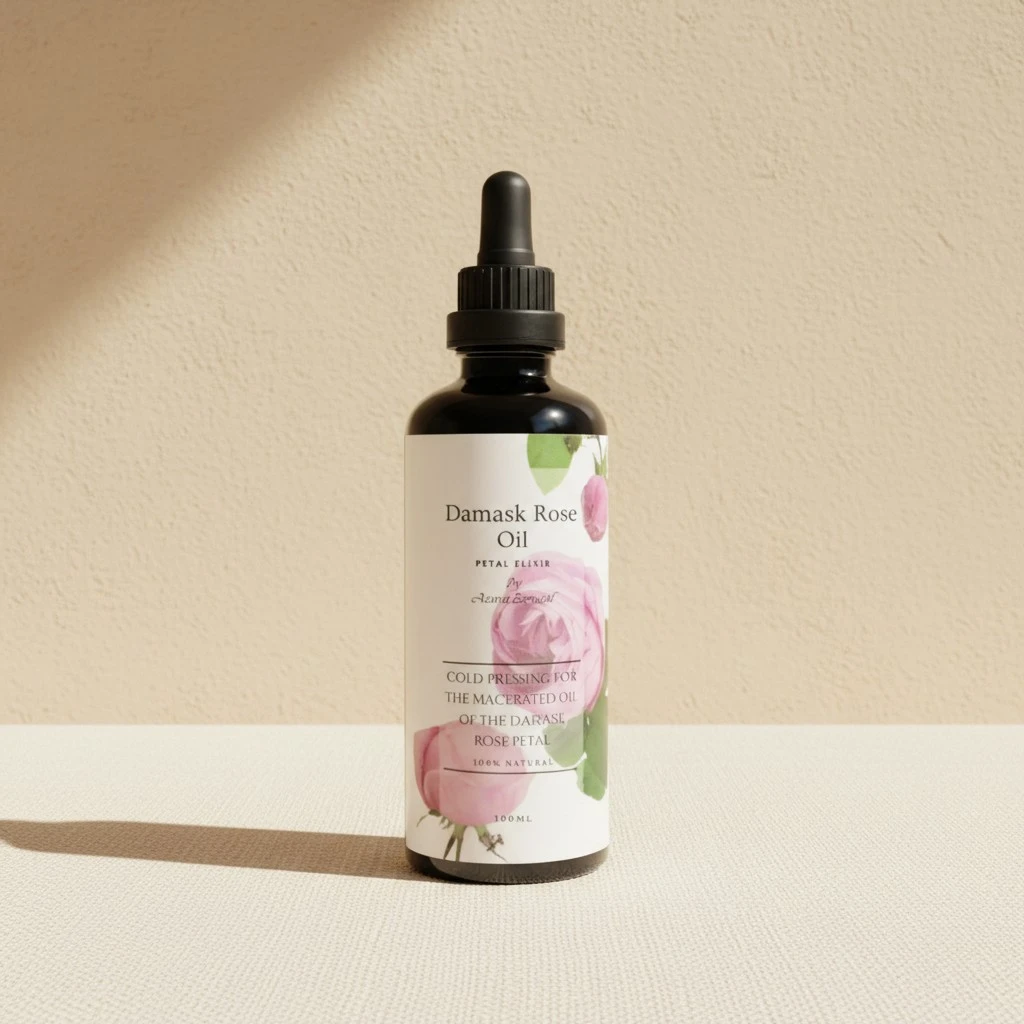
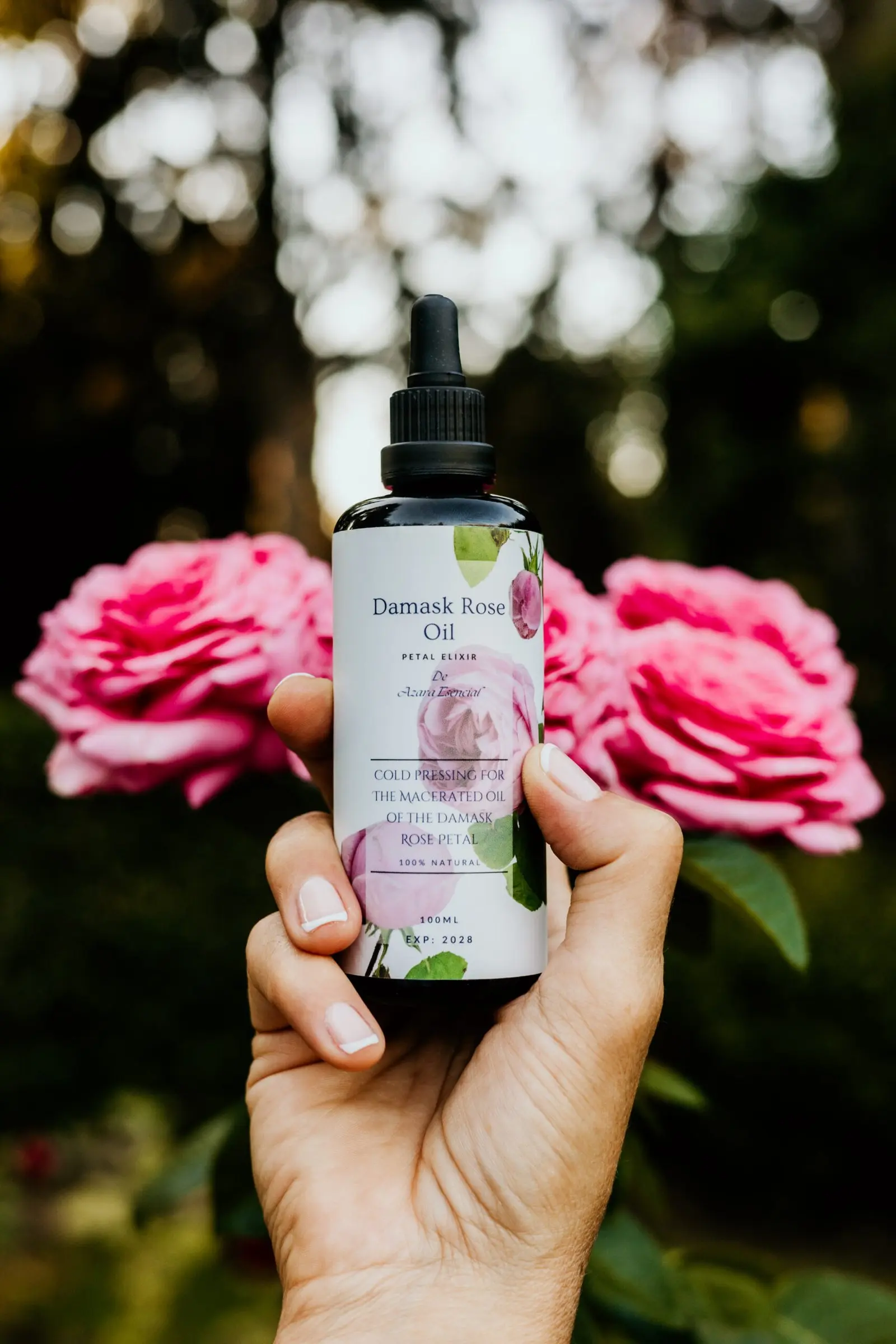
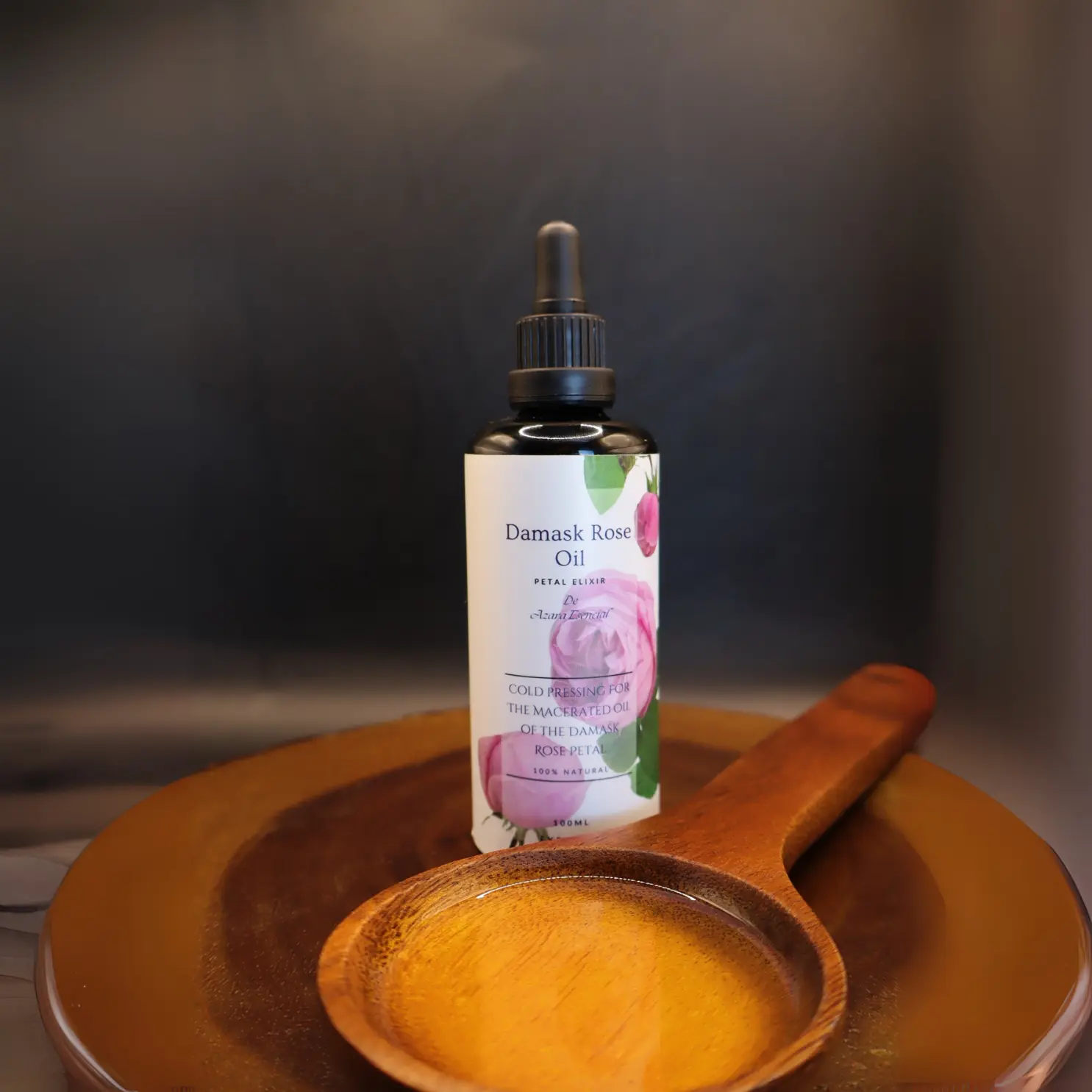
 Damask Rose Macerated Oil
30,00 € inc. VAT
Availability: In stock

30,00 € inc. VAT
Availability: In stock
Botanical origin
The Damask Rose — Rosa damascena — has its true origin in the ancient rose fields of Syria, where it has been cultivated and harvested for centuries. Azara Natural's rose oil comes from this original source: hand-harvested Syrian roses, cold-macerated to extract the full spectrum of flavonoids, polyphenols and naturally occurring plant-derived extracellular vesicles (exosomes) that are unique to the Damascus rose. Unlike rose essential oil, produced by steam distillation and primarily aromatic in character, maceration in a lipid carrier extracts the rose's complete bioactive profile — delivering genuine hydration, antioxidant protection and skin-renewal support in a single cold-pressed natural oil.
Best for
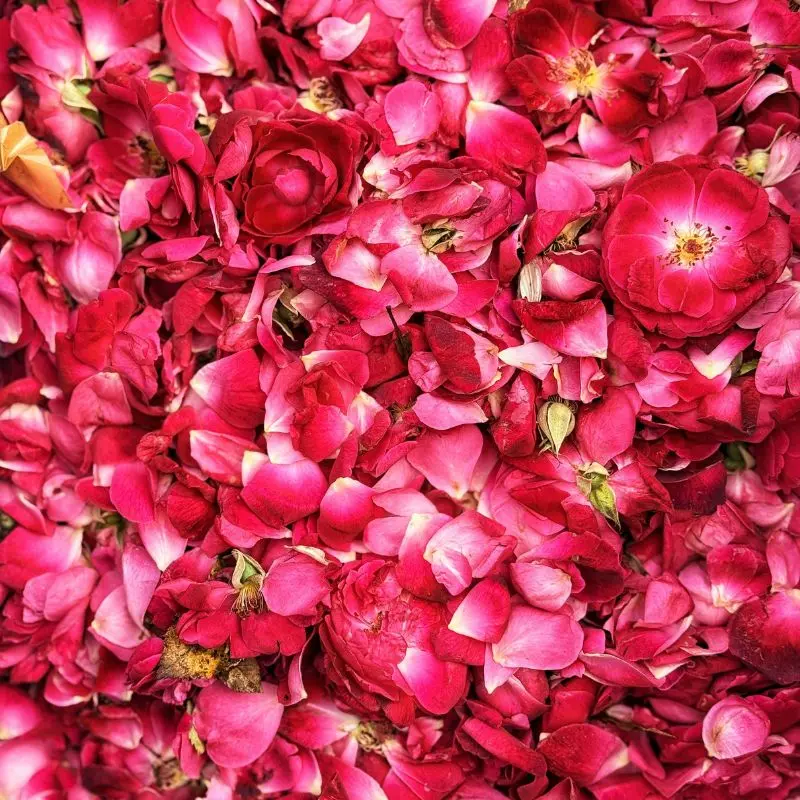
Ancient Syrian rose fields of Damascus — the original historic homeland of Rosa damascena, hand-harvested at dawn when blossoms are at their aromatic peak
Science
The primary terpene alcohols of Rosa damascena, responsible for the characteristic floral aroma. Beyond fragrance, geraniol and citronellol have documented antimicrobial and mild anti-inflammatory properties that contribute to a calmer, more balanced skin appearance with regular use.
Rosa damascena is naturally rich in flavonoids and polyphenols — potent antioxidants that defend against free radicals and oxidative stress, two of the primary drivers of visible skin ageing. These compounds also contribute to a more even-looking, luminous skin tone with consistent use.
Naturally present in the Damascus rose, these microscopic vesicles act as the plant's own communication system. In skin contact, plant exosomes are studied for their potential role in supporting cellular vitality and optimising nutrient delivery to the skin. Their presence in the macerate is a direct result of the gentle cold-pressing process.
The corn oil base contributes linoleic acid and oleic acid alongside natural phytosterols and vitamin E. This balanced fatty acid profile reinforces the skin's lipid barrier, reduces transepidermal water loss, and supports long-lasting hydration — creating a stable lipid environment for the rose's brightening and antioxidant compounds.
Application
After cleansing, apply your toner or Azara Distilled Rose Water and allow it to absorb. Leave skin slightly damp — this improves absorption of the rose oil's lipophilic compounds.
Warm 2–3 drops between your palms. Press onto the face and neck, then massage upward with gentle circular motions until absorbed.
Rose oil can be used morning and evening. In the morning, apply before SPF for a luminous base. At night, apply as the final step for deep overnight nourishment. Consistent use over several weeks reveals the full brightening and radiance benefit.
Ritual combinations
Rose and myrrh have been combined in luxury skin rituals since ancient Egypt — rose brings surface radiance, hydration and brightening while myrrh adds deep regeneration and barrier fortification. Together they address both glow and structural skin renewal.
View oil →The classic anti-ageing duo: frankincense's boswellic acids support collagen matrix integrity while Damascus rose's polyphenols deliver surface antioxidant protection and radiance. Alternate or layer both for comprehensive anti-ageing support.
View oil →Chia's concentrated omega-3 ALA reinforces the hydration and barrier benefits of rose oil — together they form an intensely nourishing dry skin duo that addresses both surface luminosity and deep lipid barrier support.
View oil →From the journal
The authentic Syrian origin story of Rosa damascena, the difference between distilled rose essential oil and cold-macerated rose oil, and the science behind plant-derived exosomes in skin care.
Read the articleQuestions
Rose essential oil is produced by steam distillation — it captures the volatile aromatic compounds but not the heavier polyphenols, flavonoids or plant exosomes. Rose water (hydrosol) is the water-soluble fraction from distillation. This macerated oil is completely different: it extracts the full lipid-soluble profile of Rosa damascena, including all the compounds not present in essential oil or hydrosol.
Yes. Rosa damascena's flavonoids and polyphenols provide potent antioxidant protection against free radical damage — one of the primary mechanisms of visible skin ageing. Used consistently as a daily facial oil, it supports a healthier-looking, more radiant complexion and helps maintain the skin's natural vitality.
Yes — Rosa damascena has a long history of use on sensitive and stressed skin. The oil's natural geraniol and citronellol have mild anti-inflammatory properties. Apply 1–2 drops mixed into your moisturiser as a first introduction, then increase to neat application once tolerance is confirmed.
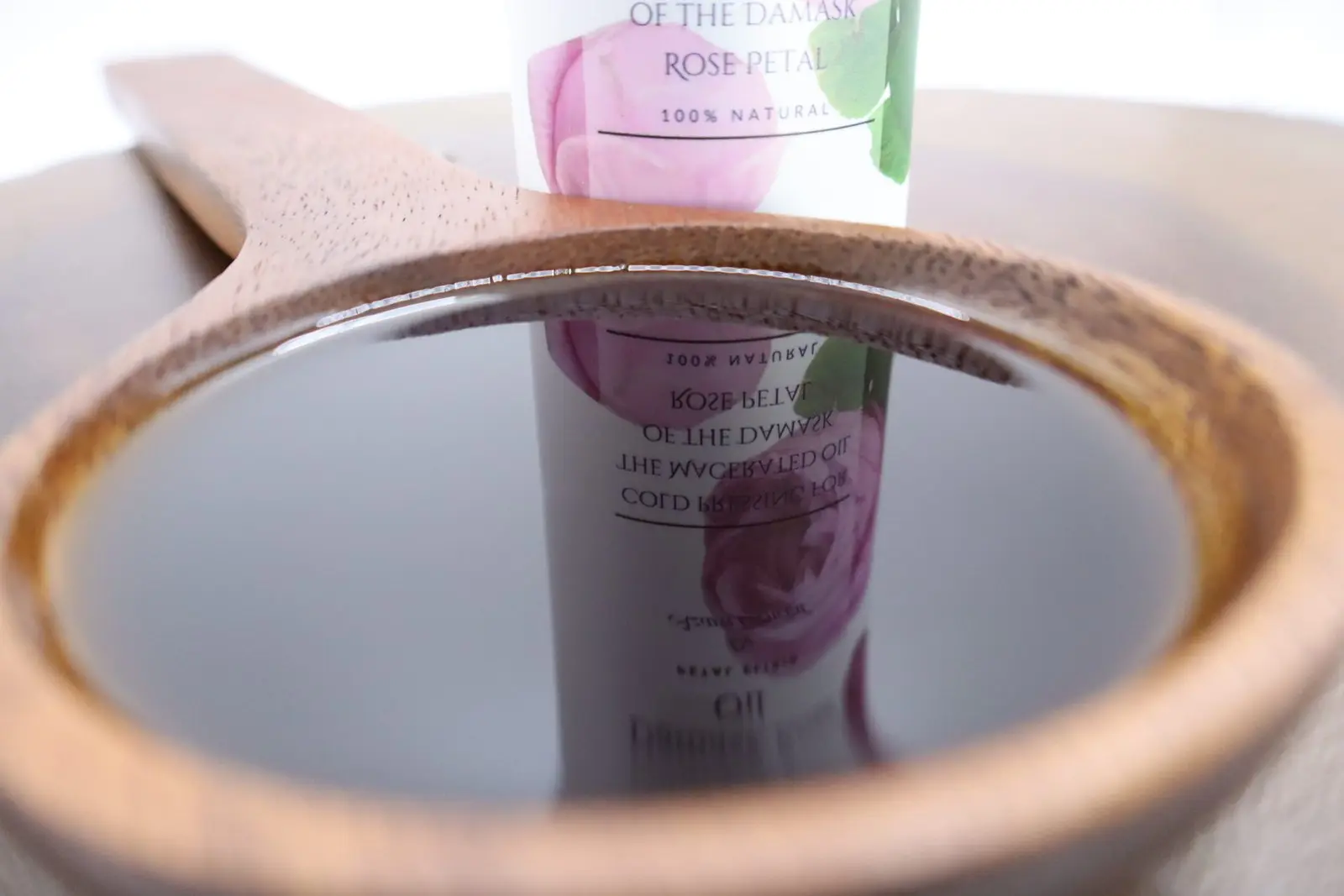
The dark green colour comes from the chlorophyll and flavonoid content extracted from Rosa damascena petals during maceration. This is a marker of a genuine botanical extract — not the pale golden colour of a cosmetically refined oil. The colour does not transfer to skin.
Yes. Apply 2–3 drops after morning cleansing and before SPF. The oil absorbs well without leaving a heavy residue and provides a luminous base for the rest of your morning routine.
Damask Rose Macerated OilAvailability: In stock