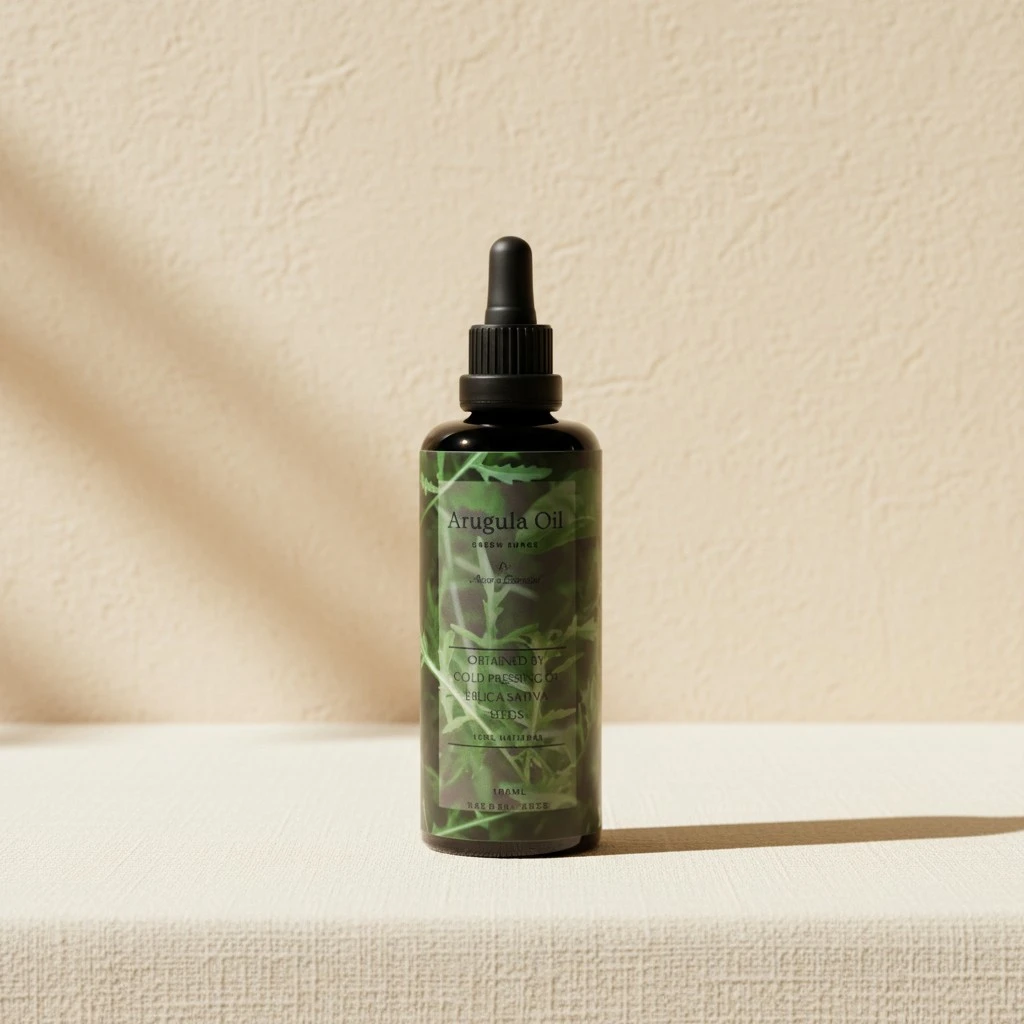
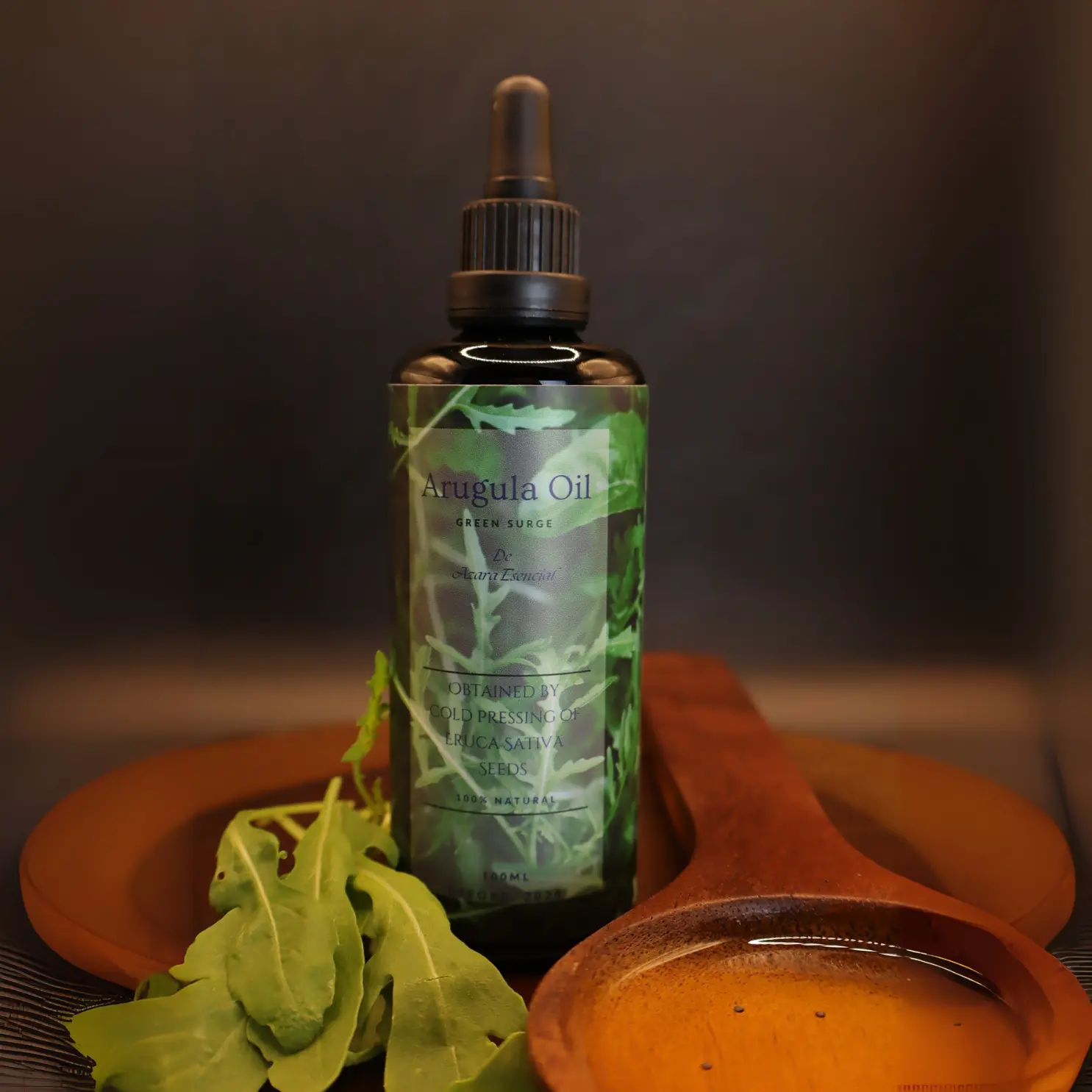
 Arugula Seed Cold Pressed Oil
16,00 € inc. VAT
Availability: In stock
16,00 € inc. VAT
Availability: In stock
Botanical origin
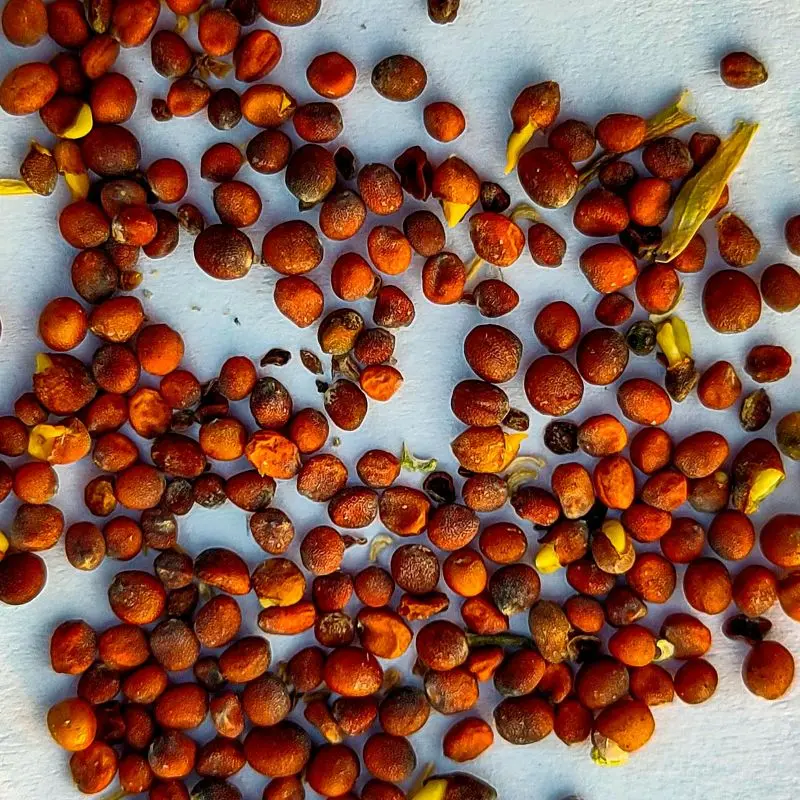
Arugula (rocket) — Eruca sativa — has been cultivated and used as a medicinal and culinary plant since ancient Rome, where it was valued for both its distinctive peppery flavour and its documented health properties. Cold-pressed from Eruca sativa seeds, this oil is particularly rich in erucic acid (an omega-9 fatty acid with moisturising and softening properties), oleic acid and glucosinolates — the sulphur-containing compounds responsible for arugula's characteristic spicy note and potent antimicrobial activity. The combination of erucic acid's conditioning texture, glucosinolate antimicrobial properties and a complete vitamin profile (A, C, E, K) makes arugula oil a versatile botanical oil for combination skin, blemish-prone routines and scalp care.
Best for
Eruca sativa seeds from the Mediterranean region — Hama, Syria — a drought-resistant crop with centuries of cultivation across Morocco, Portugal, Egypt, Turkey and Lebanon
Science
The dominant fatty acid in Eruca sativa seed oil, erucic acid provides lightweight moisturisation and skin softening without the heaviness associated with saturated fatty acid-rich oils. It contributes to the balanced, non-greasy texture that makes arugula oil suitable for combination and oily skin types.
The sulphur-containing compounds that give arugula its characteristic peppery quality. Glucosinolates have documented antimicrobial and antifungal activity against skin-relevant organisms — contributing to a cleaner, more balanced skin microenvironment. Particularly relevant for blemish-prone and scalp applications.
Oleic acid improves the skin's permeability to other active compounds and contributes to the oil's nourishing and conditioning properties. It supports the delivery of glucosinolates and vitamins into the upper skin layers where they exert their protective activity.
A comprehensive antioxidant and vitamin profile that protects skin cells against free radical damage, supports collagen integrity (vitamin C), cell renewal (vitamin A), membrane protection (vitamin E) and vascular support (vitamin K).
Application
Apply 1–2 drops on slightly damp skin after toner. Focus on dry areas if skin is combination — the erucic acid provides targeted nourishment without contributing to oiliness in already-oily zones. Use 3–6 nights per week.
Apply 1 drop targeted to blemish-prone areas at night. The glucosinolate antimicrobial and flavonoid antioxidant properties support the skin's natural defence at the surface level where blemishes originate.
Apply a small amount to the scalp, massage 2–3 minutes, leave 20–30 minutes, then shampoo. Arugula oil's glucosinolate content supports a balanced scalp environment, and its medium texture is well suited to all hair types.
Ritual combinations
Two Brassicaceae family oils with complementary profiles. Radish brings maximum lightness and slip; arugula brings slightly more nourishment and a broader glucosinolate antimicrobial spectrum. Blend for a versatile lightweight oil suitable for combination skin and hair finishing.
View oil →Arugula's glucosinolate antimicrobial support pairs with black seed's thymoquinone anti-inflammatory action — a complete botanical approach for blemish-prone skin that addresses both the microbial environment (arugula) and the inflammatory response (black seed).
View oil →Both oils are from the Brassicaceae botanical family with complementary fatty acid and glucosinolate profiles. Garden cress adds omega-3 nourishment and vitamin K; arugula adds erucic acid texture and a broader antimicrobial spectrum. Together they form a nutritionally complete brassica skin oil.
View oil →From the journal
The glucosinolate science behind arugula oil's antimicrobial properties, the significance of Syrian Mediterranean provenance for Eruca sativa quality, and why this ancient Roman botanical has a documented cosmetic history.
Read the articleQuestions
Arugula seed oil is well-suited to combination and oily skin types — its erucic acid provides non-greasy nourishment, and glucosinolates offer antimicrobial support for blemish-prone skin. It also works well as a scalp treatment and hair finishing oil. Its medium-light texture makes it versatile across face, body and hair applications.
Yes — arugula oil's erucic and oleic acid profile is lighter than oleic-dominant oils and does not add to the skin's oil load. For oily skin, use 1–2 drops targeting dry patches or blemish-prone areas at night. The glucosinolate content supports a cleaner-feeling skin surface.
A mild, slightly spicy and herbaceous aroma — characteristic of the Eruca sativa plant. It is subtle and pleasant, not overpowering. The peppery note is softened by the cold-pressing process.
Both are from the Brassicaceae family, but arugula oil has a slightly richer texture and a higher glucosinolate diversity. Radish seed oil is lighter and faster-absorbing (the "driest" of the two). Arugula offers slightly more nourishment while remaining suitable for combination and oily skin types.
Arugula Seed Cold Pressed OilAvailability: In stock