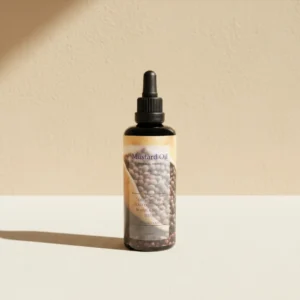
The Ancient Elixir of Warmth — Brassica nigra, Cold-Pressed for Circulation
What Is Cold-Pressed Mustard Oil?
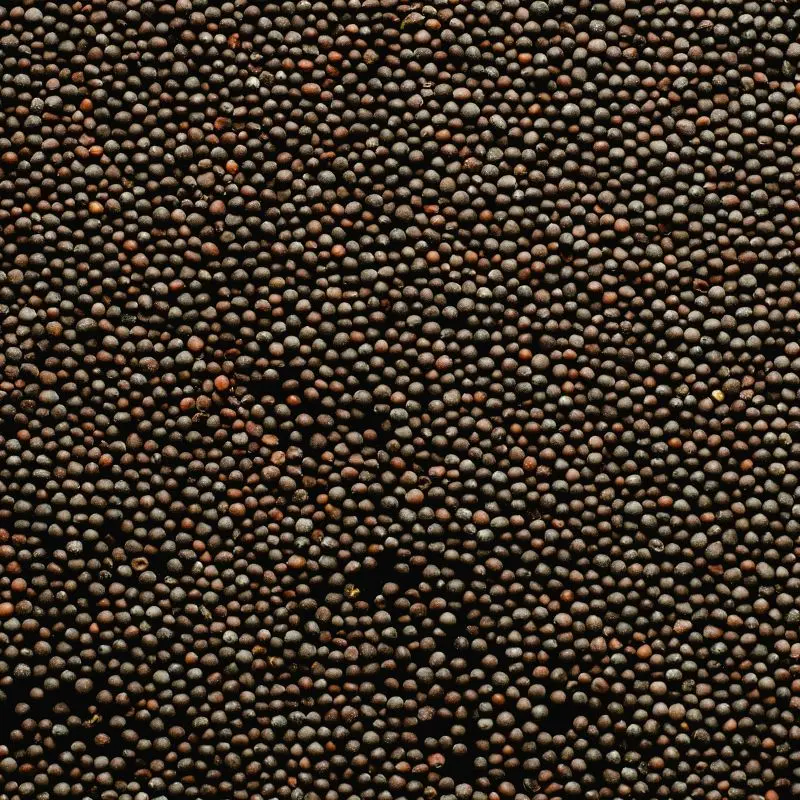
Cold-pressed mustard oil is obtained by mechanically pressing mustard seeds (Brassica nigra) without heat or solvents. This gentle process preserves the oil’s natural bioactive compounds — notably glucosinolates and their enzymatic breakdown product, allyl isothiocyanate (AITC), responsible for its pungent aroma and warming action.
Botanical name: Brassica nigra (black mustard)
Extraction method: Cold pressing, followed by natural sedimentation and filtration
Primary components: Erucic acid, oleic acid, linoleic acid, alpha-linolenic acid (ALA), AITC, vitamin E, and phenolic antioxidants
Historical Significance & Traditional Uses
Mustard oil has been used for over 3,000 years in Ayurvedic and Middle Eastern traditions, including as a warming massage oil (Abhyanga) believed to stimulate the body, and as a respiratory comfort aid applied to the chest and back in traditional balms. Its continued use across India, Pakistan, Bangladesh, and Syria reflects its enduring place in regional wellness heritage.
Key Compounds & the Research Behind Them
Allyl Isothiocyanate (AITC) is the signature compound responsible for mustard’s heat. A clinical study (Andersen et al., 2017, Pain) measured AITC’s effects on human skin and found a significant, dose-dependent increase in local blood flow via laser perfusion imaging — real evidence behind the warming sensation. The same study found this comes with measurable burning and increased skin sensitivity, which is precisely why dilution and patch testing matter — this isn’t just a precaution, it’s a documented effect of the active compound itself.
Omega-3 Alpha-Linolenic Acid (ALA) contributes to maintaining supple, hydrated skin as part of the oil’s overall fatty acid profile. Vitamin E (Tocopherol) is a natural antioxidant, protecting the oil itself and supporting the skin against oxidative stress.
Erucic Acid provides emollient texture and conditioning for skin and hair — and is the reason mustard oil is restricted for internal/culinary use in some regions, including the EU.
The Ingredients
Allyl Isothiocyanate (AITC)
The warming, circulation-active compound responsible for mustard oil's signature heat sensation.
Alpha-Linolenic Acid (ALA)
Omega-3 fatty acid supporting skin hydration and suppleness.
Vitamin E (Tocopherol)
Natural antioxidant protecting both the oil and the skin.
Erucic Acid
Provides emollient, conditioning texture; restricted for internal use in the EU.
The Ritual
Dilute first
Mix 1 part mustard oil with at least 2–3 parts of a gentler carrier oil — coconut, sesame, or sweet almond.
Patch test
Apply diluted oil to the inner arm and wait 24 hours before using elsewhere. Important given AITC's documented potency.
Warming massage application
Massage the diluted blend into shoulders, back, or scalp using firm strokes. The warming sensation is expected and reflects AITC's real, measured effect on local blood flow.
Avoid sensitive areas
Keep away from eyes, mucous membranes, and broken skin. Not recommended for infants or children.
Experience the warming tradition of Ayurvedic mustard oil, cold-pressed and ready for your massage ritual.
Shop Mustard OilFrequently Asked Questions
AITC, mustard oil’s primary active compound, activates a receptor pathway (TRPA1) that produces a genuine, measurable increase in local blood flow and a warming sensation — confirmed in clinical research, though the same mechanism causes burning if used undiluted.
At least 1 part mustard oil to 2–3 parts of a gentle carrier oil like sweet almond, coconut, or sesame. Never apply neat to skin.
Yes, when properly diluted — it’s traditionally used for warming scalp massage. Always patch test first given its potency.
Erucic acid content means mustard oil is restricted for culinary/internal use in several regions, including the EU. This product is intended for external, topical use only.