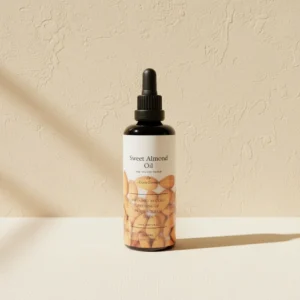
Prunus amygdalus dulcis — cold-pressed sweet almond oil with 65–70% oleic acid, vitamins E and A, and proven skin hydration, barrier support, and hypoallergenic skin compatibility
What is sweet almond oil — composition and cold-pressed quality
Sweet almond oil is pressed from the dried kernels (seeds) of the sweet almond tree, Prunus amygdalus dulcis — the same almond cultivated for culinary use. Spain is one of Europe’s major almond producers, with significant cultivation across Andalusia, Castilla-La Mancha, and the Valencian Community — making aceite de almendra dulce both a botanical heritage and a commercially significant Spanish agricultural product.
Cold-pressed almond oil composition:
– Oleic acid (omega-9): 65–75% — the dominant fatty acid, responsible for its deep conditioning, slow absorption, and compatibility with mature and dry skin
– Linoleic acid (omega-6): 20–30% — provides barrier support and is associated with healthy sebum composition
– Vitamin E (alpha-tocopherol): A notable tocopherol content — one of the higher among common carrier oils — providing antioxidant protection for both skin and the oil’s own stability
– Vitamin A (as beta-carotene and retinol precursors): Present in small but meaningful amounts in unrefined cold-pressed versions — contributes to the mild skin cell renewal support
– Phytosterols: Campesterol, stigmasterol, and beta-sitosterol — contribute anti-inflammatory properties and support skin barrier integrity
Appearance: Pale golden to yellow, light to medium viscosity, mild pleasant nutty scent in unrefined versions. Colourless and odourless versions have been refined.
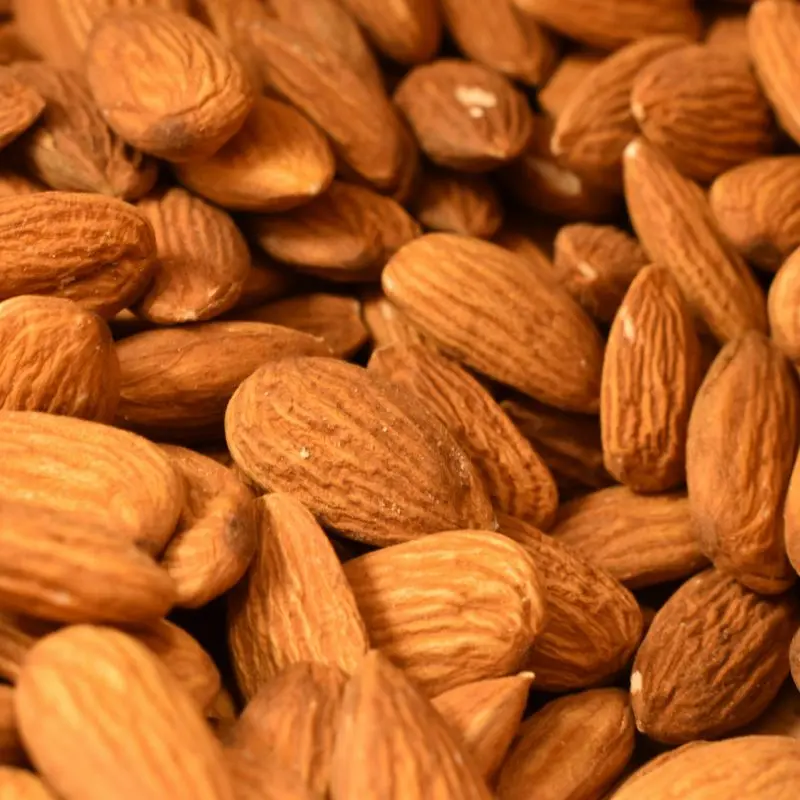
Historical and cultural use across Spain and the Mediterranean
The almond tree has been cultivated in the Mediterranean basin for over 3,000 years — among the earliest cultivated nut trees in human history. In Spain, almonds (almendras) have been central to culinary and medicinal tradition since the Moorish period (711–1492 CE), when Arabic botanical medicine integrated almond cultivation into Iberian pharmaceutical and cosmetic practice.
Traditional Andalusian and Mediterranean beauty use of aceite de almendra dulce:
Skin softening after sun exposure, hair oil treatment for dry and damaged hair, and infant skin care — a use that persists in contemporary Spanish pharmacy tradition where almond oil is consistently recommended for baby massage and sensitive infant skin.
In modern Spain, almond oil remains one of the top-selling individual botanical oils in pharmacies and parafarmacías — a product so established in the Spanish consumer mindset that it functions as the reference point for natural botanical oil quality.
Clinical evidence for skin hydration and barrier support
Sweet almond oil has a more substantial clinical literature than most natural beauty products would suggest:
Skin hydration and barrier function
A study by Sultana et al. confirmed that sweet almond oil significantly improves skin hydration and reduces transepidermal water loss (TEWL) compared to mineral oil — with both hydration and barrier improvements maintained over the study period. This provides evidence for its mechanism as a genuine barrier-supporting oil rather than a surface conditioner only.
Stretch mark prevention
A randomised controlled trial published in the Journal of Midwifery & Women’s Health evaluated sweet almond oil for stretch mark prevention during pregnancy. Results showed that massaging with sweet almond oil reduced the development of striae (stretch marks) compared to the control group — with the authors attributing the effect to both the mechanical massage component and the oil’s barrier-supportive properties.
Photo-aging protection
Research has documented vitamin E-rich oils including sweet almond oil in the context of reducing UV-related skin damage accumulation. The tocopherol content provides antioxidant protection against the free radicals generated by UV exposure — particularly relevant for Spanish and southern European skin that experiences high UV index across long summer months.
Hypoallergenic compatibility
Sweet almond oil is among the least allergenic botanical oils in dermatological testing. The nut allergy concern (almond is a tree nut) is legitimate and important: individuals with confirmed tree nut allergies should perform a patch test before use and consult a healthcare provider. For the general population without tree nut allergy, sweet almond oil has an established excellent tolerance record.
Hair benefits: conditioning, shine, and scalp nourishment
Sweet almond oil is the benchmark carrier for hair conditioning applications — its combination of oleic acid penetration, vitamin E protection, and lightweight texture makes it highly effective without the residue or weight of heavier oils like castor or avocado.
Hair shaft conditioning: Oleic acid penetrates the hair cortex to a meaningful degree, reducing protein loss during washing. The result is measurably more flexible, resilient hair that resists mechanical breakage from styling and environmental stress.
Scalp hydration: The same barrier-supporting properties that benefit facial skin apply to the scalp — reducing dryness, flaking, and tightness without adding the congestion risk that heavier oils create.
Split end treatment: Applied to dry hair ends, sweet almond oil seals the cuticle temporarily, smoothing the appearance of split ends and reducing their tendency to worsen between cuts.
Application: 3–5 drops warmed between palms and pressed through mid-lengths to ends after washing (on slightly damp hair) for daily conditioning. For a pre-wash scalp treatment, apply 10–15 drops to scalp sections, massage, and leave 30 minutes before shampooing.
As a massage carrier: Sweet almond oil’s medium viscosity and excellent glide make it the gold-standard carrier for massage applications — used at 100% or combined with heavier oils. It was the reference carrier in the original massage oil research literature and remains so.
Sweet almond oil in massage: the benchmark carrier
Sweet almond oil occupies a unique position in massage therapy — it is not simply a good massage carrier; it is the reference standard against which other massage carriers are measured in massage therapy training and literature.
Why sweet almond oil became the massage benchmark
– Viscosity: Medium — neither too thin (which causes it to absorb before the massage stroke is complete) nor too heavy (which leaves excessive residue). The viscosity is almost precisely calibrated for the sustained glide a full massage session requires
– Absorption rate: Slow enough for extended sessions (60–90 minutes) without requiring repeated application, but not so occlusive that it leaves the skin feeling coated afterward
– Skin compatibility: The highest hypoallergenic track record of any massage carrier — in professional massage settings where many different clients receive treatments, sweet almond oil’s low sensitisation risk is a practical clinical advantage
– Finish: Non-greasy, comfortable skin feel after the massage ends — important for clients who return to normal activities immediately after treatment
– Vitamin E content: Antioxidant protection for the skin being massaged and for the oil’s stability between professional use sessions
Swedish massage: Sweet almond oil is the traditional carrier for Swedish massage — the long effleurage strokes of Swedish technique require exactly the sustained, non-sticky glide that sweet almond oil provides.
Sports massage: Used alone or blended with warming oils (ginger, black pepper, mustard) for sports massage applications — the neutral base allows warming botanicals to be added at therapeutic concentrations without competing with the carrier’s own properties.
Relaxation massage: The complete Azara Natural Relaxing Massage Blend uses sweet almond oil as its primary carrier base — the oleic acid conditioning, vitamin E protection, and hypoallergenic compatibility create the ideal foundation for a relaxation massage formulation.
Massage types most suited to sweet almond oil: Swedish massage, relaxation massage, prenatal massage, facial massage, intimate massage, baby massage, sports massage (as a base).
old-pressed vs refined sweet almond oil: the vitamin A difference
Sweet almond oil is one of the most commonly refined carrier oils in commercial massage and cosmetic production — refined versions are less expensive, more shelf-stable, and have a neutral profile that suits commercial formulation. The difference between refined and cold-pressed sweet almond oil is real but less dramatic than for high-PUFA oils like linseed — because oleic acid, the dominant fatty acid at 65–75%, is relatively stable to heat.
What refining removes from sweet almond oil:
Carotenoids and vitamin A precursors — removed
Unrefined cold-pressed sweet almond oil has a characteristic warm golden colour from carotenoids (beta-carotene and other carotenoid pigments). These are among the first compounds removed in refining — bleaching eliminates the colour and the carotenoid content. Vitamin A precursor activity in skin is associated with these compounds; refined almond oil lacks this contribution.
Vitamin E (tocopherols) — partially reduced:
Sweet almond oil’s natural tocopherol content is one of its quality markers. Refining, particularly deodorisation at high temperature, reduces tocopherol content. Some refined versions have synthetic vitamin E added back (often as a preservative rather than for therapeutic benefit) — visible as “tocopherol” in the ingredient list without “natural” qualifier.
Phytosterols — partially reduced:
The cloudiness that cold-pressed sweet almond oil develops at cool temperatures is from phytosterol crystallisation — refining removes this turbidity (and some of the phytosterols responsible for it) through filtration.
Colour and aroma — removed by design:
Refined sweet almond oil is pale and nearly odourless. Cold-pressed has a characteristic warm golden colour and a mild, pleasant nutty scent — both indicators of intact minor phytochemical content.
The specific difference for massage:
For large-volume commercial massage oil use where cost, shelf life, and consistency are the priority, refined sweet almond oil is functional. For therapeutic applications where the full vitamin E and vitamin A precursor content of genuine cold-pressed almond oil is part of the intended benefit, cold-pressed is the appropriate choice.
How to identify genuine cold-pressed sweet almond oil
Colour: Pale golden to warm yellow in cold-pressed unrefined versions. Completely colourless almond oil has been refined.
Scent: A mild, pleasant, slightly nutty scent characteristic of almond. No scent = refined. Strong or artificial scent = adulterated.
Absorption speed: Genuine sweet almond oil has a medium absorption rate — faster than castor or avocado, slower than arugula or radish seed. If it absorbs immediately like water, it is too light to be pure almond oil; if it sits heavily on the skin, it may be mixed with a heavier oil.
Freezer test: Place a small amount in the refrigerator at 5°C. Cold-pressed almond oil will become slightly thicker or develop haziness from phytosterol crystallisation. Remaining completely clear and liquid suggests refining.
Allergen note: Almond oil is derived from tree nuts. If you have a confirmed nut allergy, perform a patch test and/or consult your healthcare provider before topical use. The proteins most associated with nut allergy (Pru av 1 and related) are present at low concentration in almond oil compared to the nut itself, but individual sensitivity varies.
Azara Natural's Sweet Almond Oil is cold-pressed from Prunus amygdalus dulcis kernels — unrefined, with intact vitamin E and phytosterol content. The primary carrier in the Relaxing Massage Blend and Intimate Massage Blend, and available individually for DIY skincare and hair care formulations.
Get Azara Natural Sweet Almond OilFrequently Asked Questions
Sweet almond oil is a gentle, effective facial oil particularly suited to dry, normal, sensitive, and mature skin. Its oleic acid content (65–75%) provides deep conditioning that works with the lipid composition of mature skin; its vitamin E content delivers antioxidant protection; and its excellent hypoallergenic track record makes it appropriate for reactive skin types. For oily or acne-prone skin, it is better used as part of a blend with higher-linoleic oils (black seed, chia, rosehip) rather than as a standalone facial oil, as its oleic dominance is better matched to dry and mature skin biology. It is an excellent eye area and lip conditioner for all skin types.
Sweet almond oil has been used in infant skin care across Spanish and Mediterranean tradition for generations — recommended in Spanish pharmacy practice for baby massage, cradle cap management, and infant skin moisturisation. Its hypoallergenic profile, gentle oleic acid content, and excellent dermatological safety record support this use. The only precaution: infants with a family history of tree nut allergy should not have almond oil applied before allergy risk is assessed. For all other infants, sweet almond oil warmed slightly and used for massage is one of the most gentle, effective, and traditional baby skin care preparations available.
“Almond oil” without qualification typically refers to sweet almond oil (Prunus amygdalus dulcis) — the culinary almond. There is also bitter almond oil (Prunus amygdalus amara) which contains amygdalin, a compound that can release hydrocyanic acid (hydrogen cyanide) and is generally not used in cosmetics. Sweet almond oil is the safe, widely-used cosmetic variety. When purchasing, confirm the label reads “sweet almond” or lists Prunus amygdalus dulcis as the INCI ingredient.
Sweet almond oil’s vitamin E content and its gentle conditioning properties make it a popular choice for under-eye application, and some evidence suggests vitamin E-rich oils can reduce the appearance of under-eye discolouration over time. The mechanism is indirect — improved skin condition, better hydration, and antioxidant protection of the very thin under-eye skin rather than direct pigment reduction. For true dark circles driven by hyperpigmentation (rather than darkness from blood vessel visibility through thin skin), almond oil’s effect is supportive rather than targeted. It is however an excellent gentle conditioning oil for the under-eye area that is safe for daily use.