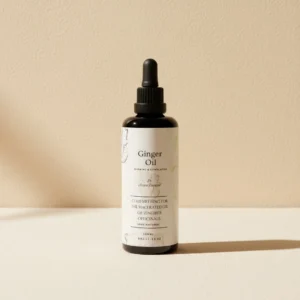
Zingiber officinale — cold maceration in Soyabean oil base, delivering gingerols and shogaols for documented anti-inflammatory COX/LOX inhibition, warming scalp circulation, and topical muscle recovery support
What is Azara Natural's ginger oil — macerate vs essential oil
Zingiber officinale Roscoe is a rhizomatous herbaceous perennial of the Zingiberaceae family — the same family as turmeric and cardamom — native to maritime Southeast Asia, cultivated across tropical Asia, the Caribbean, and parts of Africa. The ginger rhizome (root) is the source of both the culinary spice and the botanical oil.
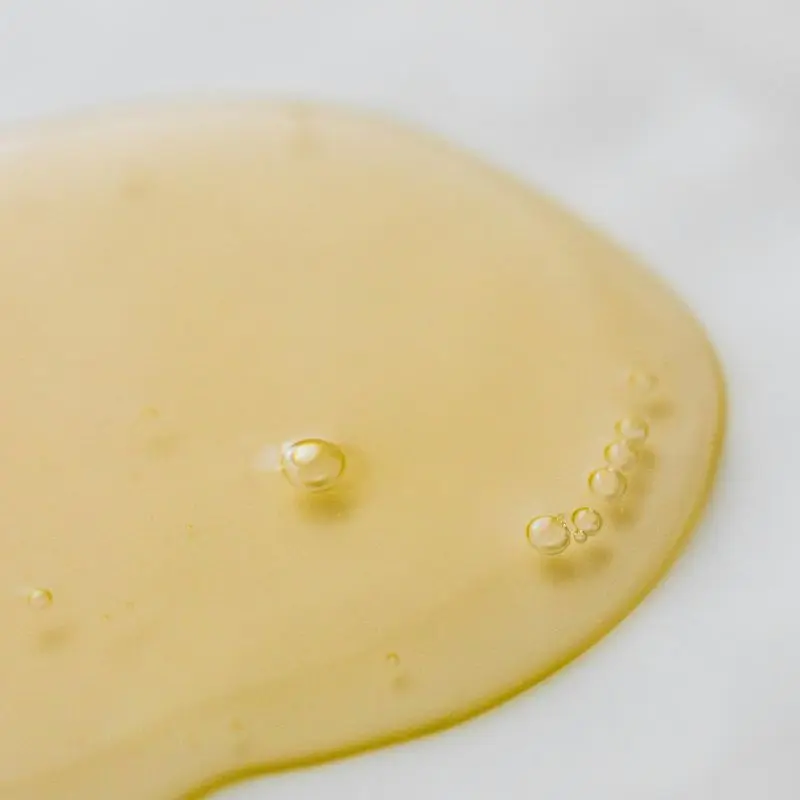
Azara Natural’s ginger oil is produced by cold maceration — ginger rhizome material cold-infused in a Soyabean carrier oil over an extended period. This is a fundamentally different product from steam-distilled ginger essential oil.
Cold maceration preserves:
– 6-Gingerol, 8-gingerol, 10-gingerol: phenolic compounds responsible for fresh ginger’s pungency and the primary documented anti-inflammatory actives — NON-VOLATILE, largely absent from steam-distilled essential oil
– 6-Shogaol, 8-shogaol: dehydrated gingerol derivatives with equal or greater anti-inflammatory potency — also non-volatile
– Paradol: minor related compounds with antioxidant activity
– High quality soya oil base. Soya oil was chosen for its complementary composition alongside ginger’s gingerol and shogaol actives:
Soya oil carrier composition:
– Linoleic acid (omega-6): ~52% — skin barrier support and sebum balance
– Oleic acid (omega-9): ~23% — conditioning base
– Alpha-linolenic acid (ALA, omega-3): ~8% — adds meaningful anti-inflammatory contribution that works synergistically alongside gingerols’ COX/LOX inhibition
– Vitamin E (tocopherols): rich content
– Phytosterols: high — anti-inflammatory and barrier-supportive
– Lecithin (phospholipids): present — supports skin permeability and compound delivery
The soya oil’s ALA omega-3 content (~8%) is particularly relevant for a ginger anti-inflammatory macerate — two complementary anti-inflammatory mechanisms (gingerols’ COX/LOX inhibition + ALA’s omega-3 pathway) are active simultaneously in the same product.
Steam distillation extracts:
– Volatile sesquiterpenes: ar-curcumene (20–30%), zingiberene (15–25%), beta-sesquiphellandrene, bisabolene, farnesene
– Volatile monoterpenes: camphene, geranial
– The aromatic fraction — characteristic ginger scent — with different (terpene-based) anti-inflammatory activity
For topical therapeutic applications where the COX/LOX anti-inflammatory mechanisms of gingerols and shogaols are the goal, the cold macerate delivers what the essential oil cannot. The essential oil serves aromatherapy and aromatic applications through its terpene profile.
Historical use: from ancient Asia to Levantine medicine and Spanish tradition
Ginger has been cultivated and used medicinally for over 5,000 years — documented in the Charaka Samhita (Ayurvedic medical text, circa 600 BCE), the Pen Ts’ao Ching (earliest Chinese pharmacopoeia, circa 25–220 CE), and the writings of Dioscorides who described it arriving in Greece via trade from Arabia.
In Islamic medicine, ginger (zanjabil in Arabic) is documented in the Quran (Sura 76, Al-Insan) as a drink of paradise — and in Ibn Sina’s Al-Qanun fi al-Tibb as a warming digestive, circulatory, and anti-inflammatory botanical. From the Levantine trade routes, it entered European herbalism through Spain during the Moorish period and became one of the most traded spices in medieval Europe.
In Spain today, jengibre is one of the most popular botanical wellness ingredients — universally available in herbolarios, farmacias, and mainstream food retail. Spanish consumers are familiar with ginger primarily through its culinary and digestive wellness context — the topical cosmetic applications represent a less widely known dimension of a very familiar botanical.
The anti-inflammatory evidence: what COX/LOX inhibition means in practice
Gingerols and shogaols inhibit COX-1 and COX-2 (cyclooxygenase) enzymes — the same enzymatic pathway targeted by pharmaceutical NSAIDs including ibuprofen and aspirin — and the LOX (lipoxygenase) pathway involved in leukotriene synthesis. This dual COX/LOX inhibition is documented across multiple peer-reviewed studies:
A comprehensive 2020 review in Phytotherapy Research summarized evidence across multiple RCTs for ginger’s COX/LOX anti-inflammatory mechanisms and pain-reducing effects, including for muscle soreness.
A 2021 PMC study confirmed that 6-shogaol applied topically reduced COX-2 protein expression in skin cells — confirming the anti-inflammatory mechanism is active via the dermal route, not only through oral consumption.
The practical topical implications:
– Post-exercise muscle soreness: the COX/LOX mechanism reduces the prostaglandin-driven inflammatory cascade in exercised tissue
– Inflamed joint and arthritic areas: the same anti-inflammatory pathway is relevant for localized inflammatory joint conditions
– Skin inflammation: reduced COX-2 expression in skin cells means direct anti-inflammatory activity at the skin’s surface
The topical delivery advantage: applied directly to the affected area, the ginger macerate delivers gingerols and shogaols at significantly higher local concentrations than oral supplementation achieves topically — making the macerate more directly relevant for skin and joint applications than a dietary supplement.
Skin benefits: warming, anti-inflammatory, and antioxidant
Circulatory warming and skin vitality:
Ginger macerate’s warming effect on skin comes from multiple mechanisms — TRPV1 activation by certain gingerol compounds at appropriate concentrations, improved local microcirculation from vasodilatory activity, and the gentle warming of the sunflower carrier oil during massage. For skin that appears dull, sluggish, or cold — common in winter months across Spain’s varied continental climate and in northern European markets — improved peripheral circulation directly improves skin radiance.
Anti-inflammatory skin support:
The same COX/LOX inhibition active in muscle tissue applies to skin inflammation. Ginger macerate is relevant for reactive, inflamed, and stressed skin conditions where the underlying inflammatory cascade is active. Applied in small amounts to inflamed skin areas alongside other anti-inflammatory botanicals, its mechanism complements rather than duplicates other actives.
Antioxidant protection:
Gingerols and shogaols are potent antioxidants — neutralising free radicals from UV and pollution that drive collagen degradation. For cumulative photoprotection alongside daily SPF application in Spain’s high-UV climate, consistent antioxidant application from botanical oil use contributes a meaningful protective layer.
Scalp anti-inflammatory benefits:
The anti-inflammatory mechanism directly addresses scalp inflammation — the driver of reactive scalp conditions, seborrheic dermatitis, and the low-grade follicle inflammation that contributes to hair loss. Applied to the scalp, ginger macerate calms inflammatory reactivity without the more intense warming of mustard or camphor.
Hair benefits — what ginger does exactly
Anti-inflammatory scalp environment:
The COX/LOX inhibition active in muscle tissue is equally relevant on the scalp. Chronic scalp inflammation contributes to follicle miniaturization and progressive hair thinning. By reducing the inflammatory load at the follicle level, ginger macerate creates a more favorable scalp environment for existing follicle health — not by directly stimulating growth, but by reducing the inflammation that impairs it.
Scalp microcirculation:
The warming vasodilatory effect of ginger macerate improves local blood flow to the scalp surface and, with firm scalp massage, to the follicle base — improving the nutrient and oxygen delivery that healthy follicle function requires.
Scalp antimicrobial support:
Gingerols have documented antimicrobial activity relevant to scalp microbiome balance — contributing to the management of dandruff and seborrheic dermatitis alongside the anti-inflammatory mechanism.
Application: Apply 5–8 drops to scalp sections and massage for 5 minutes before washing. Focus on the scalp itself, not the lengths. The benefit is in scalp environment support, not in the hair strand.
Ginger oil in massage: the warming therapeutic workhorse
Ginger macerate is arguably the most therapeutically well-supported warming oil in massage applications — where the gingerol COX/LOX anti-inflammatory mechanism combines with the mechanical benefits of massage for a documented compound effect.
Muscle recovery and DOMS massage:
The primary therapeutic massage application. At 15–25% in a sweet almond or sesame carrier blend, ginger macerate adds COX/LOX anti-inflammatory activity to the mechanical benefits of sports massage. Four RCTs support ginger’s effectiveness specifically for delayed onset muscle soreness. Applied during the 24–48 hour DOMS window with firm massage strokes, the combination of mechanical lymphatic drainage and gingerol anti-inflammatory activity supports faster tissue recovery than massage alone.
Joint and arthritis-targeted massage:
NF-κB inhibition by gingerols reduces the pro-inflammatory cytokine production driving joint inflammation — directly relevant for arthritic joints where local anti-inflammatory compound delivery complements the circulation benefit of massage. In the Azara Natural Joint Care Blend, ginger is included specifically for this mechanism.
Full-body warming and circulation massage:
In relaxation massage contexts where warming sensation and improved circulation are the goals (rather than targeted anti-inflammatory therapy), ginger macerate’s warming terpene fraction and gingerol vasodilatory activity together provide a deeply satisfying warming experience appropriate for cold-weather, circulatory, or Ayurvedic-inspired massage.
Massage types most suited to ginger macerate: Sports recovery massage (primary therapeutic application), joint and anti-inflammatory massage, warming circulation massage, cold limb massage, deep tissue back massage.
Macerate vs essential oil vs dried ginger: what each is, best applications, and price
Cold-macerated ginger oil (Azara Natural) — macerated in high quality soya oil base. The soya carrier’s ALA omega-3 content adds a complementary anti-inflammatory contribution alongside the gingerols and shogaols’ COX/LOX mechanism.
Best for: muscle recovery massage, joint anti-inflammatory massage, scalp anti-inflammatory treatment, warming body massage, and any application where the gingerol/shogaol anti-inflammatory mechanism is the therapeutic goal. Also the appropriate form for leave-on skin applications without the dilution requirements of essential oil.
Price: €18–35 for 50–100ml of quality ginger macerated oil.
Steam-distilled ginger essential oil — the aromatic anti-nausea form
Volatile sesquiterpene and monoterpene fraction — ar-curcumene, zingiberene, bisabolene, camphene. Contains minimal gingerols and shogaols. Different anti-inflammatory activity (terpene-based rather than COX/LOX).
Best for: aromatherapy diffusion, nausea and motion sickness support through inhalation (the best-documented application for ginger essential oil — strongly supported by multiple RCTs), warming aromatic massage blends at appropriate dilution (1–3% in carrier), and acute circulatory aromatic applications. For targeted anti-inflammatory therapeutic use, the macerate delivers the more relevant compound profile.
Price: €10–25 for 10ml of genuine steam-distilled Zingiber officinale essential oil.
Dietary ginger / ginger supplements — oral route
Oral consumption delivers gingerols and shogaols systemically — through digestion and blood circulation. Absorbed orally, they have systemic anti-inflammatory effects relevant to digestive support and systemic inflammation. Not the appropriate comparison for topical massage oil — the delivery routes and applications are complementary and separate.
Note: Ginger supplements vary enormously in standardized gingerol content — quality matters as much as for topical products, and gingerol content is not always disclosed on supplement labels.
Azara Natural's Ginger Macerated Oil is cold-infused from Zingiber officinale rhizome in a soya oil base — preserving gingerols and shogaols, the non-volatile anti-inflammatory compounds absent from steam-distilled essential oil. Formulated into the Joint Care Blend and Muscle Care Blend. Available individually for warming therapeutic massage and scalp anti-inflammatory care.
Get Azara Natural Ginger Macerated OilFrequently Asked Questions
The honest answer: the best available molecular evidence does not support this claim — and the most rigorous study (PLOS ONE, PMC: 3578824) found that 6-gingerol suppresses dermal papilla cell proliferation and hair shaft elongation in cultured human follicles and mice, leading the authors to describe it as a potential hair growth suppressive drug. This directly contradicts the common natural haircare claim that ginger promotes hair growth. What ginger macerate does genuinely support for the scalp: anti-inflammatory environment (COX/LOX inhibition reducing follicle inflammation), scalp microcirculation improvement through warming and massage, and antimicrobial scalp support for dandruff management. These are real and valuable benefits — and worth describing accurately.
Ginger cold macerate: infusion of ginger rhizome material in a carrier oil, preserving gingerols, shogaols, and the non-volatile anti-inflammatory compounds documented in the DOMS and anti-inflammatory research. The form appropriate for leave-on skin and therapeutic massage applications. Ginger essential oil: steam-distilled volatile sesquiterpene and monoterpene fraction (ar-curcumene, zingiberene, bisabolene) — contains minimal gingerols. Well-documented for nausea and motion sickness support through inhalation; different anti-inflammatory profile from the macerate. Both are genuine ginger botanical products; they deliver different compound families through different mechanisms.
Ginger macerate’s gingerol and shogaol content inhibits COX-1, COX-2, and LOX enzymes — the same pathways targeted by pharmaceutical NSAIDs — through a documented botanical mechanism. Applied topically to an affected joint and massaged in firmly, it delivers these anti-inflammatory compounds directly to the local tissue at concentrations meaningful for localized inflammation. It is not a pharmaceutical replacement for clinical pain management, but as a targeted topical botanical anti-inflammatory, the mechanism is real and the evidence base (including the DOMS RCTs) is among the strongest available for any botanical oil. It is included in the Azara Natural Joint Care Blend for this specific mechanism.