Eruca sativa — cold-pressed arugula (rocket/taramira) seed oil with 40–45% erucic acid for silicone-like hair shine, lightweight skin conditioning, and a 3,000-year tradition across the Levant and South Asia
What is arugula seed oil — erucic acid and the taramira tradition
Eruca sativa Mill. is an annual flowering plant of the Brassicaceae family — the same family as mustard, radish, and rapeseed. Cultivated across the Mediterranean basin, the Middle East, and South Asia. In Mediterranean cuisine, its leaves are familiar as rocket (rúcula in Spanish). In South Asian and Middle Eastern tradition, the seeds have been cold-pressed for oil production for thousands of years under the names taramira (Hindi/Urdu), jamba (Arabic), and tara mira.
Composition of cold-pressed arugula seed oil:
– Erucic acid (C22:1, omega-9): 40–45%
– Oleic acid (C18:1): 15–25%
– Linoleic acid (C18:2): 15–20%
– Eicosenoic acid (C20:1): 5–10%
– Glucosinolates: trace amounts contributing characteristic mild pungency
– Vitamin E (tocopherols): moderate content providing oxidative stability
The erucic acid:
Erucic acid’s safety has occasionally been questioned based on historical concerns about dietary high-erucic rapeseed oil in rat studies at very high intake doses — which led to development of low-erucic canola oil for food.
However, for TOPICAL cosmetic application, erucic acid does not present the same concern: it does not accumulate in cardiac tissue through skin application, and the EU Cosmetics Regulation explicitly permits erucic acid in cosmetic products. Topical arugula seed oil is safe, EU-compliant, and used in commercial cosmetics with established safety records. The dietary concern about high-erucic rapeseed oil does not apply to topical cosmetic use of arugula seed oil.
Traditional use: from Levantine taramira to Mediterranean rocket
Taramira oil has been cold-pressed from Eruca sativa seeds across the Levant, Arabian Peninsula, and South Asia for over 3,000 years — one of the oldest continuously produced botanical oils in the world. In traditional Unani (Islamic) medicine — the Galenic-Arabic tradition that shaped Levantine, Persian, and South Asian pharmaceutical practice — taramira oil was documented for scalp treatment, hair strengthening, and skin conditioning.
In Pakistan, Afghanistan, and northern India, taramira remains a traditional hair oil applied in scalp massage for hair strengthening. In the wider Levantine region relevant to Azara Natural’s sourcing, jamba oil appears in traditional herbalist preparations alongside castor and black seed for hair loss treatments.
In contemporary Spain, rocket (rúcula) is universally familiar as a culinary leaf — but the cold-pressed seed oil remains less widely known outside specialist natural cosmetic circles, making it a genuine differentiator for Azara Natural’s range. The oil is gaining recognition in European natural cosmetics formulation specifically for its unique textural and absorption properties.
Skin benefits: silicone-like texture without silicone
Lightweight absorption and rapid penetration:
Erucic acid’s long carbon chain produces a distinctive texture — significantly lighter than its chain length might suggest, absorbing rapidly without the greasy residue of heavier oils (castor, avocado, coconut). This makes arugula seed oil the most appropriate carrier for oily and combination skin in the Azara Natural range — delivering fatty acid conditioning without congestion risk.
Skin conditioning and barrier support:
The oleic and linoleic acid components (combined ~35–45%) provide standard barrier lipid support alongside the erucic acid’s unique texture contribution.
Mild antimicrobial from glucosinolates:
The trace glucosinolate content contributes mild antimicrobial activity for skin microbiome balance without the pronounced effects of more concentrated antimicrobial oils.
Texture enhancement in formulations:
In DIY formulations, arugula seed oil is used specifically for its texture contribution — creating a silky, smooth application feel. At 30–50% in a facial oil blend, it transforms overall texture without dominating the active compound profile.
Hair benefits: shine, slip, and scalp treatment
Hair shaft shine and smoothness:
Erucic acid’s molecular structure produces exceptional optical properties on the hair shaft — light reflection from a smoother cuticle produces visible shine comparable to silicone serum applications. For hair lacking luminosity due to cuticle damage or processing, arugula seed oil applied to damp hair (2–4 drops mid-lengths to ends) produces immediate visible results.
Anti-frizz without weight:
The silicone-like slip seals the hair cuticle and reduces moisture exchange with the environment that causes frizz — without the heaviness or build-up of heavier oils or silicone-containing products. Effective in Mediterranean and Atlantic coastal humid environments.
Scalp treatment for oily scalps:
Lightweight absorption profile makes arugula appropriate for oily scalps where heavier oils create congestion. Applied as a pre-wash scalp treatment (5–8 drops, 20 minutes, then shampoo), it conditions without adding to existing scalp oiliness.
Beard conditioning:
Arugula seed oil’s shine and smoothing properties make it effective for beard conditioning — delivering smoothness and optical sheen with a single cold-pressed botanical.
Arugula seed oil in massage
Arugula seed oil’s primary value in massage is textural — its silicone-like slip makes it one of the most comfortable single carrier oils for massage strokes across large body areas, while its rapid absorption means post-massage skin feels clean rather than coated.
Full-body relaxation massage carrier:
At 100% or blended with sweet almond, arugula provides sustained smooth glide for full massage sessions without residue. Skin feels conditioned but not oily after the session.
Sports massage carrier:
In blends incorporating warming botanicals (black pepper, ginger, rosemary), arugula at 30–50% provides the texture and glide that makes intense sports massage strokes comfortable — warming oils provide the therapeutic mechanism, arugula provides comfortable delivery.
Facial massage:
Most appropriate carrier for facial massage on oily and combination skin — non-comedogenic, rapid absorption, silky texture suitable for gua sha and lymphatic drainage where friction must be minimized.
Massage types: Full-body relaxation, facial massage (oily/combination skin), sports massage (as carrier component), beard massage.
Cold-pressed vs refined vs rapeseed confusion: what each is, best applications, and price
Cold-pressed arugula (Eruca sativa) seed oil (Azara Natural)
Pure cold-pressed extraction from rocket seeds — preserving erucic acid, minor fatty acids, glucosinolates, and vitamin E. Mild characteristic peppery-earthy scent. Pale golden colour.
Best for: daily lightweight skin conditioning, hair shine serum (damp or dry lengths), oily scalp pre-wash treatment, full-body massage carrier, and facial oil for oily/combination skin. The silicone-like texture is its primary quality advantage — best leveraged wherever texture and absorption quality matter.
Price: €18–35 for 50–100ml. Still relatively niche in European consumer markets — genuinely quality cold-pressed arugula oil is less commoditised than sweet almond or sesame, keeping quality and price broadly aligned.
Refined arugula seed oil
Colour and scent removed, erucic acid largely preserved (it is relatively stable), glucosinolates and minor phytochemicals reduced.
Best for: industrial formulations where textural erucic acid benefit is the goal and phytochemical content is irrelevant. Not appropriate for natural cosmetic applications where the full botanical profile matters. The mild peppery scent of genuine cold-pressed (absent in refined) is the simplest consumer-detectable quality indicator.
Rapeseed/canola oil — NOT the same product:
Rapeseed (Brassica napus) and arugula (Eruca sativa) are related Brassicaceae species — but standard rapeseed/canola oil is specifically LOW-erucic acid, bred to remove the erucic acid that gives arugula its textural properties. “Eruca sativa seed oil” in the INCI listing is the correct identifier for arugula oil. “Brassica napus seed oil” (rapeseed/canola) is a completely different oil. Do not conflate the two based on their botanical family relationship.
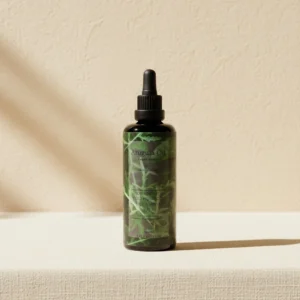
Azara Natural's Arugula Seed Oil is cold-pressed from Eruca sativa seeds — preserving the unique erucic acid texture profile and glucosinolate botanical actives in UV-protecting dark glass.
Get Azara Natural Arugula Seed OilFrequently Asked Questions
Colour: Pale yellow to golden. Colourless = refined.
Scent: Mild, slightly peppery-earthy — from the glucosinolate fraction. Odourless = refined.
Texture: Light, silky, absorbs quickly — distinctly lighter than sesame, sweet almond, or castor. Unusually fast absorption is the primary tactile quality confirmation of genuine erucic acid content.
INCI name: Eruca sativa seed oil — confirm this is what appears on the label.
Arugula seed oil (aceite de rúcula) is best for hair shine and anti-frizz treatment, lightweight skin conditioning for oily and combination skin, full-body massage carrier, and as a texture-enhancing component in DIY or formulated blends. Its 40–45% erucic acid content gives it a distinctive silicone-like texture that absorbs rapidly, leaves a smooth sheen, and does not congest oily skin. It is not the richest in bioactive therapeutic compounds, but its textural properties make it unique among cold-pressed botanicals.
Yes — for topical cosmetic use. The historical concern about erucic acid related specifically to high dietary intake of high-erucic rapeseed oil in rats, which led to low-erucic canola development for food use. For topical skin application, erucic acid does not present the same mechanism of concern and the EU Cosmetics Regulation explicitly permits it in cosmetic products. Arugula seed oil is an EU-compliant cosmetic ingredient with established safety records in commercial formulations.
All three provide hair conditioning and shine through different mechanisms. Argan oil is high in oleic acid and vitamin E — deep conditioning, rich, penetrating. Jojoba is technically a liquid wax closely mirroring sebum, with excellent scalp compatibility. Arugula’s erucic acid structure produces the most distinctive silicone-like slip and surface sheen — lightest texture, most immediate optical shine. For fine hair where argan or jojoba feel heavy, arugula is the appropriate alternative. For deep conditioning of thick or coarse hair, argan or a richer oil is more effective. The three serve different positions within a hair care routine.