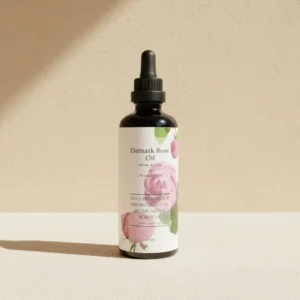
Rosa damascena — cold maceration in high quality corn oil base, Syrian origin, delivering polyphenols, flavonoids, and rose aromatic compounds for skin toning, antioxidant protection, and emotional harmony
What is Azara Natural's Damask Rose Oil? — macerate vs essential oil
Rosa damascena Mill. is a perennial rose shrub cultivated for over 3,000 years in the Middle East, the Balkans, and Central Asia. It produces highly fragrant, double-petalled deep pink flowers harvested in a narrow 3–4 week window each spring — at dawn, when the aromatic content of the blossoms is at its peak.
There are three different ways to obtain “rose oil” and each produces a fundamentally different product:
Steam-distilled rose essential oil (Rose Otto): High-temperature steam volatilises and carries over the aromatic terpene fraction — primarily citronellol (35–40%), geraniol (15–22%), nerol, linalool, nonadecane, and phenylethyl alcohol. The result is a highly concentrated, highly aromatic essential oil. Approximately 4–5 tonnes of fresh rose petals are required to produce 1kg of rose essential oil. Turkey and Bulgaria together account for approximately 90% of global rose essential oil production.
Rose absolute: Produced by solvent extraction — different aromatic profile and not appropriate for leave-on skin applications due to solvent residue risk.
Cold maceration (Azara Natural’s method): Rose petals are cold-infused in a premium carrier oil (Corn base) over an extended period. This process extracts:
– Fat-soluble rose phenolic compounds and flavonoids
– Aromatic compounds that transfer to the lipid phase
– Linoleic acid (omega-6): ~57% — skin barrier support and sebum balance
– Oleic acid (omega-9): ~27% — conditioning for mature and dry skin
– Vitamin E (tocopherols): very high — antioxidant protection for skin and oil stability
– Phytosterols: significant — anti-inflammatory and barrier-supportive
The result is NOT rose essential oil. It is a gentler, more skin-appropriate botanical infusion that delivers rose-derived compounds alongside skin-beneficial fatty acids from the sunflower carrier — in a form suitable for leave-on daily application without the dilution requirements of concentrated essential oil.
Why Syrian origin matters for Damask Rose:
Rosa damascena gets its very name from Damascus, Syria — it is named for and originated in the Levantine region. Syrian cultivation maintains continuity with the rose’s original agricultural heritage. The Azara Natural provenance is not merely marketing — Syria is the documented historical birthplace of this cultivar.
Historical and cultural significance: from ancient Syria to modern skincare
The cultivation of Rosa damascena in Damascus and the wider Syrian region dates to at least the 10th century CE, with some historians placing its origins even earlier in the pre-Islamic period of the Levant. The name “Damask” for both the rose and the woven silk textile for which Damascus was equally famous signals the city’s historical significance as a production center for luxury goods.
In Islamic traditional medicine, rose water and rose oil featured prominently in pharmaceutical preparations documented by Ibn Sina (Avicenna, 980–1037 CE) in Al-Qanun fi al-Tibb (The Canon of Medicine) — the most influential medical text of the medieval world. Ibn Sina documented rose preparations for skin toning, fragrance, and calming properties that align closely with modern clinical findings on Rosa damascena.
In Spain, the Moorish period (711–1492 CE) introduced rose cultivation and rose water preparation into Iberian medical and culinary practice. Rose water (agua de rosas) remains a staple ingredient in traditional Andalusian and Moroccan cuisine and a recognized ingredient in Spanish pharmacy tradition.
The rose’s transition from historical luxury ingredient to scientifically studied botanical has produced a remarkable evidence base — particularly for its psychological and nervous system calming properties, and increasingly for its skin benefits from plant-derived bioactive compounds.
The science of rose oil: compounds, mechanisms, and the emerging exosome research
Primary active compounds in cold-macerated rose oil:
The compounds that transfer from rose petals into the corn carrier oil during cold maceration include:
Phenolic compounds and flavonoids: Quercetin, kaempferol, and catechin derivatives — antioxidant compounds that neutralise free radicals at the skin surface. These are particularly relevant for antioxidant protection against UV-driven oxidative stress, common in Spain’s high-UV climate.
Citronellol, geraniol, nerol, linalool: Aromatic terpene alcohols that transfer partially into the oil phase during maceration. These engage the olfactory-limbic pathway — providing the psychological calming effects documented in the clinical literature.
Rosmarinic acid and related phenolic acids: Anti-inflammatory compounds that reduce surface skin reactivity.
Linoleic acid from Corn oil carrier (57%): The corn oil base itself contributes high linoleic acid — the omega-6 fatty acid associated with healthy sebum composition and barrier integrity, particularly relevant for oily and combination skin types.
The relaxation and emotional evidence:
A 2017 review of 13 clinical trials (772 participants) found consistent evidence for Rosa damascena’s physiological relaxation effects — reduced sympathetic nervous system activity and cortisol-related endpoints. A 2025 meta-analysis of 28 randomized controlled trials confirmed mood and sleep benefits.
Skin benefits: toning, antioxidant, and emotional skincare
Astringent and toning:
Rose compounds — particularly the phenolic fraction — have a mild, natural astringent effect that tones and firms the appearance of the skin surface. This is one of the most historically documented properties of Rosa damascena preparations, and it explains the persistent use of rose water as a facial toner across Mediterranean and Middle Eastern traditions.
Antioxidant protection:
The combined antioxidant activity of rose flavonoids (quercetin, kaempferol) and the carrier sunflower oil’s vitamin E content provides meaningful oxidative protection at the skin’s surface. For skin exposed to Spain’s high UV index over long summer months, consistent antioxidant application in a daily oil contributes to cumulative photoprotection alongside sunscreen.
Calming reactive and sensitive skin:
Rosmarinic acid and the anti-inflammatory phenolic compounds reduce surface skin reactivity — making rose macerate suitable for sensitive, rosacea-adjacent, and reactive skin types. The mild, warm aromatic character is calming rather than stimulating.
Emotional and psycho dermatological dimension:
The olfactory engagement of rose’s aromatic profile — citronellol, geraniol, linalool — activates the olfactory-limbic pathway during application, reducing sympathetic nervous system activity and cortisol-related skin stress responses. Given the psychodermatological evidence linking stress to impaired barrier function and accelerated aging, this is not merely a pleasant side effect of rose oil use — it is a direct contribution to skin health.
Hair and scalp benefits
Scalp sensitivity and inflammation:
Rose oil’s anti-inflammatory phenolic compounds and linalool content calm scalp reactivity — making the macerate suitable for sensitive, reactive, or irritation-prone scalps where more stimulating oils (rosemary, mustard) would be too intense.
Scalp microbiome compatibility:
Rose oil’s antimicrobial phenolics contribute mild antimicrobial activity at the scalp surface without the broad-spectrum disruption of synthetic antifungals — compatible with maintaining scalp microbiome balance.
Aromatic benefit during scalp massage:
The rose aromatic profile engages the parasympathetic response during scalp massage — combining the documented limbic calming of rose aromatherapy with the mechanical circulation benefit of the massage itself.
Rose oil in massage: calming, facial, and intimate applications
Rosa damascena is one of the most valued aromatic botanicals in massage therapy — specifically for its ability to engage the olfactory-limbic system during physical massage, amplifying the nervous system calming effects of touch with documented aromatic psychological benefits.
Relaxation and full-body massage:
At 10–20% in a sweet almond or sesame carrier base, rose macerate contributes its full aromatic and phenolic profile to a relaxation massage formulation. The combination of massage-induced oxytocin release (documented across clinical studies) and rose’s limbic calming provides a compound relaxation effect. The aromatic quality of rose is also highly valued in professional spa environments for the emotional response it reliably produces in clients.
Facial massage:
Rose macerate is among the most appropriate single-oil choices for facial massage — particularly lymphatic drainage, gua sha, and buccal massage on mature, reactive, or sensitive facial skin. Its toning astringency, antioxidant phenolics, and linoleic acid carrier work together to support facial skin during and after mechanical manipulation.
Intimate and emotional connection massage:
Rose’s documented limbic calming and the cultural association of the rose with emotional warmth and intimacy across thousands of years of human history make it a natural component in intimate massage formulations. The 28-RCT meta-analysis confirming mood and emotional wellbeing benefits provides scientific grounding for what traditional use has always indicated.
Massage types most suited to rose macerate: Relaxation massage, facial massage, lymphatic drainage, aromatherapy massage, intimate massage, prenatal massage (consult healthcare provider), scalp massage for sensitive scalps.
Cold macerate vs essential oil vs adulterated: what each is, what each is best for, and what to pay
Steam-distilled Rose Otto essential oil
The volatile aromatic fraction of Rosa damascena — primarily citronellol (35–40%), geraniol (15–22%), nerol, linalool, nonadecane, and phenylethyl alcohol. Approximately 4–5 tonnes of fresh petals per kilogram of oil, making it one of the most expensive botanical oils in existence. Turkey and Bulgaria account for approximately 90% of global production.
Best for: aromatherapy, diffusion, perfumery, bath preparations, and applications where aromatic potency and limbic engagement are the primary goal. The concentrated aromatic profile engages the olfactory-limbic system more intensely than any macerate can.
For direct skin application, the aromatic compounds have mild astringent and antioxidant properties, but meaningful direct skin chemistry requires concentrations that approach EU fragrance allergen thresholds for leave-on products (linalool, geraniol, and citronellol are all regulated allergens). Most anti-aging or collagen-related skin claims on rose essential oil products are reaching beyond what the aromatic fraction specifically supports — the GABA-mediated and limbic calming it produces does benefit skin through the psycho dermatological pathway, but that is different from direct structural skin action.
Price signal: genuine Rose Otto costs €400–800+ per 5ml. A “pure rose essential oil” at €10–20 for 10ml is almost certainly synthetic fragrance or severely adulterated. The price is not marketing — it reflects real production economics.
Cold maceration (Azara Natural)
Rose petals cold-infused in a cron oil carrier base. Extracts fat-soluble rose phenolic compounds, flavonoids, aromatic compounds, and the carrier’s linoleic-rich fatty acids — in a form suitable for daily leave-on application without the dilution requirements of concentrated essential oil.
Best for: daily facial and body skincare, relaxation and intimate massage, scalp treatment for sensitive scalps, and any application where consistent repeated use is the goal. The aromatic benefit is present and still engages the limbic pathway, but at concentrations appropriate for daily skin exposure. This is the skin-first form — where the antioxidant phenolics, flavonoid toning, and linoleic barrier support from the carrier work directly on the tissue being treated.
Carrier: high quality corn oil base — chosen for its exceptional vitamin E content that protects delicate rose phytochemicals and extends the macerate’s active compound potency throughout its shelf life.
Price: €20–50 per 50–100ml for quality cold macerate using genuine Rosa damascena petals. Significantly more accessible than Rose Otto while delivering genuine botanical compounds in their most skin-appropriate form.
Rose absolute
Solvent-extracted — a different aromatic profile from Otto, richer and closer to the living flower. Primarily used in high-end perfumery. Not appropriate for leave-on skin applications due to solvent residue risk. Best for: perfume blending only.
Adulterated “rose oil”
Synthetic rose fragrance (geraniol, citronellol, and other molecules synthesised without any Rosa damascena plant material) in a neutral carrier. Smells similar to the real thing — which is the primary consumer quality signal that makes adulteration so widespread. Contains none of the phenolics, flavonoids, or genuine botanical compounds. Delivers the aromatic experience but not the botanical skin chemistry.
Best for: nothing specific — it is a substitute for the real product, not a different application with its own genuine use case. Price: €5–15 for 30–100ml. If it is this affordable, it is not genuine Rosa damascena.
Azara Natural's Damask Rose Oil is cold-macerated from Syrian Rosa damascena petals in a sunflower carrier — delivering fat-soluble rose polyphenols, flavonoids, and aromatic compounds alongside linoleic-rich conditioning. Syrian origin. No synthetic additives.
Get Azara Natural Damask Rose OilFrequently Asked Questions
Rosa damascena cold macerate is particularly suited to mature, sensitive, reactive, and combination skin on the face. Its mild astringent toning properties improve the appearance of the skin surface; its phenolic and flavonoid antioxidants protect against oxidative stress; its anti-inflammatory compounds calm reactivity; and its linoleic-rich carrier (corn base) suits combination and mildly oily skin with its sebum-balancing fatty acid profile. For mature and dry skin, it is best used alongside a richer oil (sesame, avocado). For combination and reactive skin it can be used as a primary facial oil. Its rose aromatic profile additionally engages the stress-skin pathway during application — reducing the cortisol-driven skin reactivity that manifests as inflammation and sensitivity.
Syrian, Bulgarian, and Turkish Rosa damascena are cultivars from the same species. Syria is the documented historical birthplace of Rosa damascena — the plant is literally named for Damascus — while Turkey and Bulgaria have become the dominant commercial producers (contributing approximately 90% of global rose essential oil production). The chemical composition of rose essential oil varies somewhat by geographic origin, soil, and climate, as documented in published research showing different citronellol/geraniol ratios across growing regions. For a cold macerate, the geographical origin affects the phenolic and aromatic compound profile of the infused petals. Azara Natural’s Syrian-origin rose macerate provides provenance continuity with the rose’s original cultivation heritage.
Rosa damascena stem cell-derived exosomes (RSCEs) are extracellular vesicles isolated from rose stem cell cultures — nano-sized particles containing proteins, lipids, and miRNA that are studied for wound healing, scar management, and hyperpigmentation treatment. A 2025 publication in Pharmaceutics confirmed RSCE therapy benefits in clinical wound and scar management. These RSCEs in research settings are isolated and purified using specialized laboratory techniques (tangential flow filtration) from stem cell culture — not extracted directly from macerated oil. The cold macerated rose oil delivers the fat-soluble botanical compounds of the rose — phenolics, flavonoids, aromatic terpenes — which represent the same underlying biological complexity that the exosome science is increasingly characterizing and documenting.
The evidence base for Rosa damascena’s psychological benefits is substantial. A 2017 review of 13 clinical trials (772 participants) found consistent evidence for reduced sympathetic nervous system activity and cortisol endpoints. A 2025 meta-analysis of 28 randomized controlled trials confirmed mood and sleep benefits. The mechanism is direct: rose aromatic compounds engage the olfactory-limbic pathway — the brain’s fastest route to emotional processing — producing measurable physiological calming that goes beyond subjective perception. For the skin, the psychodermatological relevance is direct: chronic stress impairs the skin barrier and accelerates aging through cortisol-mediated mechanisms; reducing the stress response through rose aromatherapy during skincare application contributes to the skin health outcomes you’re using the oil to achieve.