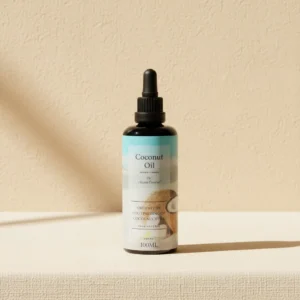
Cocos nucifera — cold-pressed virgin coconut oil with 47% lauric acid, documented hair cortex penetration, antimicrobial activity, and broad skin, hair, and massage applications — with an honest assessment of where it excels and where it doesn't
What is cold-pressed virgin coconut oil — types and composition?
Cocos nucifera is a monocot palm tree cultivated across tropical coastal regions worldwide. The coconut fruit’s white flesh (copra) contains approximately 60–65% oil by dry weight.
Types — the distinctions matter:
Virgin cold-pressed coconut oil: Extracted from fresh coconut meat without heat or chemical processing — preserving the full aromatic profile, polyphenols (ferulic acid, caffeic acid), and fatty acid composition. Characteristic coconut aroma. Semi-solid below approximately 24°C; melts on contact with skin. This is the Azara Natural product.
Refined, Bleached, Deodorised (RBD) coconut oil: Dried copra extracted with heat and/or solvents, then refined to remove colour and scent. Neutral, odourless. Less phytochemical content. Lower cost. Most commercial coconut oil in Spanish supermarkets.
Fractionated coconut oil (MCT oil): Liquid at all temperatures — long-chain fatty acids removed, leaving primarily caprylic (C8) and capric (C10) acids. Does NOT contain lauric acid in meaningful amounts. A completely different product.
Cold-pressed virgin composition:
– Lauric acid (C12): ~47%
– Myristic acid (C14): ~18%
– Palmitic acid (C16): ~9%
– Caprylic acid (C8): ~8%
– Capric acid (C10): ~7%
– Oleic acid (C18:1): ~6%
– Linoleic acid (C18:2): ~2%
– Polyphenols (ferulic acid, caffeic acid): in virgin versions only
Hair benefits: the cortex penetration evidence
Coconut oil’s most significant scientifically documented property for hair is cortex penetration — established in a landmark study published in the Journal of Cosmetic Science
The study compared mineral oil, sunflower oil, and coconut oil for protein loss prevention during hair washing.
Results: coconut oil significantly reduced protein loss from both undamaged and damaged hair. Mineral oil and sunflower oil showed no significant protein loss reduction.
Mechanism: lauric acid’s small, linear molecular structure (12 carbon chain) allows it to penetrate the hair cortex — reaching the internal protein structure rather than just coating the surface cuticle.
Practical application:
Pre-wash coconut oil treatment significantly reduces protein loss — the single most effective natural intervention for preventing wash-related hair damage. Hair that repeatedly loses protein becomes progressively more porous and prone to breakage. Application: apply to dry hair 30 minutes to 8 hours before washing; include lengths and ends; wash out with gentle shampoo.
Scalp and dandruff:
Lauric acid has documented antimicrobial activity against Malassezia species and S. aureus — contributing antimicrobial scalp support in pre-wash treatment alongside its hair conditioning benefit.
Skin benefits: deep conditioning, lip care, and the comedogenicity reality
Deep body conditioning:
Coconut oil’s lauric acid film provides excellent body skin conditioning — particularly effective on thick, dry areas: heels, elbows, shins, and knees. Post-shower application on warm, slightly damp skin maximises absorption. One of the most cost-effective body moisturisers for dry skin.
Lip conditioning:
Lauric acid film provides excellent moisture protection on the lip surface. Food-compatible and safe in the small amounts incidentally ingested during lip product use. A component of Azara Natural’s lip care formulations for this reason.
Wound healing:
Lauric acid’s antimicrobial properties make coconut oil relevant for minor wound care — reducing pathogen exposure while maintaining moisture. Traditional tropical applications for wound care reflect a mechanism now pharmacologically confirmed.
The comedogenicity:
Coconut oil has a moderate-to-high comedogenic rating, primarily attributed to its myristic acid content (18%). For oily, acne-prone, and congested skin types applied to the face as leave-on moisturiser, it frequently causes breakouts. This is well-documented in dermatological experience. It is NOT appropriate as a standalone facial moisturiser for these skin types. For dry and mature facial skin it is better tolerated. On the body where follicle density and sebum production are lower, the comedogenic concern is significantly reduced.
Coconut oil in massage: warm glide and Ayurvedic tradition
Coconut oil has been used in massage across tropical Asia for millennia — traditional Indian Ayurvedic massage (abhyanga) in Kerala and southern Indian traditions uses coconut oil as the primary carrier.
Full-body massage carrier:
Coconut oil’s melt-on-contact behaviour creates a distinctive warm application experience — pleasant and temperature-relevant for relaxation massage. Once melted, it provides sustained glide with a conditioning finish. For clients with very oily skin or acne-prone skin on the back and chest, the comedogenic consideration is relevant — a lower-comedogenic carrier (sweet almond, arugula) may be preferable.
Hot stone massage:
Coconut oil’s heat stability and high saturated fat content make it particularly appropriate for hot stone massage — it withstands warm stone temperatures without degrading as readily as high-PUFA oils.
Abhyanga (Indian traditional oil massage):
In authentic Ayurvedic abhyanga practice, coconut oil is the traditional primary carrier — particularly in southern Indian tradition. Warm oil applied in long, rhythmic full-body strokes. The sustained application over 60–90 minutes combines deep conditioning with circulation and lymphatic benefits.
Massage types most suited: Full-body relaxation massage, abhyanga and traditional oil massage, hot stone massage, body massage on dry skin, lip massage, foot massage.
Virgin vs refined vs fractionated: what each is, best applications, and price
Virgin cold-pressed coconut oil (Azara Natural)
From fresh coconut meat without heat — preserving characteristic coconut aroma, polyphenols, and full fatty acid profile. Semi-solid at room temperature.
Best for: hair cortex penetration (most evidence-supported single use), lip conditioning, body conditioning on dry and normal skin, massage carrier, cooking at moderate temperatures. The polyphenol content is present in virgin but not refined. The coconut scent may be desirable or undesirable depending on application context.
Price: €10–35 for 100–500ml. Well-established in the Spanish market — available in health food shops, farmacias, and online.
Refined (RBD) coconut oil
Neutral, odourless. Loses polyphenols in refining.
Best for: cooking at high temperatures, applications where coconut scent is undesirable, industrial cosmetic formulations. For therapeutic skin and hair applications, virgin is the appropriate choice.
Price: €5–12 for 500ml — commonly available in Spanish supermarkets (Mercadona, Carrefour).
Fractionated coconut oil (MCT oil) — a completely different product
Liquid at all temperatures. Contains primarily C8 and C10 fatty acids. Does NOT contain lauric acid in meaningful amounts — therefore does NOT provide hair cortex penetration benefit.
Many consumers purchase fractionated coconut oil thinking it delivers coconut oil’s hair benefits. It does not — those benefits are lauric acid-specific.
Best for: liquid carrier applications requiring year-round liquid texture, skincare formulations, MCT supplementation. Not appropriate when lauric acid hair or antimicrobial benefits are the goal.
Price: €15–45 for 200–500ml — higher cost than whole coconut oil due to additional processing.
Azara Natural's Cold-Pressed Coconut Oil is extracted from fresh Cocos nucifera meat — virgin, unrefined, with characteristic coconut aroma and full lauric acid content. Formulated into the Intimate Massage Blend, Body Care Blend, and Muscle Care Blend. Available individually for hair protein protection, body conditioning, and massage.
Get Azara Natural Coconut OilFrequently Asked Questions
Oil pulling (swishing oil in the mouth for oral health) is a traditional Ayurvedic practice. Some limited research suggests it may reduce bacterial counts and improve gingival health, though it does not replace standard dental hygiene. Virgin coconut oil is the traditionally appropriate form if you choose to practice this. This is separate from Azara Natural’s cosmetic oil range — noted here because it is one of the most frequently asked-about traditional coconut oil applications.
No — and this distinction is important for hair applications. Fractionated coconut oil (MCT oil) has had its long-chain fatty acids removed, leaving primarily C8 (caprylic) and C10 (capric) acids. It does NOT contain lauric acid in meaningful amounts. The documented hair cortex penetration and protein loss prevention benefit of coconut oil is specifically attributed to lauric acid’s 12-carbon linear structure. Fractionated coconut oil does not provide this benefit. For hair applications, virgin cold-pressed coconut oil is the appropriate product — not fractionated.
For some skin types — yes. Coconut oil has a moderate-to-high comedogenic rating, with myristic acid (18%) associated with pore congestion in acne-prone and oily skin. Applied to the face as leave-on moisturiser on these skin types, it frequently causes breakouts. On dry and normal facial skin it is better tolerated. On the body where follicle density is lower, the concern is significantly reduced. For hair applications (pre-wash treatment, washed out thoroughly), it does not produce scalp congestion. The appropriate response is to use coconut oil where it excels and pair it appropriately where it needs support.