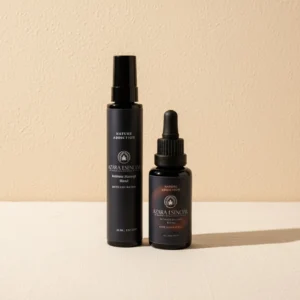
A two-phase botanical ritual combining warming clove, ginger, and black pepper with cooling mint — formulated around the sensory contrast mechanism and the documented neuroscience of intentional touch
The neuroscience of intentional touch: what happens in the body
Touch between trusted people produces a specific and documented sequence of physiological events.
Slow, intentional touch — at a velocity of approximately 1–10 cm per second — preferentially activates C-tactile (CT) afferent fibers, a class of unmyelinated sensory neurons present in hairy skin that are specifically tuned to affectionate, social touch. CT fiber activation sends signals directly to the insular cortex, the brain region associated with emotional processing, interoception, and the experience of pleasure.
This CT fiber activation is also linked to the hypothalamic oxytocin system. A landmark 2012 study (Morhenn et al., published in Alternative Therapies in Health and Medicine) demonstrated in a large mixed-gender sample that massage significantly increases plasma oxytocin and simultaneously reduces ACTH — the pituitary hormone that drives cortisol production. A 2026 study published in PMC went further, identifying the exact spinal circuit mechanism: massage-induced oxytocin release from hypothalamic neurons primes spinal dorsal horn circuits for increased social engagement — an evolutionarily conserved feedback loop between affectionate touch and nervous system state.
The practical implication: intentional touch does not merely feel connecting — it biochemically creates the neurological conditions for connection. Oxytocin reduces the perceived threat of vulnerability, increases trust, and shifts the nervous system from the sympathetic vigilance of the day toward the parasympathetic openness that genuine intimacy requires.
The Intimate Massage Blend is designed to be used during that process — to provide a botanical sensory ritual that occupies the hands and the attention while the body’s own chemistry does its work.
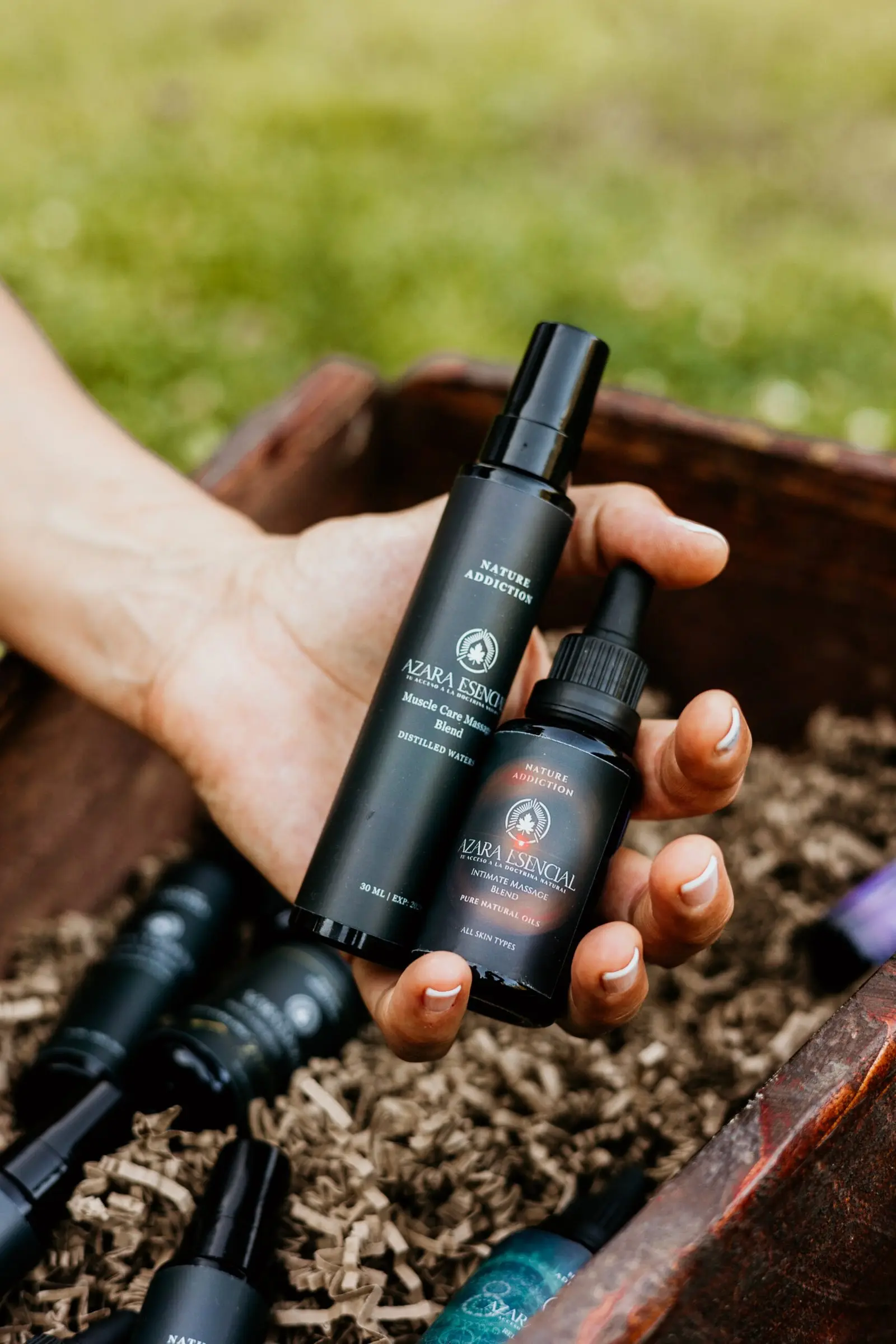
The sensory contrast principle: why warmth and cooling together work better than either alone
The most distinctive quality of the Intimate Massage Blend is its simultaneous warmth-and-cooling sensory experience. This is not an accidental aesthetic choice — it is a deliberate application of a known physiological principle.
Sensory adaptation is the nervous system’s automatic process of reducing response to a constant stimulus over time. The same sensation maintained without variation causes receptor response to diminish — which is why a constant fragrance becomes unnoticeable, or why sustained pressure from clothing stops being felt.
When two opposing sensory inputs are present simultaneously — warmth from TRPV1/TRPV3 receptor activation by clove, ginger, and black pepper, and cooling from TRPM8 receptor activation by menthol — the nervous system cannot adapt to either, because each is being counteracted by the other. The result is sustained, heightened sensory awareness that persists throughout the massage session rather than fading.
This is the same principle used in professional contrast hydrotherapy and in thermal contrast massage techniques in clinical physiotherapy. Applied through botanical compounds onto skin during intentional touch, it keeps attention anchored in physical sensation — which is, physiologically, exactly what presence is.
The contrasting sensations also prevent the mind from habituating to the experience, which is why sessions with this blend tend to feel more immersive and sustained than standard massage oils.
Inside the oil blend: nine ingredients, two receptor systems, one sensory experience
Every oil in the blend serves a specific and non-redundant function. The warming oils work through TRPV1 and TRPV3 receptor pathways. The cooling mint works through TRPM8. The carriers provide the texture and duration that makes extended, unhurried massage possible.
Clove Bud Oil (Eugenia caryophyllata): The blend’s most distinctive warming compound. Eugenol — clove’s primary bioactive — activates TRPV3 (a warmth receptor) and TRPV1, producing a pronounced warming sensation with simultaneous mild surface numbing. A human study confirmed that eugenol and carvacrol produce warming, numbing, stinging, tingling, and heat-sensitizing qualities — the most frequently reported sensory subqualities’ being warmth and numbing. Research on transdermal eugenol application confirmed its TRPV1 binding and calcium influx induction in skin cells.
Present at a carefully calibrated concentration — enough to be clearly felt, controlled enough for comfort across different skin types.
Ginger Root Oil (Zingiber officinale): Gingerols and shogaols create a diffuse, grounding warmth that penetrates beyond the skin surface and relaxes muscle tension. Where clove’s warmth is acute and pronounced, ginger’s is deep and settling — the kind that makes the body feel comfortable rather than stimulated. Its warm-spiced aroma adds a layer of sensory depth to the blend’s olfactory profile.
Black Pepper Seed Oil (Piper nigrum): Piperine’s vasodilatory effect increases peripheral microcirculation on topical application. A controlled clinical study demonstrated that topical application of black pepper essential oil significantly improves vein visibility and palpability — a direct measure of peripheral vasodilation.
In the context of intimate massage, improved peripheral blood flow to the skin surface heightens tactile sensitivity — the skin becomes warmer, more flushed, and more responsive to touch.
*White Mustard Seed Oil (Brassica alba): TRPV1 activation through allyl isothiocyanate precursors creates a mild, awakening warmth at the skin surface. At the concentration used here, it contributes background warmth and heightened skin sensitivity rather than the pronounced heat it carries in therapeutic muscle formulations.
Mint Leaf Oil (Mentha arvensis): Menthol activates TRPM8 cold receptors in peripheral sensory neurons, producing the blend’s distinctive cooling counterpoint to the warming ingredients. This is the ingredient responsible for the contrast effect: the TRPM8 cooling prevents sensory adaptation to the TRPV1/TRPV3 warmth, keeping awareness heightened and sensation continuously present. The peppery-fresh top note it contributes to the aroma also creates the blend’s characteristic sensory sharpness.
Radish Seed Oil (Raphanus sativus): Uniquely lightweight for a botanical oil, with a silicone-like slip and sheen that significantly improves the tactile quality of the blend. Makes strokes smoother, more fluid, and more continuous — enhancing the sensory pleasure of touch itself.
Watercress Seed Oil (Nasturtium officinale): Rich in glucosinolates and erucic acid, brings a gentle warming and tonifying quality that complements the more pronounced warmth of clove and ginger. Supports healthy circulation and adds a subtle vitality to the blend’s overall character.
Sweet Almond Oil (Prunus amygdalus dulcis): Primary carrier — rich in vitamins E and K, oleic and linoleic acid, closely mirrors the skin’s natural lipid composition. Absorbs effectively without residue, providing the deep skin nourishment and extended glide that makes long, unhurried massage strokes possible.
Coconut Oil (Cocos nucifera): Secondary carrier — medium-chain fatty acids melt at body temperature, creating a warm, silk-smooth glide. Adds body and richness to the blend and protects the skin surface during extended contact. Contains lauric acid with mild antimicrobial properties.
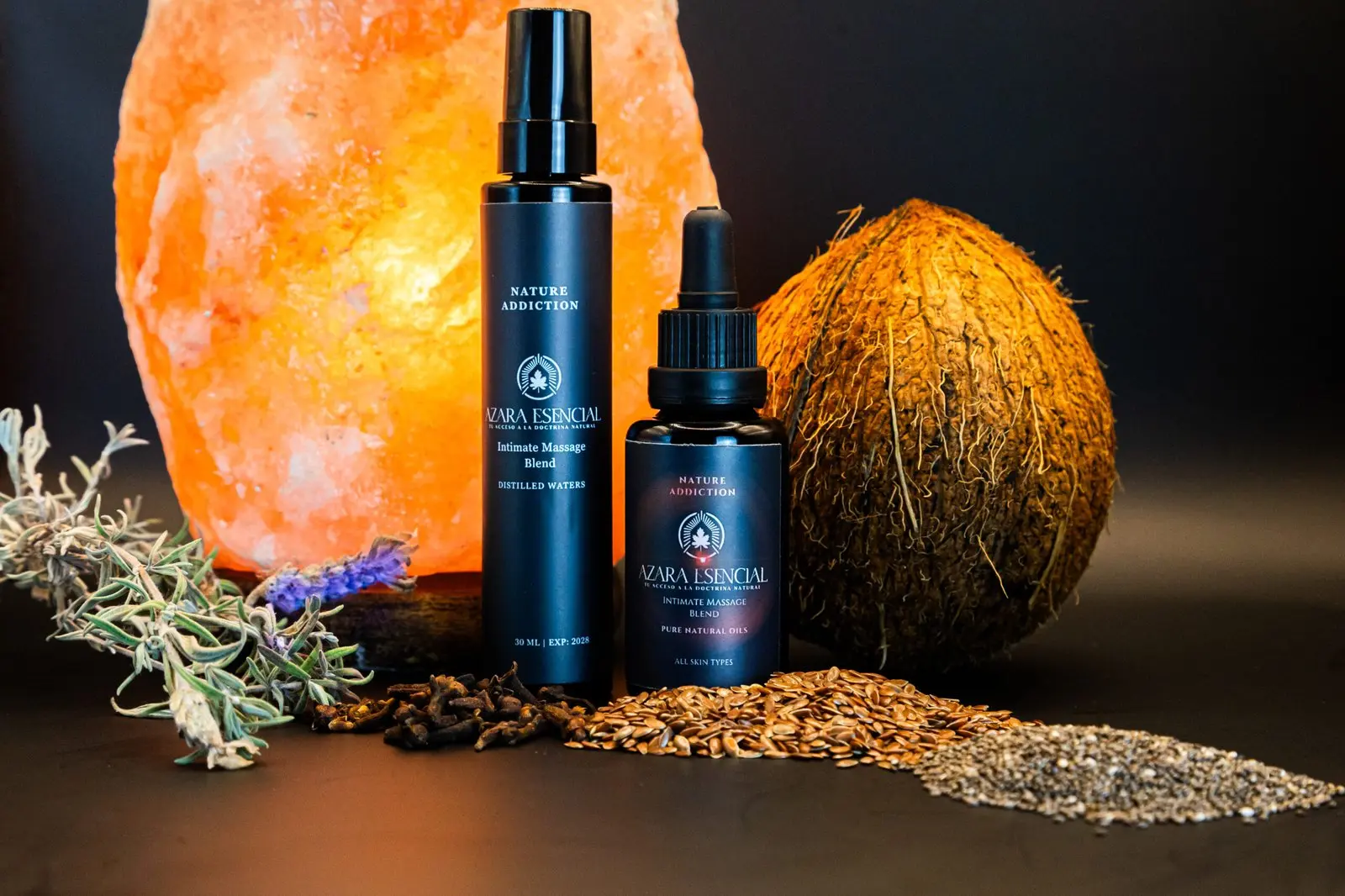
Inside the botanical mist: five hydrosols to open the ritual
The mist is applied before the oil — either to the skin before massage begins, or to both partners as a shared sensory opening to the ritual. Five hydrosols create a warm-spiced-fresh aromatic profile that shifts the atmosphere before the oil arrives.
Black Pepper Distilled Water (Piper nigrum): The mist’s warming opening note — subtle, invigorating, tonifying. Activates the skin’s surface response and begins the sensory transition from the ordinary to the intentional.
Radish Seed Water (Raphanus sativus):Refreshes and lightly tones the skin, complementing the oil-phase radish seed with water-soluble fractions. Contributes the mist’s silky, smooth-skin preparatory quality.
Rocket Seed Water (Eruca sativa): The mist’s most distinctive aromatic note — slightly peppery, revitalising, alive. An unusual hydrosol that adds character and complexity to the blend’s aromatic profile and contributes its revitalising effect to the skin surface.
Clove Bud Water (Eugenia caryophyllata): A gentler version of clove’s warming aromatic quality in the spray phase. Begins the warming sensory experience before the oil amplifies it. Creates the first aromatic signal that something different is beginning.
Peppermint Water (Mentha piperita): The mist’s fresh-cooling finish. Balances the warmth of clove and pepper, leaves the skin feeling toned and alive, and contributes the cooling counterpoint that defines the blend’s overall sensory character. Used after massage as a closing sensation: cool, fresh, and aromatic.
The Ingredients
Botanical Mist — Black Pepper Water
Piper nigrumThe mist's warming opening note. Subtle, invigorating, tonifying at the skin surface. Carries water-soluble piperine fractions that begin peripheral circulation priming before the oil blend is applied. Creates the first sensory signal of the ritual transition.
Botanical Mist — Radish Seed Water
Raphanus sativusRefreshes and tones the skin, improving smoothness and receptivity. Delivers water-soluble glucosinolate fractions that complement the oil-phase radish seed across both absorption pathways. Contributes the mist's silky, preparatory skin quality.
Botanical Mist — Rocket Seed Water
Eruca sativaThe mist's most distinctive ingredient — a slightly peppery, revitalising hydrosol uncommon in mass-market formulations. Contributes a complex, alive aromatic character and supports skin vitality. Its presence makes the mist's olfactory profile genuinely unique.
Botanical Mist — Clove Bud Water
Eugenia caryophyllataDelivers a gentle version of clove's warming aromatic quality in the preparatory phase. Begins the TRPV3-associated warming sensory signal before the oil amplifies it in Phase 2. Creates the first aromatic anchor of the ritual — the moment the sensory shift becomes intentional.
Botanical Mist — Peppermint Water
Mentha piperitaThe mist's fresh-cooling counterpoint — balances the warmth of clove and black pepper water and leaves skin toned, alive, and ready to receive. Used after massage as a sensory closing: cool, fresh, and aromatic. Initiates the TRPM8 contrast effect in its gentlest form.
Massage Oil — Clove Bud Oil
Eugenia caryophyllataThe blend's most distinctive ingredient. Eugenol activates TRPV3 and TRPV1 receptors, producing pronounced warmth, mild surface numbing, and heightened thermal sensitivity — confirmed in human studies where the most frequently reported sensory subqualities were warmth and numbing (PubMed: 23791894). Transdermal eugenol application confirms TRPV1 binding and calcium influx in skin cells (PMC: 11046106). Present at a precisely calibrated concentration — felt clearly, controlled for comfort. Traditional associations with passion and heightened sensation across Indonesian, Middle Eastern, and European traditions are explained by this receptor pharmacology.
Massage Oil — Ginger Root Oil
Zingiber officinaleGingerols and shogaols create a deep, diffuse, grounding warmth that penetrates beyond the skin surface and relaxes muscle tension. Where clove's warmth is acute and surface-focused, ginger's is settling and sustaining — the kind that makes the body feel deeply comfortable. Its warm-spiced aroma adds emotional depth to the blend's olfactory character.
Massage Oil — Black Pepper Seed Oil
Piper nigrumPiperine increases peripheral microcirculation on topical application — demonstrated clinically in a controlled study showing that topical black pepper essential oil significantly improved vein visibility and palpability, a direct measure of peripheral vasodilation (PubMed: 23153036). In an intimate context, improved peripheral blood flow to the skin surface heightens tactile sensitivity: the skin becomes warmer, more flushed, and more responsive to touch.
Massage Oil — White Mustard Seed Oil
Brassica albaTRPV1 activation through allyl isothiocyanate precursors creates mild, awakening surface warmth. At this blend's concentration, it contributes heightened skin sensitivity rather than pronounced heat — a background warmth that makes the skin more aware of touch without dominating the overall sensory experience.
Massage Oil — Mint Leaf Oil
Mentha arvensisThe essential counterpoint. Menthol's TRPM8 activation creates the blend's cooling sensation that opposes and contrasts with the TRPV1/TRPV3 warmth of clove, ginger, black pepper, and mustard. This thermal contrast prevents sensory adaptation — the nervous system cannot adapt to warmth when cooling is simultaneously present, keeping awareness heightened throughout the session. The blend's defining sensory signature.
Massage Oil — Radish Seed Oil
Raphanus sativusUniquely lightweight for a botanical oil — delivers a silicone-like slip and sheen without occlusive film. Makes strokes smoother, more fluid, and more continuous. The ingredient most responsible for the blend's exceptional tactile quality on skin — the one that makes touch itself feel more pleasurable.
Massage Oil — Watercress Seed Oil
Nasturtium officinaleRich in glucosinolates and erucic acid, contributes gentle warming and tonifying at the skin surface. Supports peripheral circulation and adds subtle vitality to the blend's overall character — a gentle energizing quality that complements rather than competes with the more pronounced warmth of clove and ginger.
Massage Oil — Sweet Almond Oil
Prunus amygdalus dulcisPrimary carrier — rich in vitamins E and K, oleic and linoleic acids, closely mirrors the skin's natural lipid composition. Absorbs effectively without residue. Provides the deep skin nourishment and extended, smooth glide that makes long, unhurried massage strokes possible. Hypoallergenic and suitable for all skin types.
Massage Oil — Cold-Pressed Coconut Oil
Cocos nuciferaSecondary carrier — medium-chain fatty acids melt at body temperature, creating a warm, silky surface glide. Adds richness and body to the blend, extends massage glide, and protects the skin surface during extended contact. Contains lauric acid with mild antimicrobial properties supporting the skin microbiome.
The Ritual
Create the environment deliberately
Dimmed lighting, a warm room, and a clear 30–60 minutes without interruption. This is not aesthetic advice — environmental cues of safety and privacy directly influence oxytocin system activation and parasympathetic nervous system response. The nervous system reads context before the touch begins.
Apply the Botanical Mist to both partners
Spray the mist over the shoulders, back of the neck, and chest. The shared sensory experience of the mist — its warming-cooling-spiced aromatic profile — creates a simultaneous sensory transition for both people. This shared signal is itself part of the ritual: the moment the ordinary pace ends.
Warm the oil between your palms before applying
Dispense a teaspoon of the oil blend into both palms and rub them together slowly for 10–15 seconds. The warming activates the aromatic compounds and brings the oil to skin temperature, improving both absorption and sensation on first contact. The moment of warming is also a natural pause — a breath before beginning.
Begin with the shoulders, neck, and upper back
These are the primary sites of stress-related tension holding and the areas where CT afferent fiber density is highest. Long, slow strokes from the lower back upward to the neck — at approximately walking pace — preferentially activate the CT fibers associated with social and affectionate touch. The warming sensation of clove and ginger will become perceptible within the first 60 seconds.
Work slowly — pace is part of the mechanism
CT afferent fiber activation — and the oxytocin release it triggers — is velocity-dependent. Strokes at 1–10 cm per second activate CT fibers maximally. Faster strokes activate pressure receptors but not CT fibers. The instruction to move slowly is not a style preference: it is what determines whether the touch produces connection or merely comfort.
Let the sensory contrast guide attention
As the session continues, the warming from clove, ginger, and black pepper and the cooling from mint will become more distinct and more interesting — not less. This is the contrast mechanism working: neither sensation can be adapted to because the other prevents it. Follow the warmth and cooling with attention rather than trying to ignore it.
Close with the Botanical Mist
A light spray of the mist over the skin after massage creates a pleasurable sensory closing — cool, fresh, and aromatic, contrasting with the warmed, oil-nourished skin. It marks the end of the session clearly and leaves the skin feeling toned and alive. The aromatic presence lingers on both partners for some time after.
The Intimate Massage Blend is a complete two-phase sensory ritual — botanical mist to open and close, warming oil blend for the massage itself. Both phases and everything needed to begin the ritual tonight are included in the set.
Get Your Intimate Massage SetWhat to Expect
Frequently Asked Questions
The warmth comes from clove (eugenol activating TRPV3 and TRPV1 receptors), ginger (gingerols), black pepper (piperine’s vasodilatory action), and white mustard seed. The cooling comes from menthol in mint leaf oil activating TRPM8 cold receptors. All are well-characterized receptor-ligand interactions with long documented histories of topical use. Perform a patch test on the inner forearm before full use — particularly if either partner has sensitivities to spiced botanicals. If discomfort occurs, reduce the amount used or apply to less sensitive areas.
Two reasons. First, massage increases local circulation, which brings more warmth to the skin surface and slightly increases tissue temperature — amplifying the TRPV1/TRPV3 receptor response to the warming compounds. Second, the menthol cooling contrast prevents sensory adaptation to the warmth: the nervous system cannot habituate to a sensation it is simultaneously receiving the opposite of. The result is a warming that feels more pronounced 10 minutes in than it did on first application.
Yes. The blend works equally well for solo self-massage — for relaxation, skincare, or the simple pleasure of deliberate sensory attention to the body. The botanical compounds’ receptor effects and the skin nourishment benefits are identical regardless of who is doing the massaging.
Perform a patch test on the inner forearm 24 hours before full use. The warming essential oils — clove, ginger, black pepper, mustard — react differently across different skin sensitivities. Most people find the concentration well-balanced and comfortable. Those with known reactivity to spiced botanicals should test first and start with a reduced amount in less sensitive areas.
A teaspoon of oil per area is a good starting point for focused application. For a fuller back massage, 1.5–2 teaspoons. Warm between the palms before applying rather than dispensing directly onto skin — this activates the aromatic compounds and improves first-contact sensation. Add more as needed during the session; the oil absorbs gradually rather than immediately.
Rocket (Eruca sativa) seed water has a distinctive, slightly peppery aromatic character that adds genuine complexity to the mist’s olfactory profile. It is an unusual hydrosol — which is precisely why it is here. The combination of five distinct botanical waters creates a more layered and interesting aromatic experience than a single botanical would. Its revitalising effect on the skin surface complements the warming and cooling botanicals around it.
Most couple’s massage oils are a carrier oil with fragrance — pleasant but physiologically inert beyond skin conditioning. The Intimate Massage Blend is a multi-ingredient formulation built around a specific mechanism: the sensory contrast between TRPV1/TRPV3 warmth activation (clove, ginger, black pepper, mustard) and TRPM8 cooling activation (menthol), which sustains heightened sensory awareness throughout the session by preventing adaptation to either sensation. The two-phase mist-and-oil ritual, the CT fiber activation through appropriate massage technique, and the documented oxytocin-releasing effects of intentional touch complete the picture. It is designed for presence — not just for pleasant skin feel.