
How to formulate professional-quality natural serums, face oils, and clay masks at home — using cold-pressed botanical oils as your base and simple cosmetic powders you can source anywhere
The oil base is the formulation — why it matters more than the added ingredients
Most DIY skincare tutorials focus on what to add — which clay, which essential oil, which powder. The base oil is treated as a neutral carrier. This is the single most common formulation mistake, and it explains why so many homemade skincare products underperform commercially formulated ones.
A cold-pressed botanical oil is not neutral. It is biologically active — carrying fatty acids, fat-soluble vitamins, phytochemicals, and antioxidants specific to its botanical source. Choose the wrong oil for your skin type and the formula will feel greasy, clog pores, or fail to absorb. Choose the right one and the base itself is the primary active — the clays, powders, and botanical additions are the secondary layer.
The three criteria for choosing your base oil:
1. Fatty acid profile matched to skin type: High-linoleic oils (black seed, chia, arugula) suit oily and acne-prone skin — linoleic acid mirrors healthy sebum composition and helps regulate overproduction. High-oleic oils (sesame, avocado, sweet almond) suit dry and mature skin — oleic acid provides sustained conditioning and penetrates the lipid layers of mature skin more effectively. Lightweight oils (radish seed, arugula) absorb rapidly and suit combination skin.
2. Oxidative stability appropriate to shelf life: Highly polyunsaturated oils (chia, rosehip) are rich in active omega-3 fatty acids but oxidize within weeks without proper storage. For a product you’ll use over months, blending a high-PUFA active oil with a more stable base oil (sesame, sweet almond) and a vitamin E-rich oil extends functional shelf life significantly.
3. No refined or heat-extracted oils: Cold-pressed, unrefined oils retain their full phytochemical profile — fat-soluble vitamins, tocopherols, polyphenols. Heat-extracted or refined oils lose these compounds. The difference is functional: the cold-pressed version does what the botanical is supposed to do; the refined version primarily provides lubrication.
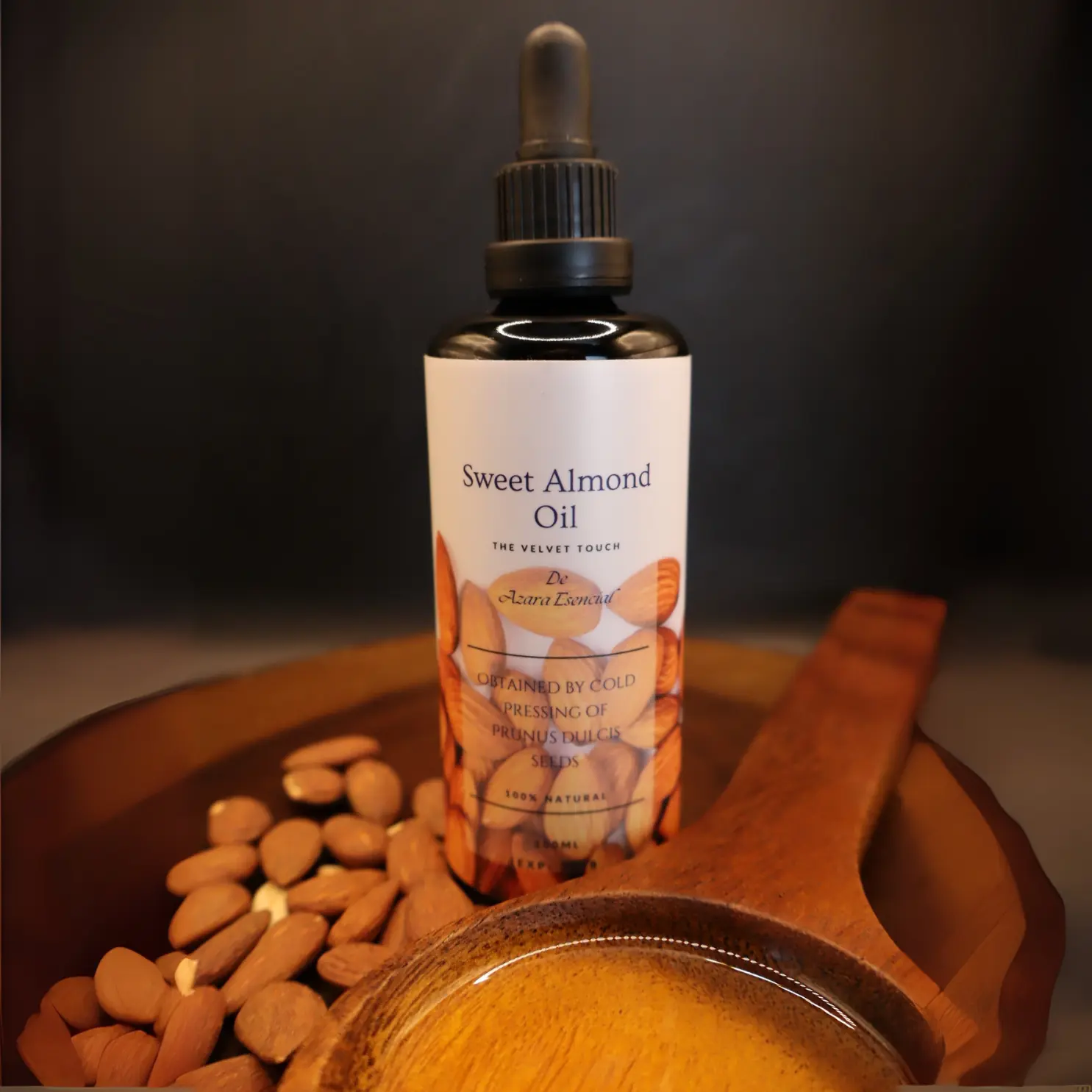
DIY face oils: oil selection guide by skin type and concern
A DIY face oil requires no additional ingredients — just the right combination of cold-pressed oils blended in the right proportions. This is the simplest and most effective home formulation, and it produces results comparable to commercially formulated serums when the oil selection is correct.
For oily and acne-prone skin:
Base: Black Seed Oil (Nigella sativa) 50% + Arugula Seed Oil (Eruca sativa) 30% + Chia Seed Oil (Salvia hispanica) 20%
What each contributes: Black seed oil delivers thymoquinone — a potent anti-inflammatory and antioxidant compound — alongside linoleic acid for sebum rebalancing. Arugula seed oil absorbs rapidly without residue, suited to combination and oily zones. Chia seed oil contributes omega-3 alpha-linolenic acid that supports barrier integrity and calms reactive skin.
Application: 2–3 drops pressed into slightly damp skin after cleansing. Apply morning and/or evening.
For dry and mature skin:
Base: Sesame Oil (Sesamum indicum) 40% + Frankincense Oil (Boswellia carterii) 30% + Damask Rose Oil (Rosa damascena) 20% + Chia Seed Oil 10%
What each contributes: Sesame delivers oleic acid for deep conditioning alongside sesamol — an antioxidant that gives sesame exceptional oxidative stability. Frankincense resin macerate delivers boswellic acid compounds associated with collagen-level structural support (confirmed in the 2010 Pedretti randomized clinical trial). Damask rose macerate provides toning, antioxidant, and skin-calming properties alongside its distinctive aroma. Chia adds omega-3 barrier support.
Application: 4–5 drops pressed into skin on slightly damp skin post-cleanser. Evening use is most effective.
For sensitive and reactive skin:
Base: Chia Seed Oil 50% + Sweet Almond Oil (Prunus amygdalus dulcis) 30% + Lavender Oil (Lavandula angustifolia) 20%
What each contributes: Chia’s high alpha-linolenic acid content is anti-inflammatory and barrier-supportive. Sweet almond mirrors the skin’s natural lipid composition and is hypoallergenic at clinical testing. Lavender macerate delivers linalool with documented GABA-mediated calming activity — functional for stress-reactive skin, not merely aromatic.
Application: 3–4 drops morning and evening on damp skin. Avoid essential oil additions until the skin’s baseline sensitivity is established.
For brightening and uneven tone:
Base: Turmeric Oil (Curcuma longa) 10% + Damask Rose Oil 40% + Radish Seed Oil (Raphanus sativus) 50%
What each contributes: Turmeric macerate delivers curcumin in a lipid vehicle — its antioxidant and anti-inflammatory properties reduce the oxidative stress that drives uneven pigmentation. 10% is the maximum recommended concentration for leave-on formulas — above this the staining becomes difficult to manage and irritation risk increases. Damask rose contributes toning and antioxidant activity. Radish seed oil provides the lightweight texture and exceptional slip that makes the formula comfortable despite the richness of rose.
Note: Turmeric oil can leave a temporary yellow tint on light skin or fabrics even at 10% — apply in the evening and use a dark pillowcase.
DIY facial serums: adding actives to your oil base
Serums come in two formats: water-based (the most common in commercial skincare) and oil-based. Some serums are oil-based — and an all-oil serum without water requires no emulsification and no preservation, making it the most practical and accessible DIY format at home.
A note on water-based serums and emulsification:
Commercial water-based serums combine a water phase and an oil phase that would naturally separate. To hold them together, formulators use emulsifiers — molecules with a water-loving (hydrophilic) head and an oil-loving (lipophilic) tail that sit at the water-oil interface and prevent separation. Common cosmetic emulsifiers include Olivem 1000 (from olive oil derivatives, popular in natural formulation), BTMS-50 (used mainly in hair conditioners), Polysorbate 20 or 80 (for low-oil-content serums), and lecithin (from sunflower or soy). The process requires heating the water phase and oil phase separately to the same temperature (typically 70–75°C), then slowly adding one to the other while mixing continuously until the emulsion forms and cools. Without a proper emulsifier at the right concentration (typically 2–6% of total formula), the formula will separate within hours. This is why all-oil formulations are the recommended starting point for DIY at home — they skip this complexity entirely and still deliver genuine skin benefit.
For home formulation with all-oil serums, the additions you can make are limited to oil-soluble compounds — those that dissolve or disperse in oil rather than water.
What you source from Azara Natural: The oil base — cold-pressed and macerated botanical oils as described above.
Note: these are all cold-pressed or cold-macerated botanical oils — not essential oils. They are the same category as the face oil blends in Section 2, with no essential oil content.
What to source elsewhere (cosmetic-grade suppliers):
Vitamin E (pure tocopherol): Add 1–2% to any oil blend for antioxidant skin activity and oxidative stability of the formula. Important clarification: pure tocopherol is a thick, amber-coloured viscous liquid — not a powder and not a tablet. It comes either as 100% pure cosmetic-grade tocopherol liquid from cosmetic ingredient suppliers (the most precise option for formulation), or in pharmacy vitamin E capsules — cut them open and squeeze the liquid out.
Check the label carefully: many pharmacy capsules are tocopherol diluted in soybean or sunflower carrier oil rather than 100% pure tocopherol. For precise concentration control, cosmetic-grade pure liquid is preferable. Both are oil-soluble and mix directly into your oil blend without heating.
Rosehip CO2 extract: A supercritical extract of rosehip seed that concentrates carotenoids and vitamin A precursors in a stable, concentrated form. Add at 0.5–1% to an oil serum base for gentle vitamin A activity. Available from botanical extract suppliers.
Sea buckthorn CO2 extract (diluted): Extremely concentrated in beta-carotene and omega-7 fatty acids — add at 0.1–0.5% maximum to an oil base. Produces a bright orange color in the formula (intentional in some formulations, manageable in small concentrations).
A simple brightening oil serum recipe:
All oils below are cold-pressed or cold-macerated botanical oils — no essential oils. The vitamin E is pure tocopherol liquid (see note above).– Radish Seed Oil (cold-pressed): 45%
– Black Seed Oil (cold-pressed): 30%
– Damask Rose Oil (cold macerate): 20%
– Turmeric Oil (cold macerate): 3%
– Vitamin E (pure tocopherol liquid): 2%
Mix in a dark glass dropper bottle — no heating required. stored away from sunlight and heat. Application: 3–4 drops morning and/or evening on slightly damp skin.
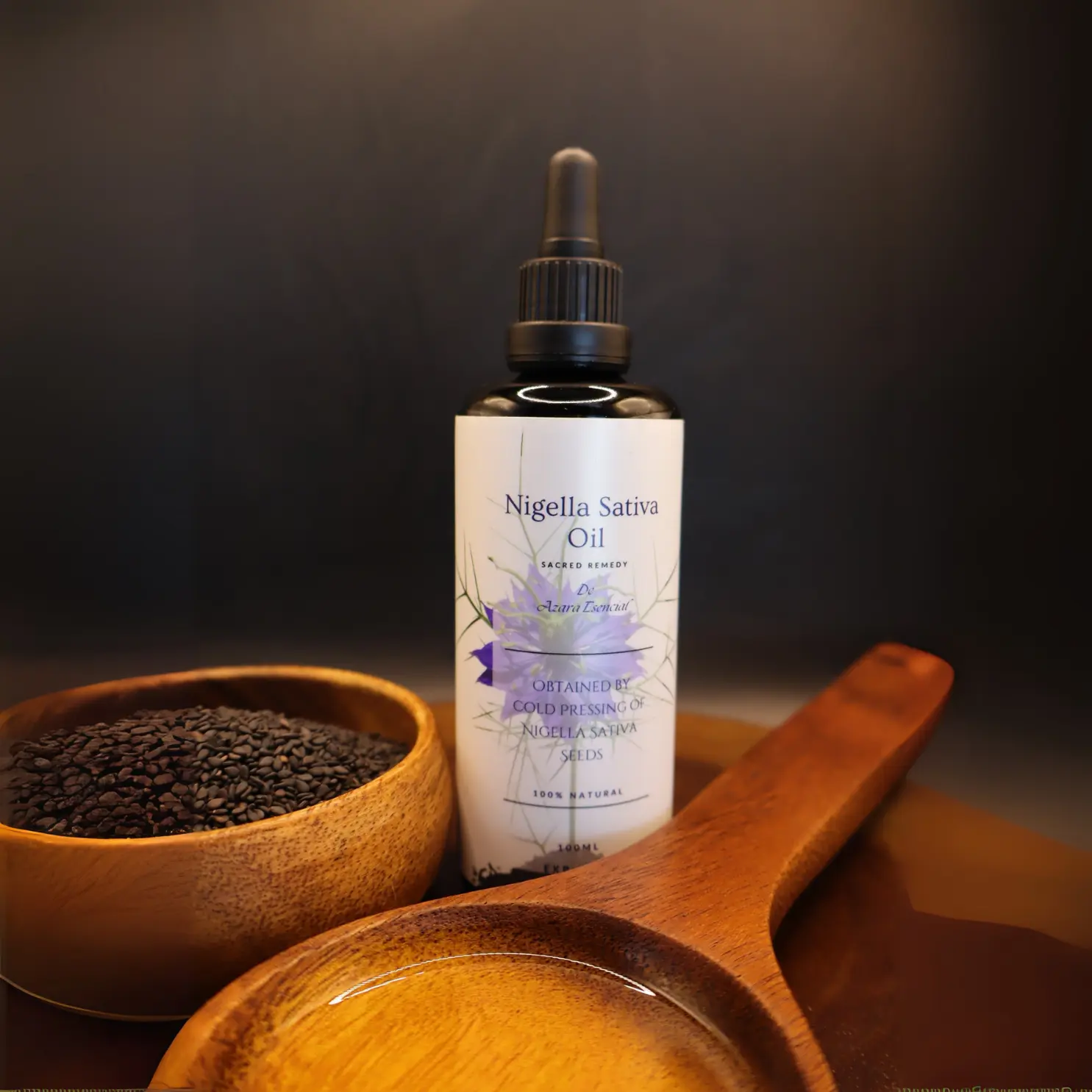
DIY clay masks: oil base + cosmetic powders
Clay masks are the most approachable DIY skincare category because the format is intuitive — mix a powder with a liquid base, apply, remove — and the ingredients are widely available and stable.
What you source from Azara Natural: A small amount of a skin-type appropriate cold-pressed oil (see section 2). 5–10ml per batch is typically sufficient.
What to source elsewhere:
Cosmetic clays (from cosmetic ingredient suppliers or natural health stores):
– Kaolin (white clay): Mildest — suits sensitive, dry, and normal skin. Gently cleanses without stripping.
– French Green Clay: More absorbent — suits oily and congested skin. Draws excess sebum and impurities.
– Bentonite Clay: Most absorbent — suits very oily or acne-prone skin. Use sparingly and only occasionally on dry skin.
– Rhassoul Clay (ghassoul): A Moroccan clay rich in minerals, with a silky texture. Suits all skin types including sensitive.
Cosmetic-grade active powders (optional additions):
– Turmeric powder (cosmetic grade): 0.5–1% for brightening and anti-inflammatory activity.
– Activated charcoal powder (cosmetic grade): 1–2% for deep pore cleansing.
– Niacinamide powder: 2–5% for sebum regulation and barrier support — dissolves partially in the water fraction when mixed.
Basic clay mask formula:
– Clay of choice: 1 tablespoon
– Azara Natural oil (matched to skin type): 5–10 drops
– Water, hydrosol, or yogurt: enough to reach a smooth paste consistency
Mix immediately before use. Do not store mixed clay masks — clay activates on contact with liquid and the formula cannot be stabilized without preservatives. Prepare fresh each time.
Enhanced version with added actives:
Replace plain water with a botanical hydrosol (rose water, rosemary water) as the liquid component. The hydrosol delivers water-soluble botanical compounds alongside the oil’s lipid-soluble ones — a simplified version of the two-phase principle used in Azara Natural’s formulated blends.
Azara Natural's cold-pressed and macerated oil range includes 23 individual botanical oils — each cold-pressed or cold-macerated without heat or solvents, in UV-protecting dark glass, available individually for home formulation. Black seed, chia, radish seed, frankincense, damask rose, turmeric, sesame, arugula, and more — the professional-grade oil bases for DIY skincare that actually works.
Browse Individual Botanical OilsFrequently Asked Questions
An all-oil serum without water content has inherent microbial stability — bacteria require water to grow. The limiting factor is oxidation, not microbial contamination. High-PUFA oil blends (rich in omega-3 and omega-6 fatty acids) oxidize in 2–4 months without proper protection; blends based on more stable oleic acid-dominant oils last 6–12 months. Adding 1–2% pure vitamin E (tocopherol) extends this significantly. Storage in a dark glass dropper bottle away from heat and light is the most important single decision. Never store in clear glass or plastic. If the blend develops a sharp, unpleasant “crayon-like” odor, it has oxidized — discard and make a fresh batch.
Yes — with precise concentration control. Essential oils in facial formulations should be used at 0.5–1% maximum concentration for leave-on products. For sensitive or reactive skin, start at 0.25%. Using essential oils above 1% in leave-on facial products significantly increases sensitization risk — limonene, linalool, and cinnamal (all naturally occurring in common essential oils) are regulated EU fragrance allergens for this reason. Measure by drops into your total volume: 1% in a 30ml bottle is approximately 6 drops of essential oil. Always perform a patch test on the inner forearm 24 hours before applying a new essential oil formulation to the face.
Combination skin benefits from lightweight, fast-absorbing oils with balanced fatty acid profiles that don’t add heaviness to oilier zones while still supporting drier areas. Radish Seed Oil (Raphanus sativus) is the most effective single oil for combination skin — it has a silicone-like slip and absorption speed that suits the T-zone without leaving residue, while its erucic acid content conditions drier areas. Arugula (Eruca sativa) Seed Oil is a close second. For a combination skin face oil blend: Radish Seed Oil 50% + Arugula Seed Oil 30% + Black Seed Oil 20% provides lightweight absorption with linoleic acid for sebum balance and thymoquinone for antioxidant protection.
Not if your formulation contains no water. All-oil products are inhospitable to microbial growth because bacteria, mold, and yeast require water to survive and multiply. The stability concern for oil-only formulations is oxidation, not contamination — and that is addressed by vitamin E (tocopherol), appropriate packaging, and storage conditions. If you add any water-containing ingredient — aloe vera gel, hydrosol, yogurt, plant juices — to a leave-on product, a cosmetic-grade preservative becomes necessary. Mixed clay masks made fresh at the point of use are the exception: they are applied and removed, not stored, so preservation is not required for single-use preparation.
Yes — with awareness of the temporary staining. Turmeric oil (Curcuma longa macerate) can leave a temporary yellow tint on very fair skin and will stain light-colored fabrics and pillowcases. This is the visible evidence of curcumin’s presence — the same compound responsible for its anti-inflammatory and antioxidant activity. Apply in the evening rather than the morning, use a dark pillowcase during treatment, and wash hands immediately after application. The tint on skin fades with cleansing. In formulations where staining is a concern, limit turmeric oil to 10–15% of the blend and combine with lighter-colored oils to dilute the visual effect.